Thursday, February 16, 2017

Let Her Go: A Universal Truth


"Let Her Go", which is on the album All the Little Lights by Passenger and debuted in 2012, is a beautiful song whose words create a new and relatable way to allow the listener understand what it means to lose things that you take for granted. This idea forms the quite evident deeper meaning of the song: you do not know what you have until it is gone. This song is a form of poetry because is uses poetic devices such as personification, hyperboles and repetition and has a deeper meaning than the words lead on.

"Let Her Go" is poetry in the form of music because it uses poetic devices and the words lead to a deeper meaning for the song as a whole. This idea is shown when Passenger sings about how he cannot seem to help himself from ruining everything when he says, “Everything you touch surely dies.” Not only does the artist use the words to disguise his self-doubt, but also uses a poetic device, a hyperbole, to make a striking line. The verse is a hyperbole because, as many things in his life may be unsuccessful, everything he touches does not actually die so he is making an overstatement. This verse helps establish the theme of the song because the artist believes he ruined his relationship and cannot forgive himself because of it. The next poetic line uses personification and imagery to continue the theme of self-reflection and remorse as it says, “Staring at the bottom of your glass/ Hoping one day you’ll make a dream last/ But dreams come slow and they go so fast.” Personification is used in this verse because a “dream” is doing the actions of a person, such as walking and running. This line is also a great example of imagery because it creates the image of a remorseful man, drinking away his feelings and missing the love of his life. These lines help establish the greater meaning of the song because the artist is at a low point in his life because he did not realize what he had until he lost it. Finally, in the first few lines of the song and repeated throughout, the artist uses repetition as a poetic device as he sings, “Only know you’ve been high when you’re feeling low/ Only hate the road when you’re missing home/ Only know you love her when you let her go.” The line displays the deeper meaning of the song as a whole as it says that the only time you appreciate the things that you have is when you do not have them anymore, such as an underappreciated good day when you are having a bad one. This is the most striking verse of the whole song and is repeated throughout to emphasize the main idea of the song, which is to tell people to appreciate the things they have before they are gone.

The use of poetic devices in the song "Let Her Go" justifies the idea that it is a form of poetry in a musical sense. The poetic devices also help to emphasize the greater meaning behind significant words. In conclusion, "Let Her Go" by Passenger is an extremely poetic song because it uses a number of poetic strategies and reflects on a universal truth: overall, you can only appreciate love when it is lost.

Wednesday, February 15, 2017

Multi-Lingual Music is Poetry


The song that first came to mind when asked what music classifies as poetry, is a song by Regina Spektor titled "Ne Me Quitte Pas (Don't Leave Me)." The song appears on one of her most recent albums What we Saw from the Cheap Seats produced in 2016. Spektor was born in the Soviet Union and was forced to immigrate to New York, as there was an increasing oppression against Jews in Russia. This can account for her wide range of languages and genres produced in her music. This includes a wide range of classical, rock, and modern pop incorporating various instruments such as pianos and guitars.

In this particular song she takes the listener on a trip through two different locations, France and New York. She references Bowery, Lexington, and Bronx in New York, Paris is spoken of with the assistance of French lyrics. The French phrase repeated in the chorus is "Ne me quitte pas, mon cher", which translates to "Don't leave me, my dear," hence the title of the song. Out of context, this lyric gives of a desperate and longing tone of someone who is begging someone not to leave. Playing the actual song, however, it is clearly given the opposite vibe. Spektor is cheerfully singing and humming to the tune of trumpets and drums. The verses describe supposed unhappy situations, yet they're followed by a pleasant alternative. An example of this is the line, "The kids go sledding down snow covered slopes... And yes, they know that it will melt. And yes they know New York will thaw. But if you're a friend of any sort. Then play along and catch a cold."

Spektor's "Ne Me Quitte Pas" supports the claim that music is poetry. She incorporates a variety of artistic methods into this song, using repetition and a satirical tone in her lyrics in contrast to her instrumentals. Songs and poetry in a foreign language typically steer uneducated audiences away. But when they take the time to understand the meaning of the French and the tone of the song as a whole, it is clear how talented Spektor is. Poetry isn't supposed to be traditional, it can be interpreted and manipulated by the audience. Since the French included in this song heightens this fact to non-French speakers, makes multi-lingual music being classified as poetry impossible to deny.

A Problem Plaguing the Nation: Explained Through Music Poetry

The song "Drug Dealer" by Macklemore was a single released in 2016. While it is a great song with a catchy chorus, it hides a deeper meaning that connects to Macklemore's real life. The underlying message of this song is that drug addictions, specifically prescribed drug addictions, are a problem of today. He is criticizing big pharmaceutical corporations who continue to sell these drugs to people who don't need them, and the doctors who are prescribing these drugs. Throughout the song he relates this issue to a number of celebrities who overdosed in the past couple years. While also explaining the experience of his personal friend who died in 2010 from overdosing on a more popular prescription drug called suboxone (there's another song about this friend even more specifically called "Other Side" that is also really good and and could also be considered poetry). In addition to all these connections he talks about his own experience with addiction and how that has affected his life. Macklemore uses a variety of poetic language to get this message across.

Macklemore uses a variation of imagery, tone and multidimensional language to get his message across to the listener. Towards the beginning of the song he says "But I seen homies turn grey, noses draining blood/ I could've been gone, off 30's, faded in that tub", this is one of his uses of imagery. This adds a lot to the overall theme and message of the song by showing how personal this issue is to him while expressing it in a way that creates an intense image for the person listening. An image of drug overdose is one thing, but a image of an actual dead person with pale skin is so much worse. Although this seems to be his intention. I also think this could relate to being a "true story" because when you hear that line it makes your stomach turn and cringe.

At the end of the first verse he says "Take Activis off the market, jack the price up on the syrup". This shows his use of tone to express the past issue with the Activis drug company taking their cough syrup off the market because of it's negative use to make lean. Macklemore emphasizes this line by using a lot of articulation on sharper words like Activis, market and jack. Much like a spoken word poem would put emphasis on certain words to increase their significance.

Lastly he uses multidimensional language when he says "The whole while, these billionaires, stay caked-up/ paying out congress so we take their drugs". This line refers to the big corporations who fund pharmacies to sell prescription drugs. More specifically when he says "these billionaires stay caked up" he is using multidimensional language. In one way he says "caked up" as in continuing to make ridiculous amounts of money. While in another way using "caked up" to refer to make up users who apply to much make up or "caking their faces" to hide their faces, similar to how these corporations are hiding behind pharmacies selling the drugs that make them money. Macklemore uses his popularity in music to inform people of this problem killing thousands. He does this by using poetic techniques that get his point across in a really powerful way.

Image result for drug dealer macklemore

The Show Goes On

Image result for the show goes on song meaningThe song "The Show Goes On" by Lupe Fiasco from the album Lasers was released in 2010. It was an instant hit and one of the biggest hip hop songs of the year. This song is super fun to rap to and is really catchy, but it does have a deeper meaning. 

This song contains a message that reaches out to today's youth growing up in rough neighborhoods or hard times. It encourages these young people to lift their heads up and keep fighting because the show goes on. It also brings across the message that no matter where you come from or what you have been through you can always come out on top and achieve great things. For example the line, "Let em' know you're there/That you struggling, survivin' , that you gonna persevere," is a really positive part in the song to let people know hey I am here trying my best and everything will be okay. It is very inspiring because most hip hop songs are about girls and money but this is reaching out to teenagers and people that need motivation in life. And it does a really great job of that. 

This song tells a story and that Is why I chose it when asked to defend a song as poetry. I may not be able to completely relate to it, but it continues to inspire me every time I listen to it. "No matter what you've been through/ no matter what your into/ no matter what you see when you look outside your window." Is my favorite line of the song because it's saying no matter where you come from you can accomplish anything you set your mind to. 

Why the song ¨Take me to Church¨ is poetry

The song, "Take Me to Church" by Hozier, was released in 2014 and was an instant hit. While many people became hooked on the catchy lyrics, musical arrangement, and the voice of Hozier, the song has a deeper meaning hidden within the lyrics that makes the song really meaningful and shows why it can be poetry.

Hozier uses the song as a metaphor to compare a lover to his religion.  Take me to Church's deeper meaning relates to the contradiction of churches treatment of homosexuality and sexual orientation and how the church thinks it is wrong to not follow the rules.  It is also about how religious organizations look down on people and shames people who do not follow the normal rules Throughout the song, the love takes the place of religion.  In the song he says,
 "I was born sick, but i love it".
  To me this is a symbol that relates to the theme of the song because it is saying that it's ok to undermine humanity and to not follow the rules.  It is ok to be different and not follow the church's strict rules regarding homosexuality. He is ok with undermining the church because he likes being who he is.  Another line in the song reads,
 "I'll worship like a dog at the shrine of your lies". 
 Here he uses a simile to compare himself to a dog and it relates to the larger theme because he is saying how he worships to what the church thinks is wrong. He is the opposite of the church as he is ok with it.  Another example of figurative language right after that is,
 "I'll tell you my sins, so you can sharpen your knife."  
I think this is an example of imagery because it really puts the picture in your head of the church getting mad and punishing someone who does not follow their rules.  It is also a reference to violence and persecution that follows someone that is admitting a sin and in this case it's sexual orientation.   Finally, towards the end of the song a line reads,
"There is no sweeter innocence than our gentle sin".  
Here, i think he uses a metaphor to say that their is nothing better than sinning a little bit because it makes you innocent.  In this case, being homosexual is a sin to the church but being open about it makes him free.

While the song may not seem like poetry at first, if you look deeper the song contains a lot of figurative language and themes that come up.  The songs use of figurative language and underlying theme allow for the song to be identified as poetry.

Sunday, February 12, 2017

A Closer Look on Satire

Seth Meyers, the host of Late Night with Seth Meyers, captures the essence of satire in the segment A Closer Look, which looks at current happenings in politics, and puts them into a different perspective, and does so in a very satirical manner. In a recent segment, entitled Trump’s Second Week is as Chaotic as his First: A Closer Look, Seth looks into the problems the Trump presidency is facing. He opens by stating how it feels like Trump has been president for two years. This is a perfect example of satire, as president’s approval rating typically go down halfway through their term, while Trump is already nearing rock bottom. Another great satirical example is when Seth analyses Trump’s black history speech, and states Fredrick Douglas is being recognized more and more. In a satirical response, Seth impersonates Trump, and says this. “Keep an eye on that Douglas kid, he is going places.” Here, Seth mocks Trump’s poor word choice, or possibly his complete lack of knowledge that Frederick Douglas died over 100 years ago. Seth only analyzes politics in this segment, and keeps the comments all satirical, as nothing in politics is just humorous, it is ironic or has some undertone. After all, the government does what they believe is for the greater good of the country, right?

This has been a closer look.

Monday, February 6, 2017

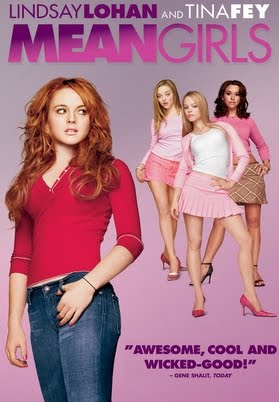
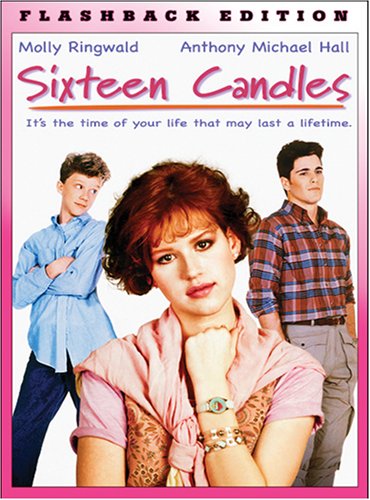
Satire In Teen Chick Flicks

There is a certain type of movie that everyone has seen at some point, either with enthusiasm or with disdain for the person who picked it out. It most likely has a pink cover with the conventionally attractive lead actress on the cover, either just standing there and looking pretty or maybe standing there, holding something, and looking pretty. These movies all have the same plot: teenaged girl is faced with injustice in the form of high school cliques or the struggles of being unpopular, teenaged girl overcomes injustice, gets the guy, and looks hot doing it.
Image result for mean girls coverImage result for sixteen candles coverImage result for clueless cover
Don’t get me wrong, some of these movies are great. I would put Legally Blond in this category and I love that movie and think it has a really important message. That being said, these movies are often lazy in their storytelling. They rely on the same characters, plots, and settings and after a while, they start to blend together. This cannot be said for the 1988 film Heathers. If you haven’t seen this movie yet, please go watch it right now, it’s on netflix and well worth the hour and forty-three minutes.

Heathers is the brainchild of writer Daniel Waters and satirizes the typical teen drama. In the film, Westerburg High School is run by the Heathers, three popular girls who share the same name, and Veronica (Winona Ryder), the dark horse of their clique. Veronica is quite possibly the epitome of the “not like the other girls” archetype. She’s pseudo-poetic, she wears a monocle to write in her leather bound diary, and she hates her friends. Like in every teen movie, Veronica’s world gets turned upside down when she meets a boy. In this case, it’s JD, played by a young Christian Slater. JD fancies himself and Veronica Bonnie and Clyde types and sets out to kill the people that make his and Veronica’s lives miserable by staging their suicides. Their targets are fairly predictable, two of the Heathers and two stereotypical "meathead jocks". In the very first suicide they stage, JD and Veronica go to see Heather #1 to help cure her hangover. Veronica genuinely does not want to hurt Heather too much, but JD ends up giving her a cup of blue drain-cleaner, causing her to collapse, smashing a glass coffee table, and die.

While the first "suicide" scene is interesting from an aesthetic and cinematographic perspective, the most interesting detail is perhaps the color of the drain-cleaner. Throughout the film, blue is very closely associated with Veronica and the world she and JD create around them. Veronica kills Heather. JD may have handed Heather the cup of drain cleaner, but she choked on blue drain-cleaner, Veronica killed her. The fact Heather tormented JD and Veronica doesn't excuse the fact that they're murderers and it becomes clear towards the end of the movie that life, in fact, was better when Heather was alive. JD is not a hero. Veronica is not a hero. They killed people, they are not meant to be glorified. In the last scene JD blows himself up and Veronica just barely keeps him from taking the rest of the school with him.The idea that one unique, quirky girl can defeat bitchy teen queens is idiotic. The premise of a school run by a clique of cheerleading primadonnas is idiotic. The notion that the right guy will fix all a girl’s problems is idiotic. The genre of teen movies that constantly forces these concepts down the throats of a young and largely female audience is idiotic and Heathers wants you to know it.

Friday, February 3, 2017

The Humor and Danger of Female Body Standards


The concept of 'the perfect woman' is no secret to human society. All over the globe you see a wide variety of what is considered beautiful about the female body. Thigh gaps, cinched waists, big in some places, smaller in others. So specific and precise, no wonder most females are unhappy with the way they look. A sad reality can, however, make an interesting satire.
A Reductress article titled "Dying Woman Finally Achieves Body Acceptance" humorously responds to this concept by telling the story of a woman who finally loves her body, as she's dying. Martha Stanley finally accepts her body image right before she dies. Throughout the essay other woman speak on how proud they are of Stanley, as they physically highlight a part of their body that's not accepted. This is a example of situational irony, as they are promoting self-love by "squeezing their muffin top and frowning". Another example of situational irony is when Stanley speaks of when she went on a diet during the Great Depression. This could also classify as dramatic irony, since the readers clearly know no one went on a diet during that time to look skinnier. Though a short satire, this article is clearly heightening the feelings from females to look desirable and perfect. Yet from a girl's perspective the essay is much funnier. In order for a women to finally love and accept how they look, they must be on their death best with nothing else to lose. Just going to show that a perfect female body is impossible and ridiculous, and really shouldn't be to die for.

"African American"


Trevor Noah is an African comedian who came to America and perform his work on stage in front of an american audience. Noah is of a lighter complexion because his mother was South African but his father was Swedish. When he was a kid he noticed at a young age that he was different from the rest and that he wasn't the stereotypical African. In his show African American he talks about many topical issues and primarily focuses on racial jokes and stereotypes. At one point he even started telling us about how he was at a comedy show and all the performers were in the back waiting for their turn on stage. A man came in and said the next performer was from Africa and he went around the room and asked all the darkest blacks in the room if they were from Africa. He then stood up after about five minutes of this and stated that he was the one from Africa and went on stage. Often times when we think about people from Africa they are people with very darker skin complexions that most people are used to seeing here in America. However that doesn't mean that someone of light skin complexion cannot be from Africa. Noah uses dramatic irony to present to us his view on life and what he goes through on a day to day basis. Throughout the show Noah mentions that while he was still in Africa someone mentioned that if he comes to America he can finally be Black and how he can finally stopped being known as a outcast. Noah took an 18 hour flight to America practicing being black and reading and watching a lot of black movies and everything like that. The moment he landed he said "I wasn't black... I was Puerto- Rican". He then said that he was a little upset bu thought it was comical to think that so many people think what you are based on your skin complexion. That's not right cause anybody could be mixed with anything and skin complexion does not judge what you are and race you might be.

M.A.S.H: American History Told in Satire

The first episode of M.A.S.H aired in 1972. The Mobile Army Surgical Hospital follows three army doctors their team on the front lines in the Korean War. Generally, the show reflected real life. Relatively accurate medical procedures, complex characters that had genuine human emotion, and real life events. An army hospital in the Korean War doesn't come off as a good setting for a show let alone a sitcom or comedy.
Corporal Klinger is one of the more popular characters on the show. His goal is to be sent home for being insane. This interesting character offers a lot to the show,  there is a ton of variety and a lot of comedic material. Klinger really helps make the show a powerful work of satire. The audience sees a character that is willing to do anything to escape the horrors of war. The show itself tells a true story about the war and its toll on people. 

The war against caring


onion article
                                                                                   In this article
it uses parody and situational irony to talk about president trump. The article talks about how trump is against empathy and wants everyone stand up and take a “vow” to be against understanding others. It also talks about how there is a very big danger that the country could be riddled with passion and that we need to try hard to look at others with indifference and disdain.

This article in its entirety is an example of parody irony because the article is a parody of an actual new article that someone will make. This article also uses hyperbole to portray their message. In this article they are using hyperbole by over exaggerating what donald trump is doing. Because of the ban on many Islamic countries banning immigrants who need help they are saying that he has no empathy. They are over exaggerating because they are saying that he has a war on empathy as a whole and doesn't want anyone to understand other people's situations. And that if he continues on his path many and gets what he wants, generations upon generations will not understand other people's feelings. 

This article is in fact trying to show people that they should care about other people and their situations and that you should have empathy and care about other people even if they’re not in your country or have nothing to do with you.

Colbert's Brilliant Response to Mrs. Trump's Alleged Plagiarism

This past July, Melania Trump was largely denunciated for plagiarizing parts of her speech at last year’s Republican National Convention straight from one of Michelle Obama’s from 2008. Never one to miss an opportunity to poke fun at a politically charged situation, Stephen Colbert and his team of writers wasted no time putting together a skit to perform on his show the night after this controversy took place.


Played by a strikingly similar looking actress, Stephen gave 'Melania' a chance to publicly defend herself against the allegations of plagiarism she had received. Tony Award-winning actress Laura Benanti perfectly captured Melania’s squinted eyes and perpetual pouty expression, even throwing in a few expertly executed model turns. Wearing her hair and outfit in a way that was made to mimic what Trump wore on stage in Cleveland that summer, Benanti began,


“My fellow Americans, this is truly the best of times, it is the worst of times. I did not plagiarize my speech last night, I would never do such a thing. I would not, could not with a goat. I would not, could not on a boat. That is because I learned honesty during my humble upbringing, in West Philadelphia born and raised. Thank you. On the playground is where I spent most of my days. So to those who say I stole my speech, I say give me a break. Give me a break. Break me off a piece of that Kit Kat bar.”


Stealing from everyone from Charles Dickens to “The Fresh Prince of Bel-Air” to a Kit Kat commercial, in making her point, her denial of any plagiarism consists only of long strings of plagiarized phrases.


The Satire in the Blow Up Doll

The television show The Office is built on the concept of satirical humor, it’s what makes the show it’s iconic self. The series is based on stereotypical issues of a corporate office and often makes jokes on race, age, sexism and gender.

One episode that really sticks out when it comes to satire specially is the second show of the second season, entitled “Sexual Harassment.” In this episode Michael received news that a CFO quit due to sexual harassment and decides to take matters into his own hands. Michael gives the entire office a mini talk or a conference that dealt with the issue of fraternizing a against women, specifically in the workplace. While talking at his own conference, he begins to start trying to re-lighten up the office by resorting to his old ways of rude and insulting comments. But, the situation gets flipped when Michael goes to the warehouse to get some new joke ideas, but just ends up getting jokes make about him, he runs away embarrassed from a taste of his own medicine.

The show uses both dramatic irony and satire to talk about a real issue in the workplace. They start with the real issue at hand, and slowly spin the topic more and more to the point of totally flipping it for a humorous effect. The episode even gets to the point where Michael brings in a blow up sex doll to show everyone the rights and wrongs of “touching in a corporate office.” By doing this the writers were addressing a serious issue in a completely unexpected funny way that helps the matter to be a bit lighter.

Throughout the entire series, The Office, used satire to make light of real world problems that corporate offices often face. Although they often bring up very controversial topics, it always seems to play out right and ends up making the show so unique and humorous.

The Colbert Report: News Satire at its Finest


Satire is tough to perfect, especially if it is on a consistent and current basis. Stephen Colbert of The Today Show, managed to combine goofy humor, extensive knowledge of politics and current events, and his ability to stay in character, while simultaneously poking fun at conservative news talk shows.

Colbert's show, The Colbert Report, appeared for nine years on Comedy Central, quickly becoming one of the most popular and highest rated shows on the channel. Because Colbert was able to caricature such a good representation of the exaggeration of an uber-patriotic, stereotypical right-wing broadcaster, he was able to speak about current events, providing context and information of what was happening in the world today.

Although the show was mostly centered around US politics, people of all different ages can watch it for man different reasons. The show is also very well written; there are many jokes that can range from idiotic and ignorant (in character with Colbert's anchorman portrayal), or, extremely poignant and indicative of American politics, through a satirical lens. It also features several different bits, all of them clever in their own way, and more impressively, related to the very shows he is imitating and parodying. Colbert features several faux correspondents in his show, conducting interviews to spin a perspective that is intriguing and comedic.

Colbert had an incredible plethora of guests, from republicans, to liberals, that he would interview and often use his persona to instigate. One of the best traits of these interviews was that sometimes he would have an extremely conservative guest, and through Colbert's equally radical and loony character, would spout out nonsense that the guest would seem to be genuinely going along with Colbert.

As sad as it is that The Colbert Report is no more, it is still an excellent demonstration of news satire in the 21st Century.

Thursday, February 2, 2017

The Simpsons: Comedy or Cultural Criticism?

The Simpsons is an American animated sitcom, satirically depicting the life of a working-class family, named the Simpsons. In episode 12 of season 5 of The Simpsons, Bart learns the truth about fame in America and what comes with it. In the beginning of the episode, Bart is on a fieldtrip with his class at a box factory, which he and his classmates find very boring. In search of some entertainment, Bart stumbles upon a recording studio where Krusty the Clown shoots his sitcom. Coincidentally, Bart scores a job as Krusty the Clown’s assistant, just the excitement he had been looking for, but almost quits soon after because he grows tired of the work. However, during one of Krusty’s shows, he needs to use Bart as an extra. In Krusty’s sketch, Bart becomes an accidental star when he says his famous line “I didn’t do it”, after clumsily tearing down the entire set. He becomes famous for his catchphrase, acquiring the same fame he admired throughout the whole episode but soon grows tired of it.


In this episode of The Simpsons, Bart is used to satirically depict American culture. Generally, this episode suggests that American people are never happy living in the moment, but are always looking for something better. When they accomplish what it was they were looking for, they quickly forget its importance, taking it for granted, and move onto the next most important objective. This pattern repeats itself over and over again until they lose everything, neglecting to realize what they had until it was gone. This idea is supported throughout the episode. First, when Bart is at the box factory with his class, he is completely detached from the moment and he is only worried about escaping the factory and finding something better to do. He finds what he was looking for in the recording studio and becomes Krusty’s manager, however, ironically, he does not appreciate the opportunity. He is almost immediately turned off by his new job and is seriously considering quitting until he achieves stardom. Initially, he is excited by his newfound fame however, ironically, very soon grows sick of it, like he does of everything else in the episode. When his career ends abruptly, he cannot help but regret that he did not make the most of it while it lasted. He reflects on his career with remorse and a heavy heart because he did not realize what he had until it was gone.

This episode does not simply make fun of Bart’s ignorance, but also makes the audience acknowledge that their actions are often similar to Bart’s. Each time Bart neglects to acknowledge what he has, it makes the audience feel a little bit uncomfortable and think “Isn’t that what you just wanted, Bart?”. By the end, Bart is regretful and sad that he did not appreciate what he had until it was gone. This episode suggests that if we as a society were more concerned with living in the moment, then we could be overall happier by appreciating what we have for what it is worth.

Key and Peele "Black Ice"

Key and Peele are two famous comedians who base quite a few of their most popular skits on real world problems. For example the skit by the name of "Black Ice". In this skit the words "black ice" are meant to sound like "black guys" when the white new anchors are giving their reports. In this skit Key and Peele are poking fun at the common stereotype that black people do nothing but cause trouble and commit crimes. 


The message embedded in this skit is that Key and Peele are trying to defend the black people that the new anchors are stereotyping. Lines such as, "just because black ice looks a little bit different than white ice, doesn't make it anymore dangerous" and, "walking away from an ATM machine when black ice just snuck up on me and practically robbed me of my balance". These two lines in particular are a dead giveaway as to what the message is in the skit. What the short clip does is clearly address the racism problem that has been lingering in America for decades. Now, while the clip approaches the issue in a comedic fashion, it is still getting its point across very strongly. Just because someone isn't white, doesn't mean they don't deserve to be treated equally in a country that prides itself on the quote, "All Men are Created Equal".

Fallout 4's secret satire


Over the past few years video games have become a new medium for satire. By incorporating complex story lines and vivid characters games can have a deeper meaning, one that the play may not even see. One such game is Fallout 4. This game takes place in a post apocalyptic United States after a nuclear war. You, the “Soul Survivor”, must find the man that kidnapped your child, and killed your wife, while at the same time completing missions, and helping other communities along the way. \


What most players don't realize is that the game pokes fun at the typical unaware suburban family during the 1950’s. When the game opens up, you begin to play as a man living in your neighborhood. Shiny cars are in front of every house. Houses are painted light bright colors. You family is your typical “nuclear” family, which is ironic. Yet they are so caught up in their suburban life, they can’t see what is happening during that time in the nuclear arms race, and you pay the price for it.

Lilly Allen Wants Us To Take Responsibility

Pop artist Lily Allen's song, "The Fear" is full of satire speaking to the idea of pop artists making songs just for the money and fame. There is obvious irony in the fact that Lily Allen is an extremely wealthy artist and will ultimately make a ton of money off of her song insulting the frivolity and wealth of artists, but her message about the consumption of media goes even deeper than just tearing down the work of others.
The opening lines of "The Fear" say, "I want to be rich/I want lots of money/I don't care about clever/I don't want to be funny". In a pretty straight forward way, these lines lay out the idea of the entire song. Allen is emphasizing the fact that many artists have turned into people that are hungry for fame and money and ultimately end up putting bad messages into the world because they don't care what kind of image they portray, as long as it gets them a lot of attention.

"I'll take my clothes off and it will be shameless/cuz everyone knows that's how you get famous" 

Although they rhyme, Allen's lyrics are in coherent sentences and not completely consumed by the melody or auto-tune, making the message and development of her ideas about the poisonous qualities of shallow artists nearly impossible to not pick up. Beyond forcing listeners to hear the message spelled out through the words, the simplicity of the structure of the song opens the eyes of listeners to the fact that lyrics in general are an important part of a song and are meant to be interpreted. In this way, Lily Allen's song does not just bash artists for being rich or desiring it fame, it encourages consumers to pay attention to the content of what they are consuming.

Titling the song "The Fear" is another way that Allen brings the song away from artist bashing and towards the idea of creating change. Bringing fear into the equation, and not explicitly saying who should have the fear, makes a listener think. Of course, the surface meaning of the title, especially when looking shallowly into the lyrics which mock the modern day pop artist by saying, "I don't know what's wrong and what's real anymore/I don't know how I'm meant to feel anymore" seem to be focused on the artists of the songs. These lyrics could easily be interpreted as jab at pop artists getting lost in the desire for fame and wealth. However, who is to say that that fear Allen mentions should rest solely on the shoulders of those producing music? The song makes the audience think about the fact that they are a part of the system. They are the people blindly consuming the shallow work of artists that only want money. The direction that the music industry goes in, whether that be towards placing more value on and enforcing positive messages through lyrics or continuing down the road of shallow and negative material, is in their hands. The fear of getting lost and absorbed in shallow products with negative meaning is something that people should be conscious of as consumers. It is our responsibility as listeners to place value on the quality of the work we are consuming and how it effects society. 

Capital punishment inhumane?

An onion article titled "Prison Now Allowing Death Row Inmates To Receive Weekly Visitors Throughout Executions" is a satirical article in which capital punishment is questioned. It uses irony by trying to make the process of killing someone humane. The article says that "since it’s cruel to simply confine inmates to the execution room month after month, we’re planning to eventually incorporate a daily free exercise period."  The fictitious people who want to implement this are victims of dramatic irony. They believe that the cruel part of execution is being stuck in a room, while obviously it is the fact that they are being killed that is inhumane. The author uses satire to prove his point that capital punishment is inhumane by showing how the reasoning behind capital punishment is ridiculous.

http://www.theonion.com/article/prison-now-allowing-death-row-inmates-receive-week-55210

Miss America Is Actually About Brains


In an episode of John Oliver’s, “Last Week Tonight” show, John Oliver pokes fun at the Miss America Beauty Pageant. The episode makes jokes about the insane standards that the organization holds its contestants to, not only for comedic effect but to reveal the true sexist nature of beauty pageants in America.


John Oliver started off the episode by making a parody of the host and the entire premise of the competition. By mocking the show it exemplified the absurdity of beauty pageants models are judged almost entirely based on their looks. John Oliver also uses sarcasm throughout the show to further display how the Miss America Organization is based upon the over sexualization of women in society, even though they claim that their main focus is a scholarship program. Although he says “Miss America is about more than just looks…” it is clear by his tone that he really means the opposite. It is clear that in actuality he means is that it is obvious that Miss America is about only looks. By satirically presenting the subject of Miss America, John Oliver attempts to critique society and ultimately change society into one that does not over sexualize women.