Showing posts with label Women. Show all posts

Sunday, April 23, 2017

Qualifications to be pretty

     Inside the TV show america's next top model it picks girls from around the world to compete in a competition to be a model. Each week the girls have to go through an array of competitions ranging from commercials to modeling to doing runway shows, and are judged off of their looks and progress throughout the weeks. Even Though this seems like a shallow show that continues spreading the old ideologies and views on women as sex objects that are meant to only be looked at. It actually takes the lead in showing the depths of women and is changing the old views and standards of beauty, while showing the different types of women in this country. Therefore, america's next top model should be considered as a feminist work of art.
     America's next top model (ANTM) works to reinforce, and change many stereotypes, gender roles and old ideologies surrounding women. Inside of the fourth season of ANTM it went against the gender role that women should show domesticity and submissiveness. It fights this by showing Noelle, who was in this this competition despite she had a husband and child. This shows that even when women have responsibilities at home they will still try and follow their dreams, even if it entails being the breadwinner in the home. In season four one of the contestants were kicked out of the competition because she almost fought someone who poured something on her. Even though the show went against those gender roles it still reinforces that women should show purity and piety. And should never show angry emotions in public even if it is instigated. ANTM also works to go against many stereotypes but still enforces some. In our society many people see models as sex objects but ANTM tries to change that view with the contestant Brittany. At the beginning of the fourth season she was almost eliminated because she came off as too sexy. Inside the TV show the judges didn't want the girls to come off as sex objects. But they wanted them to be seen as seductresses to all genders. who can get anyone to buy their products just from their looks. Even though in this society models are seen to be skinny, ANTM tries to change this by letting in competitor Keena who is considered to be a plus sized model. She continued to get really far in the competition but her personality simmered away and she lost. This shows that personality is more important than the pictures, which is a very rare view for models.

     As a whole, ANTM sees how society views women and tries to fix it through showing that models have personalities and home lives that helps them as models. It also shows that if women are driven enough to do something they can, even if it goes against the views that society has on them.

Sunday, April 9, 2017

Let Us Play!


A League of Their Own, directed by Penny Marshall, is a movie about the inaugural season of the All-American Girls Professional Baseball League. The league was created to fill the gap left by the disbanding of Major League Baseball due to World War II. The newfound league scouted young women from farm leagues and urban softball leagues all over the country to play baseball for a living. The movie itself, which follows the Rockford Peaches, was made in 1993, however takes place in the 1940s, when sexism in the United States was predominant. Therefore, the movie displays examples of the sexism that consumed the country at this time, showing many examples of misogyny, as men in power take advantage and exploit the comparatively weaker women, however A League of Their Own itself is a feminist movie because it defies gender norms as it gives women agency and a prominent place in society.

In the 1940s, America was overpowered by sexism. This was the era of the Cult of True Womanhood, which declared that women belong in the home and are expected to display ladylike characteristics at all times. This changed, however, when men crossed the seas to fight in the war because women had to take men’s place in society, thus leaving their traditional place in the home. In real life, this was viewed by the public with outrage and confusion. The movie cannot, however, be knocked for illustrating this reaction because it is accurately representing the time period’s profound disrespect towards women. The sexism of the era is shown in the movie as a radio talk show host introduces the radio world to women’s baseball. He says, “Careers and higher education are leading to the masculinisation of women with enormously dangerous consequences to the home, the children and our country. When our boys come home from war, what kind of girls will they be coming home to? And now the most disgusting example of this sexual confusion. Mr. Walter Harvey of Harvey Bars is presenting us with women’s baseball. Right here in Chicago young girls, plucked from their families, are gathered at Harvey Field to see which one of them can be the most masculine. Mr. Harvey, like your candy bars, you are completely nuts.” The radio announcer uses words like “disgusting” and “sexual confusion” to describe women breaking out of the private sphere, displaying the popular opinion that women cannot hold the same place as men in society. The movie exploits and emphasizes the radio announcer’s use of sexism to allow the audience to recognize the misogynistic treatment of women when the league started. Because it does not condone or encourage sexist behavior, the movie is a feminist work.

A League of Their Own is a feminist movie because, despite the obvious objectification of women by the public, the movie gives women agency in a time period when this was extremely uncommon. The agency of the women in this movie is shown when the women sneak out of their residence on an away trip to go to a local roadhouse for dancing, drinking and fun. This scene is visually different from the rest of the film because it is fast paced and filmed with a moving camera to display how wild and unusual the women’s actions were. This scene also shows cultural difference for the time period because it shows women making impulsive decisions for themselves. Their decision, consequently, allows them to abandon common stereotypes of women such as that they are submissive and tranquil. Because they are defying common stereotypes of women, the movie is a feminist work.

After the teams are selected for the league, the women discover that they are required to wear uniforms that are no type of uniform at all, but rather very closely resemble dresses. Not only do their required uniforms make it almost entirely impossible to perform at the level they are capable of but also, turns them into sex objects. This attire was a real requirement in the AAGBL and is important because it shows that no matter what women are doing, they are required to look good and ladylike to please the public. The movie, however, takes this perpetuation of gender expectations and uses it to show the determination and grit of the women in the league, characteristics not normally given to women at this time. In one scene, we see the results of the terrible uniforms, as a player slides safely into third base and gets a severe bruise because the uniform does not cover her legs. Despite her deep contusion, she continues to play through the pain showing the audience the magnitude of female perseverance, further justifying that the movie is a feminist movie.

In conclusion, A League of Their Own is a feminist work because it gives women agency, defying gender stereotypes that were commonly perpetuated in the 20th century. The women in the league defy these common gender stereotypes by neglecting the private sphere and pursuing their dreams as professional baseball players. The All-American Girls’ Baseball League is a real life example of the type of work women can do when given the opportunity.

Friday, April 7, 2017

The Arrival of Women as Real People in Movies

In the movie “Arrival” gender is not the obvious main focus but there are some gender roles that are not typical for a 21st century movie. In "Arrival", the world tries to figure out why aliens dropped twelve spaceships on earth. One landed in the U.S. and a team was put together to communicate with them and try to figure out why they were there. The main character, Louise (Amy Adams), is portrayed as a strong, intelligent and independent woman. In a lot of movies, the main character is not a woman and if there is a women in the movie her role is usually related to sex and how she portrays herself to a man. However, in this movie the focus is on Louise’s talent and skills. Even though at the end of the movie Louise and the other main character, Ian (Jeremy Renner), fall in love, Louise is not objectified.

Louise is a quiet woman who lives alone and focuses on her work as a professor in language after losing her daughter. When the aliens land, Louise is called by the U.S. government to try to communicate with them. “You’re at the top of everyone’s list when it comes to translations,” says the Colonel from Army intelligence. Louise is looked at as a smart women instead of an object that is only good for sex. A way in which Louise shows her strength and confidence is when she is on the spaceship and is trying to communicate with them, she takes of her suit that protects her from any unearthly substances and says “they need to see me.” Adams is dedicated, fearless, and professional and is trying to get her job done. She is in control of herself and her job and shows her strength instead of being the “damsel in distress.” This is contrasting to most action films like the James Bond and the Mission Impossible movies which portray women as sex objects.

Towards the end of the movie after the aliens are all figured out, Louise and Ian fall in love and the attention is off of her work and onto them as a couple for a brief time. Ian asks Louise “Do you want to make a baby?” this obviously implies that he wants to have sex with her, but I still do not think she is objectified at all in this movie. Also, most of the clothes she wore in the movie are not objectifying; she wore professional clothes, however, she was also not portraying the “ugly woman” stereotype. Louise is not shown as a sex object but is also not shown as “unfeminine” either.

This movie breaks the typical female character stereotype and focuses on a real person with real characteristics, instead of just her appearance. This is not the only work in culture that portrays a truly powerful female character. The Movie “Courage Under Fire” and T.V. shows like “Grey’s Anatomy” and “Scandal” are all examples of works of culture that show strong, independent women.

Tuesday, April 4, 2017

Stereotypical but Not Stereotypes

Left to right: Mary Jackson, Katherine Johnson,
Dorothy Vaughan
Hidden Figures, a recent movie about the women “computers” at NASA who sent the first American into space, is one example of a new trend of gender stereotypes in media. Previously, a revolutionary female role consisted of the Ultimate Kick-A** Take No Shit Anti-Stereotype woman, but now media is beginning to show women who do stereotypical things while still on the whole defying stereotypes. In Hidden Figures, each of the three main female characters all have a story line revolving around her home life, as mother or wife, which is balanced with the story of their intelligence and their jobs. The movie attempts to show this balance with a few of the men, but unfortunately almost all of the male characters have male stereotype as their whole identity, making Hidden Figures portrayal of male gender roles far less progressive.

Early on in the movie, there is a transition scene in which the women drive home from work together, and then we are shown a snippet of each of their home lives. They are all mothers and wives (or widows). This scene demonstrates the domesticity that these women possess, the role of the mother and the wife that they all play. There is no woman in the movie who does not fall into these roles. However, given that the scene just before was them at work defying every feminine stereotype of submissiveness and non-ambition, the viewer is left with a stark contrast that only goes to show how women are multidimensional 
and can be both stereotypical and not at once.

Another place where the domestic stereotype is both proven and disproved is in one of the main storylines of Katherine Johnson finding a second husband, Jim. At first glance, this appears to reflect the age-old trope that a woman is nothing without a man. However, when her prospective love interest says something sexist, Katherine is immediately enraged and stops pursuing him. Jim is then left to win Katherine’s love, a complete role reversal of the trope originally hinted at. While the overall endgame of marrying off the woman is there, some credit is due in reversing the traditional gender roles and giving the woman agency over her love life, again showing both women and men defying stereotypes to an extent.

Jim is one of the few token men who treat Katherine and her colleagues with true respect. When Jim slips up and says the infamous line, “They [NASA] let women do that kind of work?”, he immediately regrets it and works to apologize to Katherine. The other man who breaks the mold is Al Harrison, the head of the research center where the women work. He commends her for her intelligence, takes her opinion into consideration, and works to make NASA a welcoming place for her and the other women.

However, these two seem to be the few token “good” men. The rest of the men working at NASA are rude and derogatory towards Katherine, because of both race and gender. Being the supposed epitome of STEM workers, they fall into the geek stereotype, where they think they are infinitely smarter than any woman and refuse to listen to any evidence that would convince them otherwise. Though there are a few defiant male roles in this movie, the majority of them do fall into a sexist and tired stereotype. 

Certainly in the past few years we have been seeing a lot of media with women who break the mold by departing from the stereotype as much as humanly possible. Hidden Figures takes a new spin in which women are allowed to fit stereotypes and still be unstereotypical. However, the movie also falls trap to the more broad trend that men’s roles have not changed nearly as much. Men in media are still subject to heavy stereotyping, and those who break the mold tend to be token outliers rather than the norm in any given work.

Friday, February 3, 2017

The Humor and Danger of Female Body Standards


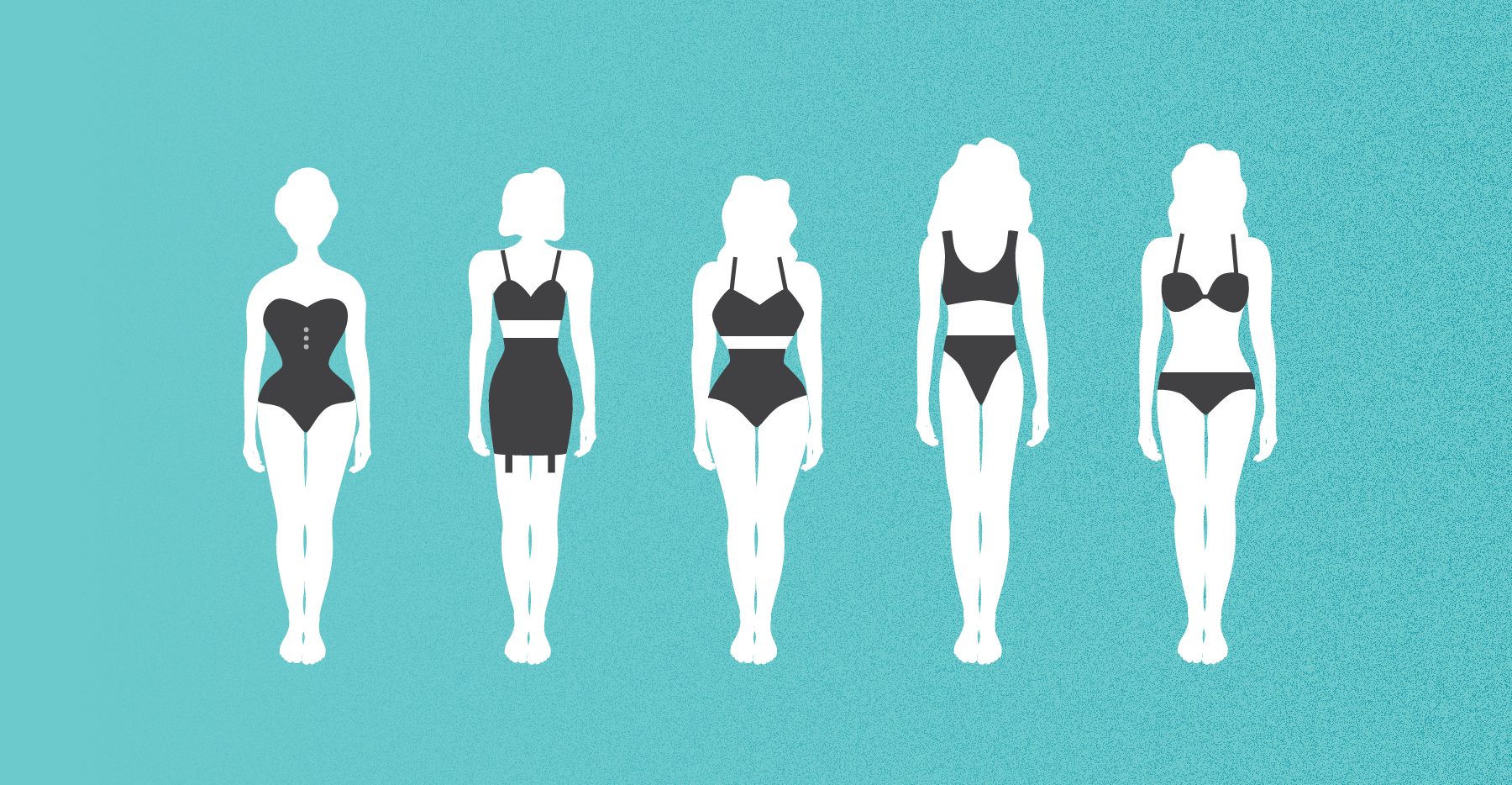
The concept of 'the perfect woman' is no secret to human society. All over the globe you see a wide variety of what is considered beautiful about the female body. Thigh gaps, cinched waists, big in some places, smaller in others. So specific and precise, no wonder most females are unhappy with the way they look. A sad reality can, however, make an interesting satire.
A Reductress article titled "Dying Woman Finally Achieves Body Acceptance" humorously responds to this concept by telling the story of a woman who finally loves her body, as she's dying. Martha Stanley finally accepts her body image right before she dies. Throughout the essay other woman speak on how proud they are of Stanley, as they physically highlight a part of their body that's not accepted. This is a example of situational irony, as they are promoting self-love by "squeezing their muffin top and frowning". Another example of situational irony is when Stanley speaks of when she went on a diet during the Great Depression. This could also classify as dramatic irony, since the readers clearly know no one went on a diet during that time to look skinnier. Though a short satire, this article is clearly heightening the feelings from females to look desirable and perfect. Yet from a girl's perspective the essay is much funnier. In order for a women to finally love and accept how they look, they must be on their death best with nothing else to lose. Just going to show that a perfect female body is impossible and ridiculous, and really shouldn't be to die for.

Tuesday, December 13, 2016

Living in our Man Made World


In this day in age it is hard to go anywhere without seeing electronics, advertisements, music or magazines with way to skinny girls on them. In seeing this it is hard for you not to ask how much do these things control our lives and influence what we do. In this time we are still living in a postmodern world.

In America self image has become less about who you are and more about how you look. Instead of self image being about what you want to be it has been mutilated into a lifestyle of what everyone else wants you to be. And, because of this America and it’s youth are hurting themselves just fit into a stereotype that they can never be. As a women in America from a young age you are taught what to be. Growing up all you see is women in magazines and t.v shows skinny as sticks telling you to be just like them, and that they got there beauty naturally. But what society doesn't tell you is that these women either work out 24/7 or bodies are cropped into perfection onto a computer. In our postmodern world we use these false images to guide how much we eat and how we should exercise.

We also use celebrities as a guide on how to spend our lives. Through a variety of advertisements. In commercials we see the singers and actors advertising things like clothes and beauty products. So, we spend a lot of our money on things that are over priced making actors and companies rich while we try to feed into the man made stereotypes of coolness. another way that media controls us is by music. famous singers flaunt their money, girls and cars in front of our faces telling us this is what we are suppose to be. we are suppose to act a certain way to get to this fictional promised land where we get everything we dream of.

And as naive easily influenced human being we try to reach for it posting our lives on social media as evidence that we are getting further in our lives than everyone else. we grasp at straw, like and follows to prove that we are as popular and making our way to somewhere we never get to.


Wednesday, October 19, 2016

Debate 3 Live Blog

Hillary's response to some of Donald Trumps recent actions with the outbreaks of sexual and verbal attacks was truly moving. Trump claims that he has not and will not apologize for his actions because they are not true. Hillary brings up some of the things that Trump has said such as, "she's wouldn't be my first choice" to show how he is degrading to women. What extended her response above and beyond was the expansion on the other controversial topics such as his mocking of a disabled reporter on national television. With all of this evidence, and him not responding and apologizing, it puts Trump in a bad situation when it comes to popularity.

Debate 3 Live Blog #3

"Nobody has more respect for women than I do" says Donald Trump in response to Hillary Clinton in the third and final debate. However, there have been multiple accounts and reliable sources saying that he has mocked women as well as sexually degrading them as he pleases. No person has respect for women if he or she states that they will kiss or do other inappropriate things to them without there permission. Can we really trust someone such as Trump with our country if he continues to lie to the people of the United states. Any person who says "Grab them by the Pussy" has no respect for themselves as well as women and furthermore people in general.

Trump vs. Clinton Final Debate, part 3

When Trump is asked if the stories of assault were true, he firmly stated that they were not true. He told the mediator and the American people that he did absolutely nothing, stating that the reason this is a rumor is because of Clinton's campaign and because the women want their "10 minutes of fame." Trump also tells the audience that he did not apologize to his wife because "it was lies and it was fiction." Trump sticks with his claim that he did not assault women and that nobody has more respect for women than he does.

Sunday, October 9, 2016

A Predator In The Oval Office

A little over a week ago, Hillary Clinton's campaign released this video


As far as content goes, the ad is basically the same as a video called "Our Children Are Watching", in which small children are shown watching Donald Trump making offensive, racially charged, and sexist remarks. "Our Daughters Deserve Better" makes the same appeal to pathos and ethos, but it delves more into things Trump has said about women.

Even though this ad was released before the tape of Donald Trump admitting he sexually assaults women, the ad has new meaning now that the tape is out there. Now that it's been leaked, you can't help but watch Clinton's ad within the context of Trump being a sexual predator. With that being said, a new, subtextual ethical argument is introduced. How can parents with daughters vote for Trump in good conscious, knowing how he treats women just a few years older than the girls in this video.

Sunday, September 25, 2016

Hot Chicks For Trump

If you watched coverage of the Republican National Convention, you may have caught a piece done by the BBC, in which a reporter asked Donald Trump supporter whether or not he would actually build a literal wall. While the interviews were fascinating, to some (myself included) the most memorable part of the piece was an the giant pin one of Trump's supporters was wearing.
Image result for hot chicks for trump buttons\
Specifically, this button

To a lot of people this button seems like the perfect summary of Trump's campaign, obnoxious, trashy, and inappropriate. While all that may be true, the Republican party wouldn't have been selling these buttons if they didn't promote their ideals. In fact, while it may not seem like it's making a point at all, this button speaks to two aspects of Trump's campaign that often go overlooked. 

For starters, the button is clearly trying to appeal to women. It doesn't make a substantive appeal by any means, but the hope is that women buy and wear these pins. Throughout the race, Trump and other republican candidates have struggled to win over female voters. Though this pin isn't trying to win people over, it does increase the visibility of Trump's women supporters. The women that sport these pins make a better case for Trump being a good candidate for women than he ever could. Trump is a pro life candidate that routinely trivializes women's issues and has called women "fat pigs" and "bimbos". He's never going to be able to take that back. He's never going to be able to appeal to women that care about issues like the pay gap, abortion, and the treatment of women in the military, but that's not the point, that's not who he's trying to appeal to. The point is that it's pink, it says something positive (albeit, trashy) about women, and it doesn't bring any of that nasty substantive stuff into the conversation. 

Then there's the issue of the button being crass. The tone used here is casual and frankly inappropriate for something tied to a presidential candidate. But this informal tone is prevalent in the majority of Trump’s speeches and there's a reason for that. It shows he’s not like highly educated, elitist, career politicians who can eloquently say nothing. He's like his supporters. He's going to "tell it like it is" and not mince his words. Whether or not he, a lifelong, privileged billionaire, has anything in common with the mechanic in Indiana who's voting for him because he's "relatable" is up for debate; but again that's not really the point. This is how Trump wins people over, he convinces them that he's different, he's one of the people and that's a good thing. Yes, he's rich, but he's also genuine. Genuinely terrible? Maybe, but you can't deny that he is unlike other politicians.

Friday, March 11, 2016

Men appear Women appear

In a passage from Ways of Seeing by John Berger, he states that "men act and women appear". Although women are over-sexualized in media, the same can be said for men. Therefore a more accurate critique of modern american culture would be "men and women both appear".

While women are more noticeably reduced to sex objects in pop culture, but both sides are portrayed that way. Women in film are shown to always have attractive body, and a sexual nature to them, whether in films like James Bond or Transformers. Many argue that because of this women are being demeaned and not properly represented, but this is true for men also. Actors like Channing Tatum and Ryan Reynolds have built their careers around their looks before their acting chops could catch up with their stardom. Admittedly women are more blatantly shown in this light, due to the male target audience, but with a closer look both genders are shown in similar over-sexualized ways. The main reason it is less obvious for men is that the male characters are given more depth behind their characters, which is the real problem with gender in film.

The over-sexualized nature of both genders is also revealed in music. Both women and men artist surround themselves with attractive people, to appeal to their audiences. In many modern rap videos there are women and men both in revealing clothes and suggestively dancing. Like in Rhianna's Work and LMFAO's Party Rock Anthem.Sadly, similarly to film there is a much larger male target audience leaving women more susceptible to the stereotyping.

Women are trapped in a state where they are seen mostly as sex objects in media, but it isn't because of over-sexualization. It is because women aren't given a chance to develop themselves beyond their appearances. Therefore the over-sexualization isn't the problem. The problem is media's reliance on sex as the way to define women. That is where the real change needs to come from.


To See or Not to See

In John Berger’s book entitled, The Ways of Seeing, he expresses his view about gender roles in society. He articulates the idea that men act and women appear. He says that men first survey a woman and what a man sees often determines how the woman will be treated. Berger later says that a woman’s actions also determine how others will treat her. Although I agree with Berger’s assertions that men often judge women based on what they observe, I believe that both men and women contribute to the objectification of women and I believe that not all men are the brave, confident individuals Berger portrays them to be.

More often than not, the first thing a man observes about a woman is her appearance. At a young age, kids are always taught not to judge a book by its cover. Even though this cliché is repeated time and time again, men seem to have an innate urge to judge a woman based on her appearance. A few weeks ago two guys sitting at a lunch table next to mine were “rating” various girls on a scale of 1-10. Their “rates” were based purely on physical appearance and had nothing to do with who the girls were or what their personalities were like. Sitting at the same table as them was a girl who was listening to the entire conversation. After a few minutes she was clearly aggravated and voiced her frustration. She said that taking a woman and reducing her to nothing more of an object of review was ridiculous and insulting. Upon hearing this, the two boys justified their actions by saying “well all guys do it so it’s okay.” Not only is this a classic bandwagon logical fallacy but it also shows how this mentality is so deeply ingrained in society. Just because “everyone does it,” doesn’t mean that it is right and should be repeated.

Both men and women contribute to and perpetuate the objectification of women. Men objectify women by looking at them and seeing them as sex objects. Women objectify themselves by succumbing to social pressures. Berger says that the success of a woman’s life is dependent on how she appears to others and more specifically, men. Therefore, a woman's sense of herself is supplanted by the feeling of “being appreciated as herself by another.” Berger argues that a woman’s view of herself is less important that how another person views her. This mentality leads to a lack of self-confidence and insecurities. When a woman accepts what men may think of her, she allows herself to become objectified. When a woman is objectified she can more easily be compared to other “objects” (e.g. the “rates”). Both men and women help to perpetuate objectification, which can often hurt a woman’s self image. Women are continuously seen as sex objects and objectified day after day but still should be seen as a symbol of purity.

Berger’s insinuation that all men are strong, dominating, and extremely confident individuals is a very far-fetched idea. Everyone has insecurities and there is no avoiding it. Berger asserts that while men act without a thought of what others might think of them, women are always thinking about who will judge them. As a man, I find this utterly ridiculous. I constantly find myself trying to figure out how other people may be judging me. I often worry that things I say or do might offend someone or hurt their feelings. As a man, I am self-conscious and have insecurities just like everyone else. There is no biological trait that gives men more self-confidence than women. As humans, both male and female, everyone has at least one thing they don’t feel confident about.

Men and women both face many gender stereotypes. Some are more harmful than others, but they are stereotypes nonetheless. The way in which men and women view themselves and others is critical in solving this problem. Humans by nature are insecure so individuals should never be singled out something they are not confident about. If society wishes to end the objectification of women as a whole, both men and women need to make changes.

Domesticity Can be Progressive

The progression of gender equality in America has come a long way. Women now are presented with more opportunities than ever before for agency, expression, and equality in American society. Specifically, there has been a large increase in the amount of women in the work force. Many women are now breaking away from stereotypical domestic roles to pursue jobs in many different fields. But, as women have begun to take on less domestic roles in society, the idea of being domestic has now become a trait that is often looked down upon. Many traditionally domestic women are often shunned for their domestic role, and are seen as perpetuating a stereotype, even if the stereotype is something they want to uphold and something that personally gives them agency. Many women in America who choose to pursue domestic roles are often criticized for their perceived un-progressive actions, however making a choice in and of itself is quite progressive.

During the mid-nineteenth century, a new ideology regarding women came to be called “The Cult of True Womanhood.” This ideology stated that women had to be four things: pious, domestic, submissive, and pure. Implementing these traits, these women acted as the moral backbone for their husbands in the workforce and for their children living at home. Though this ideology could be seen and close minded, demeaning, and repressive for women, some women did find agency in the home, living by “Cult”standards. These women took pride in being the supporter and backbone of their husbands and children and were like skilled artists, with their homes being their medium. In a way, by being submissive, these women found freedom. Now in a time when women can more freely choose their careers and life paths, being domestic is looked down upon, because ideologies like the “Cult” and other oppressive figures once enforced the idea of domesticity on women. But, even as some women found agency being domestic when it was forced on them, women now can find agency in domesticity as their life path.

For a large period of my younger life, my mother chose to quit her job to become a full-time mother, taking care of my sister and me. When my mother was asked about her career, I remember her always quietly replying that she was a stay-at-home mother, almost as if she was embarrassed. My mother often felt like she had to justify why she took on a domestic-role because society suggests that if you are a woman not making money and in a home environment, you are not working hard and that your chosen life path is easy. Society looked down on my mother’s choice to take on a domestic role because they perceived it as anti-feminist and anti-progressive, but that was my mother’s personal career choice, which is progressive. Though in history women were often forced into domestic roles, now when women choose to take on domestic roles it is looked down upon. The condemnation of a choice to be a stay-at-home mother does not give these mothers the opportunity to express agency, but instead this condemnation is quite anti-progressive. Though people may think condemnation encourages feminism, one is criticizing the free choice of a woman when condemning a stay-at-home mother and this criticism is very anti-feminist.

When First Lady Michelle Obama decided to give up her career as a lawyer and writer to focus on taking care of her two daughters, many people were upset at her decision. Individuals believed that Michelle was wasting all of her hard work and schooling on focusing on the care of her children. But, the decision to take care of her two daughters was ultimately made by Michelle, and she sets a good example to fellow mothers to listen to yourself when deciding to become a stay-at-home mother or not. Though individuals could argue that Michelle sets a bad example because she encourages women to take on stereotypical domestic roles, she in fact is a great role model to show that it is okay to be domestic if it is your own personal choice and desire. At this point in her life, Michelle wishes to focus on taking care of her children and this may not be a permanent choice. Michelle may choose to go back to a career in law or writing in the future. The most important thing is Michelle is deciding her own life path and setting an example to other women that they should make their own decisions too. This ability to choose one’s own life path is progressive.

We live in a time where women are presented with more choices than ever before. Though the opportunity to participate in the work force is a progressive opportunity for women, it does not give individuals the right to criticize women who personally choose to be stay-at-home mothers. If these women desire to take on traditionally domestic roles, their personal decision to do so is quite liberal and feminist because these women are deciding their own futures. The still reigning issue regarding domesticity in society is the way society often portrays domesticity as being submissive to the patriarchal expectations of American society. Women should be able to take on a domestic role if they wish, a working role if they wish, or even both roles. The next task for progressive America is to make those decisions of equal value economically, socially, and personally.

Thursday, March 10, 2016

The Inequalities Outside of Algebra

For centuries, American women have always been viewed inferior due to certain expectations that debilitate their capabilities. Unfortunately, today’s society continues to follow the same mindset. Gender inequality in the U.S. exists not only politically, but also socially and economically. Alas, every aspect of American culture and media portray numerous stereotypes of women. As Betty Friedan describes, gender inequality is an epidemic that infects this country’s progress. In order for the U.S. to advance forward, we must put an end to the obstacles that prevent women from fulfilling their capabilities and the objectification of women as a whole. 

To this day, there still exists many derogatory stereotypes that reduce women to objects, or place prejudice against any woman who shows power or independence. Such stereotypes create a mold of the “ideal female features” and pressure women of all age to succumb. In doing so, our society then reduces females’ potential to being the inferior sex, whose sole purpose is to appeal to men and repopulate the planet. Furthermore, the media is a large component in the spread of such ideals. For example, in a Revlon makeup commercial featuring Halle Berry, she claims that the use of such product will allow you to “get close, real close”. Following the close-ups of her face, Halle is then in multiple shots with a male model who is admiring her appearance up close. This particular commercial especially targets a female audience, and is branding it the product that can finally smooth the skin to make women more appealing to men. Unfortunately, sexist stereotypes do not stop at makeup commercials, but instead, dominate American culture, everything from movies to magazines to music.

The concept of inadequacy of females has been ingrained in American society for centuries, and has still prevailed. Although women have had historical triumphs in paving a path in a “man’s world” such as gaining the right to vote, America lacks ever having a female leader, and also has a severe scarcity of women holding positions of high power. Not to mention the fact that women (even more so for women of color) receive lower pay for the same job than men. To be exact, white women earn 78 cents to the white man’s dollar, 63 cents for an African American woman, and 54 cents for a Latina or Hispanic woman. How can a nation considered to be so innovative and free allow such obstacles for women’s equality to exist?


Even as young children, we are exposed to our culture’s fundamentals of sexism. Girls are told the romanticization of being a damsel in distress or common fairy tales in which the female ends up marrying her prince and that is her purpose. In society there needs to be representation of strong and independent females whose life does not revolve around a guy. Sexism is so deeply-rooted in American society to the point where movies and tv shows are a play on the heroic male figure with the beautiful female whose character is never as fully developed. How can our society be content with teaching young children to fit into these traditionalist stereotypes rather than pave a path for themselves?

As stated by feminist activist, Betty Friedan,“The problem that has no name — which is simply the fact that American women are kept from growing to their full human capacities — is taking a far greater toll on the physical and mental health of our country than any known disease.” Together, this society must pull efforts in order to create a better future for women to succeed.

Wednesday, March 9, 2016

What if it was you?

The female experience for the modern woman may have gotten more equal and/or bearable throughout the years, but by no means is it equal to that of a man's. Objectification is a huge factor of why women are not seen as equals; women are seen as objects, in the eyes of most men. As of very recently, I have identified myself as a feminist, although I never really understood the extent to which women truly suffer because of this objectification. I recently came upon a gem, a short film which asks a simple question to men: what if it was you?

Oppressed Majority is a video that very expertly flip-flops society, putting women into the position of social and economic power, and follows around a man during a day of his life. The events of the video are slightly NSFW: to portray the common man running without his shirt on, the women joggers are not wearing shirts, and there are slight levels of violence. As the man's day progresses, the events become more and more morally troubling, starting at slightly disturbing and eventually ending at a level of the complete violation of rights.

The video begins with the man walking down the street with his son, getting a few comments from women passing by, ranging from "keep smiling, cutie," to "lookin' good." This may seem harmless looking from the outside, but in the perspective of the man, it's weird to have strangers compliment you nonstop, which is what women today have to deal with constantly. It gets even more frustrating when the man goes to pick up his mail, and an acquaintance woman begins to talk to him about business, and stops in the middle of a sentence and says, "you know, I should probably be talking to your wife about this, huh?" This degrades the intelligence and usefulness of the man (therefore the woman in today's society), ultimately making him feel like crap.


The man eventually gets sexually and physically assaulted by a group of girls in an alley (after dropping off his son at daycare, run by a man submissive to his wife), where he afterwards goes to a police station. The policewoman interviewing him was very skeptical and/or unimpressed with his claim, even saying (with a condescending tone), "assaulted in broad daylight, with no witnesses. Who would have thought?" To which the man breaks down crying, and goes out to wait for his wife to pick him up.

After he and his sympathetic wife are leaving the station, the man seems to be severely traumatized, and then breaks down over the overly oppressing "feminist society," to which his wife scolds him for, saying "I can't stand your masculinist nonsense," and then commenting on the clothes he wears, how he may as well have been asking for it.

This video was a unique way of portraying to me, and possibly all males, what women have to deal with constantly in today's society: from sexual objectification, to physical/sexual harassment, to not being taken seriously, and everything in-between. This video has made me realize the true horrors of objectification, and make me even more obligated to fight for the end of it.

Sunday, November 22, 2015

Stupid Girls Aren't Stupid

In 2006, P!nk released a new song, Stupid Girls, on her I'm Not Dead album. This song was awarded the MTV Video Music Award for Best Pop Video and nominated for many other awards, such as a Grammy Award for Best Female Pop Vocal Performance. An example of the lyrics include:

"What happened to the dreams of a girl president
She's dancing in the video next to 50 Cent
They travel in packs of two or three
With their itsy bitsy doggies and their teeny-weeny tees
Where, oh where, have the smart people gone?
Oh where, oh where could they be?"

P!nk uses satire to mock society's sexualization and objectification of women. She explicitly points out the women in music videos. She targets the all-too-familiar image that the women in many music videos, especially rap, hardly wear any clothing while dancing provocatively. These said women are seen as the rapper's trophies and accomplishments which he then praises in his song. Their value consists only of their beauty and their ability to satisfy a man's wishes. While male rap videos are an extreme example referenced by P!nk, she also targets societal pressures on a woman as a whole. She sings, "Maybe if I act like that, that guy will call me back/ Baby if I act like that, flipping my blond hair back/ Push up my bra like that, I don't wanna be a stupid girl" depicting that women do these things to be accepted in our society. While she's criticizing the women who act like this, P!nk still describes having to face the pressure to conform and act the same way.

P!nk's larger motive isn't to criticize these women, but to criticize our society that shoves these "ideals" onto women to be accepted. Our society's image of a woman is a docile, sexual object whose interests and skills have no influence on her value, just her physical appearance. P!nk's bigger picture is how our media depicts a limited view of women which in turn influences young girls to believe that this is how they need to shape themselves to be. The media places a huge pressure on females to abide by the images that represent the gender. By P!nk creating this song and getting it out there, she is taking action on changing and questioning society's image of women.


Friday, October 9, 2015

The Postmodernism of Barbie

Postmodernism shows how the artificial image that we see in society has become more important to us than reality. We focus so much on the artificial image that we put less importance on what is happening in reality. The popular toy Barbie is an example of how we live in a postmodern society.

Barbie went on the shelves in 1959 and has been a popular toy ever since. The image of Barbie has transformed from a toy to an ideal body type that was strived for in society. Young girls were using Barbie as an image of the ideal body type and thought that her dimensions were the ones to strive for. Society was caught up in the image of a "perfect" female body with the same dimensions that reality was not a factor.

In reality if a human had the same dimension as Barbie, she would have to walk on all fours and would not be able to support her head. Barbie has an 9 inch neck, a 16 inch waist, and 16 inch thighs, all resting on 6 inch ankles. These are the dimensions of an image that is unattainable. These dimensions are not realistic for a woman to have and live a healthy life. The U.S average dimensions in women 18-25 are a 15 inch neck, a 35 inch waist, 25 inch thighs and 9 inch ankles. These are the dimensions of reality.

The unattainable goal of Barbie's "perfect" dimensions has invade the thoughts of young girls in society. The image of the perfect body that they are learning is not attainable or healthy. This image has become prevalent in society in defining the "perfect body" for women. Striving for the same body type as Barbie would result in a very unhealthy life style. Post-modernism shows us that an artificial image has more emphasis in society than reality. Barbie has the artificial image of the "perfect body" and that is focused on as oppose to the reality that if Barbie was a real person, her body would not be able to support her.


Friday, September 25, 2015

Contradicting Advertisement

This advertisement sponsored by Peta, seems like an encouraging advertisement at first encouraging people to save the whales and go vegetarian. But the underlying message is fat shaming females and their physical appearance by comparing the overweight lady to the whale that they're trying to get people to save. This is what makes it controversial because although they're promoting good things, they're also throwing some negative things into the mix for comedy. People's weight should never be made fun of for people's entertainment purposes.

Carly Fiorina's Use of Faces

Carly Fiorina's recent ad "Faces" was a message that was sent towards a special demographic of voters. Fiorina's purpose was to target women and uses pathos and ethos throughout her ad to make it effective. The opening of the ad is a image that says "a message from Carly", this connects the viewer to Fiorina on a personal level.


As the ad carries on you see the faces of many women that are of all different ages and races and in the background Fiorina is talking about how the faces of the women shown and the faces of women in the audience are all faces of leadership. She is appealing to the viewers ethos as she associates them with leadership.

Fiorina establishes pathos with the audience when she says "note to democrat party, we are not a special interest group. We are the majority of the nation." She is targeting the emotion of strength and by using the word "we" she is connecting herself with the audience so that there is a general shared belief. At the closing of the ad Fiorina establishes her own pathos when she talks about how old she is and that she is "proud of every year and every wrinkle." She is saying that she is the right candidate for women in the election. The last part of the ad before her logo is a image much like the opening one but now it says "join us." This image is saying that women need to join together in support of Florina because she is the candidate that will fight for the needs and rights of American women.