In this ad for the 2016 presidential election Donald trump is trying to convince people to not vote for Hillary Clinton. He is trying to convince people of this by using pathos, ethos and logos.
In this ad it shows Hillary Clinton is giving a speech to a room of upper class Americans and during her speech she calls the middle and lower classes a basket of deplorable. In this ad Donald trump uses pathos by making the ad more personal to the viewer. He does this by saying she’s calling “you” a deplorable. This makes the viewer feel more personally offended and hurt by Hillary Clinton's words.
In this ad Donald trump tries to turn voters against Hillary Clinton by using ethos. At the end of the ad it takes Hillary Clinton's words and uses it against her by calling her “deplorable for viciously dehumanizing hard working people like you.” This tries to smear her image by showing that she would openly insult people that don’t agree with her or people who are not on her side. This also shows that she is a hypocrite because she would generally stereotype a group of people negatively, but still judge Donald trump for doing the exact same thing.
In all, this ad tries to convince people of not voting for Hillary Clinton by making her seem like she is personally offending the voter. And by shining her in a bad light by making her seem hypocritical, stereotypical and willing to offend anyone that is not on her side.
Clinton's ad "Grace" features the parents of Grace, a disabled child, and a clip of Donald Trump mocking a reporter with a disability.
This ad very effectively uses ethos to attack Trump's character, because it literally shows a clip of him giving a speech, and there's no denying that he did what he did. The ad works hard to show you that these parents are real people, the reporter Trump mocked is a real person, and that what Trump did was real, and this quality makes the ad really effective.
Grace's parents talk about Grace's experiences being disabled, and how it really hit them hard when they saw Trump mocking a disabled man. The parents say that that moment showed them Trump's true character and they "didn't like what they saw."
Pathos appeal is used many times in this ad. You sympathize with Grace, her parents and their story, and with the disabled reporter, whose picture is also shown in the ad. The ad also makes you angry at Trump, and sides with the parents.
Monday, February 15, 2016
In the 1/14/16 republican debate Ted Cruz was asked to respond about a statement the president made about the economy and responds with something that has nothing to do with the economy. He says, "I want to get to the substance on jobs, but let me start with something, Today, many of us picked up our newspapers and we were horrified to see the sight of ten American sailors on their knees with their hands on their heads and that state of the union president Obama didn't so much as mention the ten sailors that had been captured by Iran. President Obama is preparing to send 100,000,000 dollars to or more to the Ayatollah Khomeini. And I'll tell you it was heartbreaking but the good news is the next commander in chief is standing on this stage." Here Ted Cruz uses a Red Herring to pull aware from the intended question and appeal to ethos and pathos to cause an uproar in the crowd and improved his worthiness of being president. Not only was he talking about something that was completely irrelevant to the question, he also insulted both the president and the democratic party, by guild of association. Even though he ended up answering part of the question in the end, he used a red herring to avoid the complexity of the question and ended up giving a very simple answer. This logic is faulty for several obvious reasons: he talked about a topic that was completely unrelated to the questions, he attacked a party while doing it, and he meant to evade the complexity of the question, so that he might be able to give a simple answer and seem patriotic while doing it.
Donald Trump has become known for his extreme plan for immigration. Trump blames illegal immigrants for the bulk of America's problems from violence to the economy. From building a wall to the deportation of eleven million people, Trump uses the rhetorical tools of ethos and pathos to make his immigration plan make sense.
Trump uses ethos throughout his argument on immigration as a way to discredit illegal immigrants and his fellow candidates and to establish his own ethos as the solution to the problem of immigration in the United States. Trump focuses on the harm that illegal immigrants are causing in America through crime and stealing jobs from Americans. He makes all illegal immigrants seem violent, which is false, and that they are raising the violence in America. He also blames them for hurting the American economy by taking jobs away from American citizens. By doing this Trump is destroying the ethos of immigrants in America and making them appear dangerous to American society. Trump also targets his fellow candidates in saying that they are weak in terms of their immigration policies and that they would not accomplish what needs to be done if they were to be elected. By discrediting illegal immigrants and his fellow candidates, Trump is establishing his own ethos as the solution to the immigration problem. Trump believes that he is the person that can fix immigration and secure the nation's border and he establishes his ethos by making everyone else seems as if they can't. Trump also uses pathos in his argument on immigration in the United States. He uses pathos to rouse the emotion of fear in his audience over the harm that illegal immigrants are doing to America. He paints immigrants as those who are creating violence in America creating a sense of fear and nervousness. He also says that illegal immigrants are stealing American jobs. By doing this he is arising pathos in the form of anger especially from those that are unemployed. Pathos becomes a tool that Trump uses to gain support for his extreme plan to stop illegal immigration. Trump and his plan to stop illegal immigration are based off of ethos and pathos that are supposed to persuade his audience that his extreme plan is the only one that will work.
Donald Trump is a presidential candidate for the Republican Party in the 2016 election. Infamously known as a racist with extreme ideas for the country, Trump uses an appeal to pathos and an appeal to nationalism to help his argument.
Donald Trump believes that we should deport all undocumented immigrants to help better America as a country. In a recent interview he specifically targets Mexicans.
Here, Trump uses the rhetoric, in particular, an appeal to pathos to convince Americans that Mexicans are bad people. He says "They [Mexico] aren't bringing their good people here. They aren't bringing you [American citizens]." By saying this Trump is appealing to the emotions of American citizens, making them feel better about themselves to have an inferior look down on Mexicans. Trump is also inferring that his audience are all hard workers. This gives his potential voters a good feelings about not only themselves, but Trump as a president. Trump also uses inclusive words like "you" "we" and "us." These words appeal to a strong sense of nationalism. They make his American audience feel as though Trump cares about them dearly. This rhetoric is effective when persuading voters to vote for you.
Ted Cruz recently released an advertisement regarding the importance of immigration regulation. The title of the advertisement, "Invasion," presents Cruz's audience with a sense that Cruz is aware of the growing issue. Throughout the one minute film, Cruz uses several outputs of media and rhetorical devices to strengthen and rally supporters for his immigration plan. In the advertisement, Cruz uses video effects, filming techniques, ethos, and forceful diction to evoke emotion and convey that he will establish firmer border patrols and prevent more illegal immigrants from entering the United States.
The advertisement begins with short, slow motion video of people running (most dressed like lawyers, bankers, etc.) through desert land and water. Each short clip then flashes to a plain black screen, transitioning one short clip to another. In addition, dramatic, 'dooming,' music plays in the background. These added effects establish a serious and overpowering presence. The emotion evoked from these effects make viewers to feel trapped, and as though Cruz will come to their rescue. Cruz's booming voice also supports that he is powerful, and in charge. The business clothing style signifies Cruz's ironic point that most illegal immigrants are often not associated in any higher, business occupations. Cruz tries to prove that if illegal immigrants were taking the jobs of lawyers and bankers, then the immigration issue would be much more on Americans' radar. Cruz states, "And I would say that the politics of it would be very, very different if a lot of lawyers or bankers were crossing the Rio Grande."Through the advertisement, Cruz emphasizes the growing need to fix the immigration problem.
Furthermore, the camera is often at a higher angle, suggesting that the people running are vulnerable to Cruz's aggressive immigration plan. The people running are also shown at a faster speed, further implying the increasing number of illegal immigrants, and that the rapid 'invasion' of illegal immigration is detrimental to America's economic system.
Moreover, Cruz uses his ethos and demanding language to evoke more support for his campaign. He says, “I understand that when the mainstream media covers immigration, it doesn’t often see it as an economic issue. But, I can tell you it is a very personal economic issues." Cruz uses words such as 'I,' 'you,' and 'personal' not only to connect with his audience, but also to establish that he knows how to fix the overflow of illegal immigrants and that he will be taken seriously. Cruz additionally forcefully expresses, "...the economic calamity that is befalling our nation." Cruz is aware that the issue must be solved and repeatedly uses a tone that demonstrates leadership and power. He then goes on to conclude as his logo (TrusTED) appears,“If I’m elected President, we will triple the border control, we will build a wall that works, we WILL secure the border." His logo displays the sense of alliance and true emotional connection that most Americans strive for when electing a president. Cruz believes on taking the initiative to bring attention to the growing problem before it can get worse.
Presidential Candidate Donald Trump is all but soft-spoken on the topic of immigration in the US. In an interview in November 2015, Trump was asked what his plan for immigration reform would be if he were to be elected president. Trump responded that there was a need for total reform on the topic of immigration, and attempted to persuade his audience to agree to his radical ideas. Even before he answered the question, Trump began by citing some recent horrific events that have been perpetrated by "illegal immigrants". He first explains the story of an illegal immigrant who "just kept running over" a police officer with his car. He then goes on to talk about another case, one in which a woman was kidnapped, raped, and killed by an immigrant. By beginning with these two cases, and telling the audience that "incidents like this occur every day", he appeals to the listeners' pathos. He makes the audience feel scared and unsafe by telling him these things, which effectively sets him up to give his audience a "solution" to the problem he has just created. These statements also establish exigence, because he is presenting the threat as immediate and domestic, which makes the listener feel threatened and vulnerable.
Later on in the speech, Trump continues to appeal to pathos as he is explaining his plan to "build a wall" around the Unites States in order to keep out illegal immigrants. As he is laying out his plan, he continuously repeats the word "illegal", enforcing the idea that these immigrants should not be here and should be thrown out of the country. This appeals to his audience's pathos in the form of anger. By reinforcing the claim that immigrants do not belong in America, Trump makes his audience feel angry at the "unfairness" that is present in America. Through many appeals to pathos, Trump successfully persuades his audience to support his ideas.
In John McCain's 2010 advertisement on illegal immigration titled, "Complete the Danged Fence," McCain argues that he will unite all levels of law enforcement (troops, local, state, and federal) in order to stop illegal immigration into Arizona. McCain also states that he wishes to build a fence around the southern border of the United States to also fight illegal immigration. In his advertisement, McCain appeals to ethos by employing the use of a police officer in order to legitimize the belief that his political views are what are best for America. McCain also utilizes bright lighting and close up camera shots in order to give the advertisement a personal feel and to make his audience feel secure in his ideas.
As McCain is walking along the border of Arizona and Mexico, he is alongside a police officer. The officer comments on McCain's plan, saying that it is "perfect" and towards the end of the advertisement, the officer says to McCain, "you're one of us." Law enforcement is often viewed as reliable authority: people you can trust and count on to have your best interest and safety in mind. By associating himself with the authorities, McCain enhances his credibility as a man individual's can trust and count on. Also, by having the officer say that McCain's plan is the right plan, McCain's ideas appear to be on the side of the nation and seem to have the best interest of the people. McCain utilizes law enforcement in order to enhance his position as a man who can be counted on and a man who wants to keep America safe.
McCain utilizes various film techniques throughout his ad in order to make himself authoritative and dependable. Throughout the advertisement, the shot is often close up to McCain's face. This close up shot makes the advertisement seems more personal. It almost puts the audience into the advertisement and makes them feel as if they are walking alongside McCain and the officer. By making the audience feel apart of the advertisement, McCain creates the illusion that he is directly addressing the fears and needs of advertisement audience members. As well as using camera angles, McCain also utilizes bright lighting to add a positive and secure note to the advertisement. As McCain is talking about his plan regarding illegal immigration, the bright lighting makes McCain's plan appear secure and with good intentions. The bright lighting also makes audiences feel optimistic and makes McCain appear reliable.
In his advertisement, "Complete the Danged Fence," McCain utilizes an appeal to ethos and camera techniques in order to make himself appear empathetic, trustworthy, and optimistic. McCain encourages his advertisement viewers to support his plan to unite law enforcement and to build a fence between the United States and Mexico in order to fight illegal immigration in Arizona.
In a recent debate in New Hampshire, Democratic nominees Bernie Sanders and Hillary Clinton exchanged some choice words regarding donations from interest groups. Sanders began by expressing frustration regarding how much influence large donations can have on campaigns. "If we do not get a handle on... the degree to which big money controls the political process in this country, nobody is gonna bring about the changes that are needed in this country for the middle class and working families," This statement immediately makes me think of the fallacy of hasty generalization, as it seems a bit presumptuous to say that there is no hope for the middle class with the current system.
Clinton's response, however, shows a much clearer fallacy. "There is this attack that [Sanders] is putting forth, which really comes down to, anybody who ever took donations or speaking fees from any interest group has to be bought!" Clinton claims. This is a clear example of the strawman fallacy. Instead of responding to Sanders' actual argument, which is the unhealthy influence of these large donations on politics, Clinton twists it into a crude generalization that demonizes all interest groups, which wasn't Sanders' point at all.
While these candidates make good points on both sides, it's important that they are as careful with their language as possible. Once campaigns start falling into these logical fallacies, the quality of discourse goes downhill rather quickly. Let's hope these are small errors on the part of these candidates, rather than long-term political patterns.
In Donald Trump’s latest political ad he attacks his fellow candidate Ted Cruz regarding Cruz’s views on immigration. The ad states that Cruz wishes to let undocumented immigrants remain in the United States permanently and to obtain legal status. Trump believes that one of our nation’s biggest problems is undocumented immigrants and he and his followers believe that letting undocumented immigrants stay in the United States hurts the nation and especially hurts the economy. In this advertisement, Trump criticizes Cruz’s views on immigration with the use of visual and auditory rhetorical techniques, that put Trump in a positive and valiant light and put Cruz in a negative and untrustworthy light.
Throughout the advertisement, Trump uses a contrast in music to emphasize that individuals should be worried about Cruz’s views on immigration and should trust Trump. When clips of Cruz appear in the ad, looming and intense music plays. The music has a fast beat, with unexpected symbol crashes and booms, all which make viewers feel uneasy and alert when Cruz is talking. The music ultimately presents Cruz in a negative, panicked light. When Donald Trump appears in the ad towards the end, the music changes from intense and abrupt to more soothing and pleasing music. The music is slower, has subtle trumpet noises, and a very patriotic vibe. The change in music from chaotic to calm when Trump appears, makes Trump look like he has control, and the patriotic undertones in the music as Trump is speaking about his views on immigration make Trump appear to really care about those issues in our country.
Trump uses bold and simple text to get straight to the point when criticizing Cruz’s views on immigration. As video clips of Cruz talking about his beliefs that illegal immigrants should be able to gain citizenship in the United States play on the screen, large text appears next to the clips that say “PRO IMMIGRATION” and “PRO AMNESTY” in all capital letters. These quick blurbs of criticism are simple and to the point, and are easy for all to understand. Donald Trump’s views are against illegal immigration and amnesty and by using text to identify Cruz as supporting these issues, Trump puts Cruz in a bad and untrustworthy light. The text is also surrounded by a dark red color, which makes it identifiable, but also gives the message an easily viewable negative tone. The simplicity of Trump’s criticism makes it easy for viewers to see and comprehend that Cruz is the bad guy in this light.
Trump uses visual and auditory effects to create a simple and comprehensible advertisement against Ted Cruz. With the use of loud, fast music and bold text, Trump makes viewers uneasy and alert when the ad focuses on Cruz. The contrasting positive tone when Trump is shown in the ad is complemented by light patriotic music. The negative and positive contrast between Trump and Cruz is easily identifiable, and shows that Trump believes that Cruz’s views on immigration are ineffective and an overall threat to our nation.
Hillary Clinton is perhaps the best candidate for analyzing rhetorical strategies. Her long resume has helped her to master ethos; she always ameliorates any accusation of bad politics. In the Democratic debate on January 17th, Clinton showed these political skills off in front of her opponents. Clinton used Martin Luther King’s legacy to her advantage, appealed to pathos, and effectively attacked the reliability of her biggest adversary all within the first fifteen minutes of the debate.
As the candidate with the largest voting base of black and Hispanic voters, she used the continuation of Martin Luther King’s campaign for justice as a reason for her presidency. Clinton asserted that, “[King’s] moral clarity, that message he conveyed that evening really stayed with me and helped to set me on a path of service. I also remember that he spent the last day of his life in Memphis, fighting for dignity and higher pay for working people. And that is our fight still.” All of the candidates mentioned Martin Luther King in their opening remarks during the debate, but Clinton made an implicit statement about continuing King’s fight for equality in the United States. This resonating argument simultaneously boosted her ethos and appealed to pathos; she is saying that she is the only president that can and will continue the fight for working people.
Additionally, Clinton discredited her opponent during the discussion of gun control. She stated, “I have made it clear based on Senator Sanders’ own record that he has voted with the NRA, with the gun lobby numerous times.” Subsequently, she listed specific examples of the event which provided substance for her claim. This rhetorical strategy bolsters her own image by creating an appearance of a more reliable, credible candidate. Later in her response to the gun control issue, she specifically appealed to pathos using a local example of armed violence. The Charleston shooting served as a way to connect with the sentiments of the crowd and show that she, personally, will try to prevent these shootings in the future.
There was a time where the stereotype of America was one of beauty and liberty. The "American Dream" sprung from old-school ideals of equality and acceptance, and aimed to show the world the power of a country founded upon immigration and religious freedom. Sure, we always had our enemies, but I truly believe that once upon a time the eyes of the world looked at America with respect.
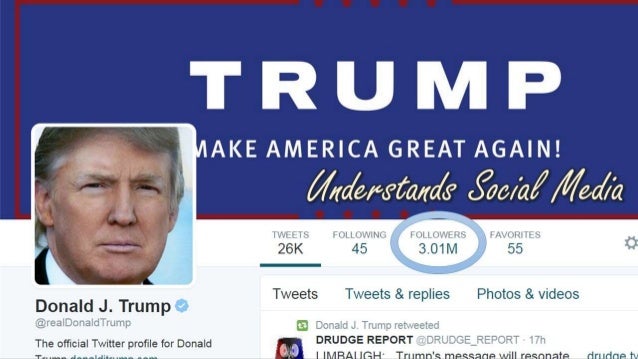
In 2015, this is no longer the image I see. The culture we have cultivated does not deserve any respect from our neighbors. Everyone from our politicians to our religious leaders seem to be competing with each other, in some overarching rat race to earn the most twitter followers. Much like Tom, the modern American is less concerned with truth and more with the theatrics- they are more fascinated by the political drama than by the politics themselves.
In some ways, the modern America hearkens back to the classic idiom of "kill or be killed", but instead, it's "follow or be followed". The goal in a society such as ours is to be the Tom and not the Huck- to be the leader, and not trail in someone else's wake. The fact that Huck was a kinder and more mature soul than Tom didn't even make a difference in the end. And even today, what you say doesn't really matter as long as people are willing to listen.
This week, we've seen two large debates for the upcoming election, and the candidates have used several rhetorical devices and appeals. Because of this, the rhetorical tone of these debates ends up being based on the speed of your responses and the pressure that you can put on the other candidates. Often, knowing what you're doing is less important than looking like you know what you're doing. There is one rhetorical device that I've noticed basically every candidate uses, most likely since it's very effective at easing this pressure. It is what I refer to as the "I called it" technique.
When a candidate is presented with an issue regarding older politics, they love to say that their political views back then match what actually happened. For example, The monitor mentioned that the government underestimated ISIS during Clinton's time as Secretary of State, and asked how she would be able to properly identify these threats in the future. Clinton responded, "I did, early on, say we needed to find a way to train and equip moderates very early... because I thought there would be extremist groups filling the vacuum (in Iraq)."
What Clinton achieves here is proof that she knows what she's talking about and that her methods work. Suddenly, the burden of proof is on the other candidates, since she has automatically provided her own. This is one of the hidden advantages of having lots of prior political experience- you can cherry pick the arguments you were right about and bring them up to prove your point.
Clinton isn't the only person to use this tactic, either. Several republican candidates made similar claims about tax reform and Obamacare. I think that it says a lot that one of the most relevant rhetorical strategies in these debates is defensive- it is so advantageous to tear other candidates down that proving the validity of your own argument is a major concern. Hopefully someday, the candidates can work together instead of ripping each other to pieces, and the "I called it" technique won't be necessary, but that day is a long way off.
Sanders continues to support the middle class by restating his opinion that minimum wage should be raised to $15 per hour. And in concluding his one minute to discuss it, he states "And I'm sorry to no one". This sarcastic joke raises laughs and applause to his platform.
Bernie Sanders addresses the maldistribution of wealth in America. He states that the wealthy should be taxed heavier than those in the crumbling middle class. He continues to support his point by sharing the inequality in paying taxes between two people of complete opposite ends of the wealth spectrum. This shows that Sanders is for the people, the middle class.
During the 2016 presidential debate there was a common theme between each of the candidates intros; they all established their ethos. It is imperative that politicians establish their ethos right off the bat. A politician’s first impression on the voters depends heavily on whether the politician is qualified for presidency or not. Governor Chafee was the first democrat to give his introduction. He started off by saying; “I'm the only one running for president that has been a mayor, a United States senator, and a governor.” He asserted himself as the most experienced. He then proceeded to go through his experiences as mayor, senator and governor and explain each of his accomplishments. From voting against Bush-Cheney tax cuts and the Iraq war to flaunting his pride of being scandal-free, Chafee has accomplished a lot. His accomplishments make him qualified to become president. Then Senator Webb had his turn to introduce himself. He established his ethos with the audience through his previous jobs of being an author, a journalist and a sole proprietor. He connects with the audience on the premise that he has not always been a politician. He then expressed his qualifications through his career with the military. Not only is he a Vietnam veteran but he also served as Assistant Secretary of Defense and Secretary of the Navy in the Reagan administration. Just like Chafee, he proclaimed his qualifications for president through an ethos-based approach. Martin O’Malley, Bernie Sanders and Hillary Clinton all had similar introductions. They all stated their achievements and followed up with a quick preview of their policies.
Senator Bernie Sanders loves his statistics. During many of the times Sanders spoke, he used a logos approach to either express a problem in America or back up his argument. For example, he first states “America has more people in jail than any other country on Earth.” He then connected this issue to a problem with employment within minority youths. In his intro he quoted a statistic about African-American and Hispanic youth unemployment. Fifty-two percent of African-American youths are unemployed and thirty-six percent of Hispanic youths are unemployed. Instead of building more jails, he suggested putting more money into education and jobs for kids. Later in the debate he stated, “Republicans win when there is a low voter turnout.” He backed this statement up by saying “Sixty-three percent of the American people didn't vote, eighty percent of young people didn't vote.” Sanders’ usage of statistics and factual evidence support his arguments and make them more believable and more effective. It is essential for politicians to have effective arguments. Using good rhetoric strategies and having a good argument allows for politicians to sway voters to vote for them.
Bernie Sanders established that he stands with Planned Parenthood, stating that he wants paid leave for women and families. In depth, he wants to provide access to safe and legal abortion, expand access to birth control, and overall supports PP. By supporting Planned Parenthood, Sanders sets himself apart from the Republican candidates.
When introducing themselves, the candidates immediately use logos to show their character while establishing their platforms. For example, Chafee's use of logos is his lack of a scandal, "I'm proud that over my almost 30 years of public service, I have had no scandals. I've always been honest... Had the courage to take the long-term view and I've shown good judgment. I have high ethical standards".
Hillary Clinton directly calls out Republicans and states the differences between the Democratic debate and the Republican debate. In doing so, she also stands up for the immigrant population, and attacks the Republicans who have "demonized hardworking immigrants and who have insulted them".
Presidential candidates should conduct themselves in a professional manner to say the least. Typically there are some scandalous behaviors in the election, yet never before have so many presidential candidates acted so unprofessionally. Donald Trump's aggressive and condescending personality plays a large role in the attitudes taken on by other candidates in the 2016 election.
In the Republican Debate, Trump said, "I think the big problem that this country has is being politically correct. I've been challenged by so many people, and I don't frankly have time for total political correctness, and to be honest with you, this country doesn't have time either." Maybe Trump's ideals have rubbed off on other candidates.
Trump had his security escort news anchor, Jorge Ramos, out of his event when he asked question about immigration. Trump responded by saying, "he is like a mad man."
Recently, Hilary Clinton compared Republicans who oppose abortion rights to "terrorist groups." Trump responded to this extreme by calling it a "disgusting statement." Trump lacks inhibitions when he speaks, yet is quick to judge the word choices of others.
Republican Senator Lindsey Graham believes Trump is leading the polls because of his appeal to "the dark side of politics." Graham later said that if Trump were to go to South Carolina that he would "blow his brains out." The lack of professionalism by these candidates were sparked by Trump's behaviors throughout this campaign.
In addition, there has been news of House Speaker John Boehner calling Ted Cruz a "jackass" at a fundraiser, Trump labeling Fox News host Megyn Kelly as a "bimbo," and Jeb Bush criticizing Trump's views as "catastrophic."
The political rhetoric in the 2016 campaign is out of control due to Trump's shockingly cruel and unprofessional attitude throughout his public appearances. Trump has set a negative norm for all candidates in this election, and their use of personal attacks against one another.