Showing posts with label Television. Show all posts

Monday, April 10, 2017

Feminism Has Seen Stranger Things


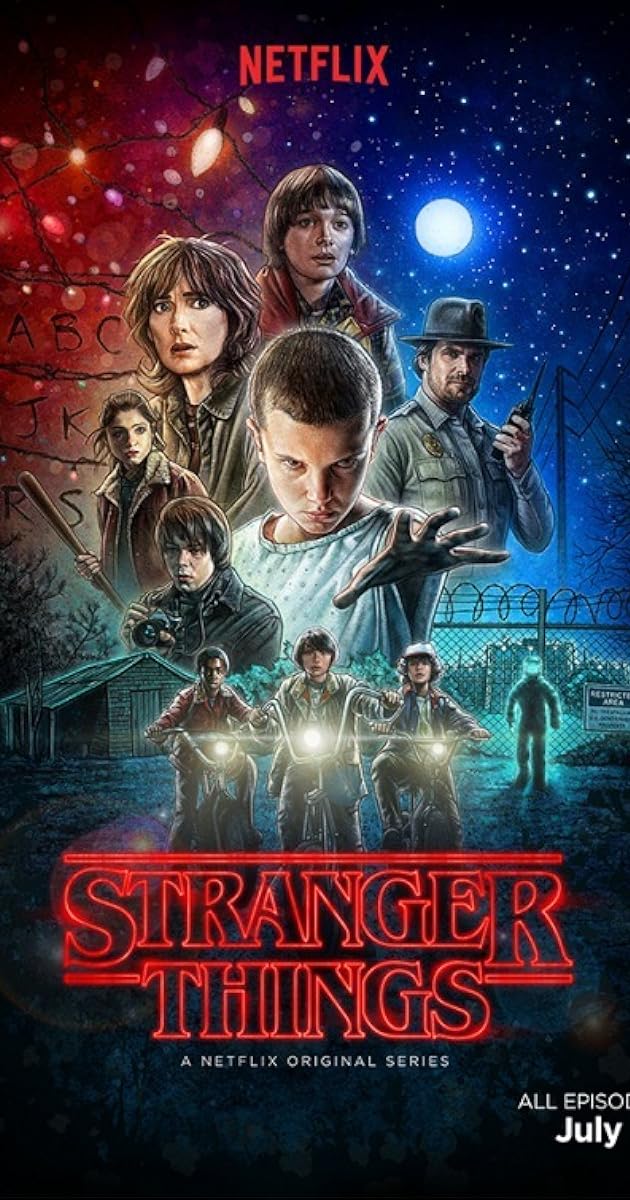
Stranger Things is a recent Netflix Original series that blew up in popularity. The show contains elements of mystery and sci-fi, and takes place in 1990’s Indiana. The television show seems to have an interesting relationship with modern gender roles. The main trio of boys searching for their friend Will have these stereotypes pushed onto them, but fail to follow. They play Dungeons and Dragons, get scared easily by almost everything, and end up making Eleven do most of the dangerous activities. Teenager Nancy is stuck between two boys, Jonathan (Will’s brother) and Steve. Yet as the story progresses she ends up firing a gun and showing more bravery than both the boys combined. In only eight episodes, Stranger Things promotes the individuality and power of women through its complex characters while also showing how society attempts to shut these females down.

The children of the story are arguably the protagonists. Three of Will’s friends, Mike, Dustin, and Lucas, leave the hard and dangerous work of finding Will to a young girl named Eleven. Although tormented and abused to gain these abilities as a child, Eleven is intelligent and exact with her telekinetic powers. Without spoiling the show, there are many instances in which clues are found and lives are saved all because of her. Overtime the storyline begins to paint her as Mike (the leader of the group)‘s love interest. But when analyzing her it’s clear she’s not doing all of this necessarily for Mike, she’s doing it because she cares and wants no one to go through what she has.

The teenagers of the story are sadly very cliche. Nancy is the older sister of Mike, and Jonathan is the older brother of Will. Steve is Nancy’s current boyfriend, who causes her to neglect her best friend Barb in order to be popular. Through helping out their siblings in any way they can, Nancy and Jonathan start develop a romance. But this does not get in the way of Nancy’s determination to help her younger brother, as she travels to different dimensions and fires a gun all on her own. And in the end of the season, despite the clear opposition most of the audience felt, Nancy dated the guy she wanted to. Her only downfall as a character is neglecting her best friend Barb, which causes this ginger sidekick to get involved in the disappearance of Will.

The adults of the story seem to, quite frankly, be the laziest until the last couple episodes. One of the questionable female of the show is Will’s mother Joyce. She goes into hysterics when Will goes missing, frantically begging Chief Hopper of the police to devote his work to searching. Over the course of the show, the debate arises on whether or not Joyce in mentally sane. She keeps claiming to be receiving messages or calls for help from Will throughout her home, through christmas lights or telephones. Society, like Hopper, see this behavior as pure craziness and just a symptom of a grieving mother. Yet this remains a mystery, as season one concluded with no real answer to how much Joyce saw was reality.

In the society of Stranger Things females lack agency in how they appear how they act, etc. But the strongest leads are women who fight for their agency and basically do whatever they want no matter what they’re told. On the one hand, we have the powerful telekinetic girl Eleven, who directs majority of the plot and fits none of the womanly spheres. On the other hand, another featured female Nancy seems fierce, but is continually having to ‘decide’ between two male love interests. Yet the only visible stereotype is the mother figure Joyce but even she stands up for herself and her own (possibly insane) ideals. Almost all the females in the story are told at some point that they’re crazy, that they’re wrong and should listen to what the men have to say. In some of these cases it’s reasonable, as the female’s action may harm other. But nevertheless there is definitely evidence of “mansplaining” in the young boys and grown men of the show.

Stranger Things barely passes the Bechdel Test, but this does not mean it doesn’t promote feminism. The main conflict of the series is the disappearance of a young boy named Will. Therefore, most conversations between any of the characters are about Will. The only small incidence that passes the Bechdel Test is when Nancy asks a random side character named Mia if she’s seen Barb today. This counts because Mia’s name is mention seconds before, so she is a named character. But this still barely counts, and the entire gaze of the show is still on Will.

The hit Netflix Original Series didn’t get it’s fame for being radically progressive with its badass females. They just added to the intriguing storyline and attracted a stronger female audience as they saw themselves in Eleven, Nancy, or Joyce. This kind of work, shows that highlight feminist ideals but isn’t centered on them, is becoming more popular in movies and television. In order to shine light on an oppressing situation, a fictional representation can be created to real in the audience to the reality of it.


Mr. Robot or Mr. Feminist?

Hacking, perhaps one of the most feared and glorified trade in today’s society. Mr. Robot, an American drama series by USA network follows a young man named Elliot. Mr. Robot has been glorified for its complex ad accurate portrayal of the tech world as well as it’s critiques on corporate america. With six Emmy nominations as well as a renewal for a third season, there is no doubt that Mr. Robot has something special. Mr. Robot follows Eliot,  a cyber security employee at a large firm by day, but by night, a serious computer hacker. Mr. Robot has been a breakout TV series because of its controversial themes that criticize corporate america, as well as its realistic display of gender and humanity. The cast of characters in this show follow a robust group of underground hackers as well as the top professionals in a technology corporation. Mr. Robot is a feminist work because it portrays women characters as fully human and complex as well as uncovering the damaging effects of masculine and feminine ideals in America.
Mr. Robot’s portrayal of a complex and anti-heroic female challenges all norms of women in television. A female anti-hero  is so rare in popular American television. Angela is a lifelong friend of the main character, Eliot. Angela’s physical appearance sways the audience’s first perception of he
Angela Moss
r. She is a tall and beautiful a blonde working as a cyber security worker at one of the largest businesses in America. Not only is Angela cunning, but she is resilient. She endures intense sexism in her job. As Angela discovers a scandal in her workplace, she meets with the head of the company she works at. As she tries to cut a deal with the boss, she is brutally humiliated and sexually harassed. The realization for Angela sets in; she can never make it as a women in this job by not playing dirty. Angela’s only viable option is to become ruthless, becoming an anti-hero. Angela ends up getting offered a prestigious job at the company because of her new found identity. Because Angela’s morals have been clouded, she commits very questionable acts in order to gain status and power.  A woman who is completely complex and represented in a tv show is almost unheard of. The notion of Angela being an anti-hero is also very rare in today’s media. Angela’s character exposes how sexism and patriarchy the workplace force women to decide between two extremes. Angela is forced to decide between giving up her dignity or throwing away her morality. The show is arguing that patriarchy forces women to endure defeat and give into the system, or become inhuman and evil. This system offers no true victory for any woman. Mr. Robot is a feminist work because it represents Angela as a complicated character who is not always likeable, yet the audience still roots for her. Mr. Robot also uncovers a larger truth about the detrimental effects sexism has on women as a whole.
The  consequences of patriarchal ideologies are exposed through Tyrell Wellick. Tyrell Wellick is a upstarting business man who works for the company. On the surface, he is cunning, handsome, put together and successful. As the audience sees more of Tyrell, we uncover that he is deeply unsatisfied with himself and is being driven crazy by his need to protect his family. Tyrell’s wife, a beautiful woman who has much complexity to her, schemes with Tyrell in order to blackmail his way to a promotion. Tyrell is so obsessed with being the provider for his family he risks everything. Tyrell cheats, kills, and lies in order to work his way to the top. Tyrell is also deeply enraged and repressed. This is symbolic to many men in society today. The stereotypical man is not allowed to show emotion. The “entrepreneur” needs to be cunning and friendly yet willing to use his power whenever needed. Tyrell’s insanity leading to a  downward spiral are a reflection of what societal norms do to men themselves. Tyrell needs to be the image of perfection, free from emotion and flaws. Tyrell reveals his sense of self when speaking with Eliot early on in the series, “But even extraordinary people, and I believe you are, are driven by human banalities. And unfortunately, we're all human. Except me, of course.” Mr. Robot critiques the construction of the male gender through Tyrell. It reveals the consequences of conditioning men to be robotic and emotionless, and the disgusting effects it has on men.

Mr. Robot most successfully displays the human side of people. While it does represent many different types of people-men and women alike, it is not afraid to show flaws in both. It is simply too hard to watch this show and decide who is innately good and bad. The characters and their circumstances are too complicated to determine morality. Mr. Robot is not a feminist show because it glorifies women and puts them on a pedestal of altruism. Instead, it exposes the very real and flawed characteristics of everyone. Most feminist type media places a strong and hero-like woman as a lead character. Mr. Robot challenges this old notion by presenting all types of women, good and bad. Mr. Robot’s subtleties also reveal an intense truth to the audience. Mr. Robot reveals the consequences that gender norms have on men and women, as well as the eventual destruction of the characters themselves. A feminist work does not require the utopian image of a woman and a society free from flaws, instead it simply asks for a true and honest portrayal of society today.

Sunday, April 9, 2017

Can You Even Critique The Office?


The media plays a big role in creating social norms in our society, whether it’s through advertisements, television shows, or movies. According to the Nielsen Company, 96.7% of people own a television, this shows why TV shows have so much power in our society. They have the power to emphasize and reinforce stereotypes or they have the power to change social norms. More often than not we see shows reinforcing gender stereotypes. People watch so much television that a lot of the times they believe and think what they see. A show that has become widely popular over recent years is The Office. The Office is an American TV series that aired from 2006 to 2013 and has won several awards throughout its airing, including 5 Emmy Awards. The Office depicts the everyday lives of office employees in Scranton, Pennsylvania who sell paper and printers while also going in depth into their personal lives. While The Office does continue dominant gender stereotypes and ideologies of woman as being sex objects, seductresses, and dependant on men, The Office uses satire to show real life issues going on in the workplace and bring attention to major problems that are taking place.

The Office has a lot of characters that continue the social norms in society that women are sex objects and seductresses. While doing this, it also objectifies women and degrades them to a lesser role in society. For example, Michael Scott, the boss of The Office, gets into a relationship with his corporate boss, Jan, but later breaks up with her. Later in the show, Jan comes back with new breasts. Jan uses her looks and her new breasts to seduce Michael into thinking that she is the perfect person for him. She controls their relationship and controls all the power in it. Jan is the typical gender stereotype for women because she is a controlling, attractive, and a powerful woman. While Jan is a seductress, she is also used as a sex object because all Michael wants from her is her sex. Throughout the show, Jan and Michael have sex everywhere and he does whatever she says to be able to keep that up. He tries countless times to break up with her but he cannot do it because of her looks and sex, not her personality. In fact, Michael tells other people in the workplace that he wants to break up with Jan, but he always falls through. Later in their relationship, Michael realizes that he only cares for her sex and breaks up with her. Michael’s associates were the ones who pushed for Michael to break up with her and he finally did.  Here, The Office uses satire to show relationships that happen in the workplace and how they affect everyone around them.

Another example in the show that continues the ideology of a sex object is with Meredith. Meredith is an office worker that constantly has sex with anybody that’s willing. All she does is fulfill male’s sexual needs. One time, she had sex with an Outback Steakhouse worker for coupons and sales deals. She carries on the stereotypes that women are “sluts” and dependant on men. These two examples show continued social norms and gender stereotypes that are seen in this show and everywhere in our society even though they might not even be true. While continuing these gender norms the show also shows that women do not have to be restricted to the homelife and can do things outside of caring for the family.

The Office has consistently had five female leads in the show: Pam, Kelly, Phyllis, Angela, and Meredith. Throughout the show, these woman represent strong and dynamic workers that are involved all over the workplace in places such as accounting and sales. Although some of these women do possess some typical female gender roles such as being emotional, they were given enough development and they were very complex characters which allowed for them to be more than just average stereotypes. Many shows have a big male cast and a very small female cast, The Office is an exception. TV shows and movies continue to cast men way more than women which does not accurately depict the real world. In the real world, women represent 51% of our population and The Office enforces that statistic. The Office usually always has 6 female characters and 6 or 7 male characters depending on the season. An example of this is seen in the episode "The Beach Games".  In this episode, Michael has received job offers at a new office and he needs to decide who will be his predecessor.  He created four teams to compete in various games with four male leaders who are the obvious candidates for the job.  Michael assigns Pam the job of being a note taker to help him decide.  Throughout the episode, Pam acts as a valuable source of insight by completing all the tasks, showing off her leadership skills, and shows her plans for the future office.  While Pam is obviously the best candidate for the job, Michael still over looks her for her male counterparts. This episode gets at a real issue with the treatment and fairness between men and women in the workplace. The show uses this strong core group of women to show that they can have success in the workplace and compete with men in the same fields. It is defying the sense of a patriarchal society because men are not dominating the office place.

The Office uses satire to play on issues that exist in actual corporate offices such as gender, race, sexism, and other stereotypes that they address through humor and and different storylines.  The Office represents a very diverse cast, but the show still reinforces gender stereotypes for the sake of humor.  Some episodes where this occurs is the "Sexual harassment" episode, where Michael and his friend poke fun at a scandal that is going on in the office. While the episode is obviously blown a little out of proportion for humor purposes, it still gets at an issue that a lot of people face in the modern workplace.  Another episode that we satire in is, "Gay Witch Hunt". In this episode, Oscar is offended by one of Michaels comments where he uses an offensive word,  Michael later finds out that Oscar is gay and proceeds to tell the whole office about it. This episode, while being hysterical, talks about an issue that many people face in our society and have trouble dealing with. While it might seem like The Office is reinforcing stereotypes and dominant ideologies, it uses those ideologies combined with humor as a gateway to express real life issues that a lot of people would not pay attention to without humor. There are countless episodes in The Office that use satire to get at real issues, stereotypes, and ideologies in our society which makes is so good.  Satire is used in countless shows but it stands out in The Office because of how it expresses things going on in the country.

In our society, the media controls what people think and what people believe in because everybody watches TV and movies. A lot of people do not realize that these shows are reinforcing dominant ideologies because they are so used to seeing them. If our society is going to change the typical gender stereotypes and ideologies to what our society is actually like, it starts with the media. In particular, The Office puts women in the workplace and uses satire to express societal issues but continues ideologies and stereotypes in the workplace that are seen as normal even though they might not be true. A lot of women in society have power and work outside of their homes but the media does not portray them that way. The Office uses satire to criticize todays culture and how it translates into the workplace. The Office uses satire to demonstrate the ridiculousness of discriminating by gender, race, or sexual orientation in a comedic way while also bringing attention to real life issues going on in corporate offices.  

Tuesday, March 7, 2017

Breaking Bad: Is Gus Fring a Stereotype?


The television show Breaking Bad is about a high school chemistry teacher in New Mexico named Walter White who has been diagnosed with cancer. Not knowing how he would be able to pay for it, or leave any money for his family if he ends up passing away, he starts a life of cooking and selling meth. Throughout the story he meets many diverse characters. Some of theses characters can fall into the trap of having stereotypical, but the characters are so round and multifaceted as to not be stereotypical.
An example of a deep character in the series is Gus Fring, a black man who is the very top of the drug operation in New Mexico and Walter’s boss. He is very stern and strict and even resorts to murdering one of his most trusted employees to try and scare Walter and his assistant straight. One the surface that may look like a typical brute stereotype of a black man, but if you look into his motivations for his actions you can see he is much more careful and calculated than he lets on. Ever since Walter is first deffered to Gus, he was told how careful of a man he was. His highest priority is keeping his industry running without any kinks or chances of exposure. He is very intelligent and deliberate looking deeper into his character, which is contrary to most stereotypes of black men in America. From a Mexican drug peddler who just wants to care for his disabled uncle to a white drug addict with deep morals struggles and care for children, the show Breaking Bad has many characters that may seem stereotypical at first, but turn out to be very dynamic and round, transcending the grip of racial stereotypes.

The Proud Family Television Series: Is it Really Prideful?


The Proud Family is a television series that aired on Disney Channel in the early 2000s, based on teenager Penny Proud and her African-American family. Although the television series ended in 2005, it is still relevant today because, since it first aired when I was so young, it was one of my generation’s first encounters with racial stereotypes. Throughout the television series, The Proud Family perpetuates some racial stereotypes while also rejecting others because some individual characters, like Trudy Proud, do not follow common stereotypes versus black mothers while, in contrast, other characters, like the Gross Sisters, perpetuate racial stereotypes throughout the series.

The series rejects many common racial stereotypes throughout the episodes. In general, the series itself was the first Disney Channel television show to have a black lead, breaking a large racial barrier on a very popular network. In the series, one prominent character who rejects common racial stereotypes against African Americans is Trudy Proud, Penny’s mother. Black motherhood is historically denounced and constantly questioned so it is extremely rare to see a strong black motherhood role in the media. Trudy Proud is a strong woman, who is the main financial, emotional, and physical supporter of her family and works as a veterinarian. In addition to her job, she is the mother of three children and an influential mentor to her oldest daughter, Penny, helping her as she navigates her teenage years. This rejects racial stereotypes because Trudy is caring and concerned with family affairs and makes good money at a respectable job, characteristics not commonly given to African-American characters on TV shows.

While the series rejects some common stereotypes against African-Americans, it also perpetuates many more. As previously mentioned, black mothers are commonly stereotyped as absent caregivers. This stereotype is perpetuated by Penny’s best friend, Dijonay, who has many misbehaved siblings whom she has to care for herself because there is no other authority figure to do so. This also perpetuates the idea that black children are disobedient. In addition to Penny’s friend, Penny’s father takes the role of the stereotypical “coon” because he is known to be a business failure who is lazy and irresponsible. Oscar Proud preserves the stereotype of a lackadaisical black father. Finally, the criminal stereotype which states that black people are dangerous, is perpetuated by the Gross Sisters. These are girls at Penny’s school who bully and take kids’ lunch money. To make the stereotype more real, they wear ragged clothes and their skin is blue to illustrate that they are “ashy”.

In conclusion, The Proud Family is still relevant today, even though it ended over ten years ago, because it planted the seed of African-American stereotypes in young viewers of Disney Channel, like myself. Before I realized it, the television show set a standard for what I expected to see in the media. While it rejected a few stereotypes, it also accepted many more, giving me false ideas about what to expect in my life and in media. The series also connects to other works of culture because the generalizations made against certain races remains a common factor in many popular television series, movies, and many more.

Diversity in The Office

The Office was a groundbreaking television show that challenges relatable and uncomfortable topics that are relatable to many Americans. The extremity of the subject and vulgar humor forces the audience to experience the awkwardness of the situation. It has received countless nominations and over 20 awards such as Emmys, Screen Actors Guild awards, Golden Globe awards, as well as the People's Choice award. The Office has incredible character development and real life situational humor. The second episode of the series, aired in 2005, “Diversity Day”, was named the nineteenth greatest episode of any television show in 2009 by TV Guide. The construction of race in the episode “Diversity Day” uses intense exaggeration, highly offensive and vulgar stereotyping as well as developing characters in order to symbolize the audience.

Michael, the boss, thinks he's trying to help and that he understands race as well as actually making the workplace a safer and more welcoming environment. However, because of his own insensitivity, the workplace is forced to do a “Diversity Day” to educate the staff on proper race relations. Ironically, Michael is the only one who really needs it. Michael tried to come from a place of understanding but his  ignorance is visible, “Abraham Lincoln once said that if you're a racist, I will attack you with the North, and those are the principles that I carry with me in the workplace.” Taking matter into his own hands, Michael writes out different races on index cards such as “Asian”, “Indian”, “Jamaican”, and even “Jewish” and “Martin Luther King Jr.”  Michael has the employee's tape the index cards to their heads and have others describe the race to them so they can guess what is written on the card.  When Pam, a mild mannered worker is forced to play along,  describes Chinese, “Fine, if I had to say something very stereotypical and bad about this card that’s on your head, if I’m being forced to do this against my will, I suppose I would say, and I don’t actually mean this, but I suppose I would say that you’re not a very good driver.” By using common and offensive stereotypes, the audience is shocked but can still relate to the resistance of the characters. Pam’s unwillingness to participate symbolizes the uncomfortableness of race, especially coming from a place of privilege. Michael Scott symbolizes the good hearted and well intentioned American who matter of factly knows next to nothing about race in America. The writers do this in such an outrageous and ballsy way that it brings shock value to the audience. The show is not afraid to cross boundaries, all races included, even the most touchiest, “You'll notice I didn't have anybody being Arab. I thought that would be too explosive. No pun intended. But I just thought, "Too soon for Arabs." Maybe next year. Um... You know, the ball's in their court." It makes the audience remember the times in life they too have experienced very cringy and similar experiences. Race is such an unspoken and silenced subject, especially in the workplace. By bringing forth this uncomfortable topic in the way they did, it shines the light on American culture and the unspoken mental stereotypes and biases we all have. They are rarely to the extreme that’s portrayed in this episode, but it does challenge our notions and and makes us stop and think about the world around us. 

 This episode reminds me of the uncomfortable situations of race I have encountered. In grade school, race was explained in a very clear cut manner with no grey areas allowed. As I continued to get older,  I was woken up to all of the injustice and inequality in our society. There are so many grey areas when it comes to race in our society. Race has become such an important topic that should be spoken about freely and normalized. With the election and inauguration of the new president elect, race will be forced into the spotlight as a central topic heavily discussed in America today. As society progresses, and regresses, race will always be an underlying problem that demands to be heard. Television shows like The Office, although crude and outrageous, force the American consumer to question their own notions of race as well as allow them to do it in a satirical fashion. American culture needs more iconic television shows like The Office that allow the audience to be conscious of their own biases and beliefs, as well as modernize and portray a diverse cast. The Office pushes the boundaries of television in an effective and thought-provoking way, making race a central topic of discussion.


Thursday, February 2, 2017

The Simpsons: Comedy or Cultural Criticism?

The Simpsons is an American animated sitcom, satirically depicting the life of a working-class family, named the Simpsons. In episode 12 of season 5 of The Simpsons, Bart learns the truth about fame in America and what comes with it. In the beginning of the episode, Bart is on a fieldtrip with his class at a box factory, which he and his classmates find very boring. In search of some entertainment, Bart stumbles upon a recording studio where Krusty the Clown shoots his sitcom. Coincidentally, Bart scores a job as Krusty the Clown’s assistant, just the excitement he had been looking for, but almost quits soon after because he grows tired of the work. However, during one of Krusty’s shows, he needs to use Bart as an extra. In Krusty’s sketch, Bart becomes an accidental star when he says his famous line “I didn’t do it”, after clumsily tearing down the entire set. He becomes famous for his catchphrase, acquiring the same fame he admired throughout the whole episode but soon grows tired of it.


In this episode of The Simpsons, Bart is used to satirically depict American culture. Generally, this episode suggests that American people are never happy living in the moment, but are always looking for something better. When they accomplish what it was they were looking for, they quickly forget its importance, taking it for granted, and move onto the next most important objective. This pattern repeats itself over and over again until they lose everything, neglecting to realize what they had until it was gone. This idea is supported throughout the episode. First, when Bart is at the box factory with his class, he is completely detached from the moment and he is only worried about escaping the factory and finding something better to do. He finds what he was looking for in the recording studio and becomes Krusty’s manager, however, ironically, he does not appreciate the opportunity. He is almost immediately turned off by his new job and is seriously considering quitting until he achieves stardom. Initially, he is excited by his newfound fame however, ironically, very soon grows sick of it, like he does of everything else in the episode. When his career ends abruptly, he cannot help but regret that he did not make the most of it while it lasted. He reflects on his career with remorse and a heavy heart because he did not realize what he had until it was gone.

This episode does not simply make fun of Bart’s ignorance, but also makes the audience acknowledge that their actions are often similar to Bart’s. Each time Bart neglects to acknowledge what he has, it makes the audience feel a little bit uncomfortable and think “Isn’t that what you just wanted, Bart?”. By the end, Bart is regretful and sad that he did not appreciate what he had until it was gone. This episode suggests that if we as a society were more concerned with living in the moment, then we could be overall happier by appreciating what we have for what it is worth.

"Nosedive": A Social Media Obsessed Society

Charlie Brooker, the writer and creator of the television series “Black Mirror” explores the dark side of technology intertwined in our modern day lives. Black Mirror has three seasons on Netflix, with a fourth planning to air sometime in the beginning of 2017. Often taken to the extreme, the satirical manner of this show exposes the devastating possibilities of our nation involved with today's modern gadgets and technological products. The first episode premiering in the third season titled, “Nosedive” explores a world locked in a perpetual cycle of faux Facebook pages, likes, star ratings, and competition for acceptance.
This unsettling society is not too far off from the typical American experience today. Although highly exaggerated, the characters in the episode are dependent on “star ratings” from others. Every time you buy a cup of coffee, or engage in small talk, you hold your phone towards them and give them a rate out of 5. This point system reveals the shallowest impulses of our society. Not only does this point system affect your social impact on others, but it can limit you from being accepted from gym memberships, exclusive high end housing, etc... A society where the internal instant gratification social media allows is now outward and external. This episode shows how interactions with others can be highly superficial. The protagonist of the episode, Laci, is a social climber willing to do anything for a higher rating, until it eventually consumes her life leading to her downfall.

The ironic nuances played out in the episode critique the extent our society judges others based on looks a popularity. American culture is obsessed with beautiful celebrities, as well as our own likes and status updates. With constant gratification with the click of a button, we become trapped in our phones and social media accounts. The episode tries to show how Laci realizes that life is more than just a screen and artificial relationships with shallow conversations. Perhaps a world a little less self absorbed and dependent on the number of likes would be beneficial. How far is our society from the one depicted in the episode?

Friday, September 30, 2016

Preparation and Confidence Wins the Race


Preparation and Confidence Wins the Race 


This year's presidential debate between Hillary Clinton and Donald Trump has been long awaited and hyped up by all of America. Advertisements for the debate looked like they were produced by UFC, and millions of people tuned in. Whether or not the debate resembled a reality t.v show is beside the point, what everyone cares about is 'who won?'. Through rigorous trials of interruption and fact checking, it is clear that the most prepared and respectable candidate was Clinton. Putting all political views aside, Trump always resorts to personal jabs and his own self ego when giving speeches. Clinton focuses more on the political issues at hand. During the debate she actually took up her time to answer the questions and knew how to appeal to her audience. Trump continued to interrupt, insult, and invoke his egotistical attitude which his fans loves.

Both candidates are guilty, however, of using their audiences' hatred of the other candidate to their advantage. Clinton repeats the phrase 'Trumped up, Trickled down' throughout the debate, and Trump states he 'has better judgement and temperament' than her. Over all, the debate barely covered all the questions asked, and each topics ended up with a discussion of Clinton email scandal or Trump's tax issues. The whole presidential debate was a big ball of pathos, trying to make themselves look good by making each other look bad. This even caused the audience to clap and shout many times, which they aren't allowed to do. As much of a mess this election is, most people are seeing the professionalism and poise of Clinton that is needed in a president. Trump is always cocky, but it was clear he was not prepared to answer some of Clinton and the moderator's questions. He continually interjected with 'wrongs' and 'I didn't say that'. This debate is just an example that in order to win a debate, preparation and the right attitude is key.

Wednesday, September 7, 2016

Stew, Cats, and The Office


The typical cubicle workplace. Endless clicking away and checking the time to see if you can leave. America has many of workplaces, and the common stereotypes that is both associated with the workers and the job itself are still very relevant to today's culture. The Office, an American- made comedy created around the style of it's British made counterpart tells the stories of a cast of odd but regular people at a paper company in Pennsylvania. Once (and still) a very popular show, the cast is shown in such a way that each stereotype surrounding its very specific set of people is very clear for comedic effect.


Let's start with the obese guy. Three of the many stereotypes incorporated with large people include being slow, clumsy, and being overly obsessed with food. Throughout the entire show, Kevin Malone is shown as both of these stereotypes in the film such. This can be seen around the middle of the series. Kevin has just made a big pot of stew, and is happily bringing it into the office. He however trips, hurling is newly made stew into the floor. Out of desperation (and this is sad), he drops down and starts to try to scoop the stew back into the pot with his hands.  Although this is very funny, the show uses the stereotypes already common in society and puts it into this character to get the most out of this comedic act. Here is one out of the many acts the show uses these stereotypes to portray Kevin in a funny way. Image result for kevin famous chili gif


Another common stereotype would be that women who aren't married by their mid 30-40’s automatically become non social and cranky “cat lady”, who make up for the lack of loving by buying and keeping lots and lots of cats. Angelina Martine is the perfect example of this. In one such episode, the fire alarm in the office begins to go off. Now although the fire is a false alarm, the staff doesn't know this and everyone begins to go into a panic. The camera pans over to watch Angelina start to pull multiple cats out of her drawers and toss them into the now broken ceiling to save them from the fire. In another example, Angelina starts to talk about her relationship with her sister. She continues by telling us that she hasn't talked to her sister in 16 years, because of some fight she can't even remember, and remarking the she is that good (at fights). These examples use these stereotypes to mold the character in the show.

Here are just two examples of stereotypes used, although there are many more used in the show. This however applies to much more than The Office, as media everywhere uses these common stereotypes to increase the number of viewers or enhance their popularity in american culture. I think comedies however use this most of all, as these stereotypes can make some funny scenes.

Gender and Mental Illness Through a Kid's Cartoon

The cartoon Steven Universe by Rebecca Sugar may appear like any other children show, but the progressive plot suggests otherwise. Covering topics such as homophobia, rape, anxiety, and the concept of gender, this Cartoon Network series opens the eyes of the viewers to modern society ‘in the real way.’

Most of the characters in the story are a fictional species of alien beings called ‘gems’, the main characters being part of an organization called the Crystal Gems. They are all named after gemstones and rocks found on Earth. Pearl, Peridot, Garnet, Amethyst, almost any gem you can think of has/will appear on the show. These gems have feminine characteristics shown through their hair and clothing, and go by she/her pronouns. But the creator Rebecca Sugar said that she did not intend for the gems to have specific genders. “Gems are Gems!” said Sugar. “Steven is the only male gem because he is half human! Technically, there are no female gems!” With the modern American world beginning to accept the flexibility of gender, Steven Universe gives early exposure of this to its predominantly younger audience. Gender is a topic that many people have valid and true opinions on, representing these opinions through a cartoon gives them an accepting and less stressful connotation.

The gems in Steven Universe are able to do something called ‘fusion’, in which two gems combine to make a bigger and stronger gem. This, in a real world sense, represent love and sometimes can specifically be sex. You can only fuse with someone if you both are open to it. On Homeworld, gems are only allowed to fuse with another gem of their own kind to become more powerful in battle. If one were to fuse with a different kind of gem, the would be banished or killed. One of the Crystal Gems is Garnet, who is a constant fusion of two gems names Ruby and Sapphire. Ruby was a guard to Sapphire and eventually fell in love with her. When they ‘accidentally’ fused into Garnet, their leader Blue Diamond threatened to kill them. Eventually they escape and join the Crystal Gems. They remain fused because it feels right to them, they love each other so much that they never want to be apart. A fusion that contrasts Garnet is Malachite. The Homeworld commander Jasper threatens her prisoner Lapis Lazuli to fuse with her in order to destroy the Crystal Gems. Lapis agrees, but as soon as they fuse into Malachite, Lapis takes control and traps herself and Jasper as Malachite deep under the sea. Many episodes later, The crystal gems find Malachite and frees Lapis. But Jasper begs Lapis to fuse with her again. Jasper said she felt amazing, and believed that Malachite could be the most powerful gem in the world. But Lapis is very scarred and traumatized from the experience, and bravely refuses Jasper. The contrast between these two fusions represents the contrast between a good versus a bad relationship. The younger audience will go through good and bad relationships when they grow up, therefore the show's truthful depiction of these relationships is important and goes unnoticed.


The last true topic shown in Steven Universe is their coverage of mental illness. In a recent episode "Mindful Education", the audience gets to see deeper into the anxiety of Steven and his friend Connie. Connie accidentally hurt a kid at school in the hallway and felt very guilty about it. Steven has also gone through similar, but must worst experiences being a Crystal Gem and having to fight and hurt other gems. Neither one of them wants to talk about/confront their anxieties, therefore they fall apart when they fuse into Stevonnie. Garnet tells them they must think about the bad things in order to move on. They sing a duet called "Here Comes a Thought" in which they calm their nerves together as a fusion. Anxiety can begin at a very young age and can affect someone awfully if they don't deal with it right. Another mental illness hinted at in the show is depression through Lapis. She is real messed up after she is released from Malachite, and has a very pessimistic and sullen attitude. Even before this, she didn't care much for her own safety. But Steven shows her some of the beautiful things on Earth, and she becomes friends with another gem named Peridot who has also had a bad experiences with Jasper. Finding comfort and happiness in the world and in your friends is another true coping method the show introduces to it's audience. These illnesses are often avoided on even adult television, so the fact that Steven Universe chose to cover really justifies how progressive the cartoon is.

Steven Universe is one of the only cartoons that truly captures what it means to live in America. Rebecca Sugar has truly shown how a children's show can still cover real world topics with shoving ideas in their face. I highly recommend this Cartoon Network show, and look forward to how it will continue to cover true topics in the future.


Gender Stereotypes in HIMYM

The TV show How I Met Your Mother is an American sitcom that started airing on September 19, 2005. The show follows the protagonist, Ted Mosby, and his group of four other friends living in New York City. How I Met Your Mother shows many stories of the twenty-somethings as Ted tells them to his children in the year 2030. In this American TV show, many stereotypes about gender are supported, which is why it is a false story.

How I Met Your Mother supports many gender stereotypes, one of them being that the male characters have more successful and higher-paid jobs. Ted is an architect, Marshall is a lawyer, and Barney is a business man. In contrast, Lily is a kindergarten teacher and Robin is a struggling news anchor. The stereotype that men must be the breadwinner is supported when Marshall decides to take a higher-paid job from a company he despises, just because he wants to be able to support Lily and their family. Another gender stereotype that is shown is how men manipulate women to get them into bed. Barney uses many tricks from his ‘playbook’ to get women to sleep with him. The women he manipulates are portrayed as dumb, which also supports the stereotype that women don’t think at all when they’re attracted to a man. The show supports other gender stereotypes including Lily having a shopping addiction and Barney sleeping with over 200 women (and being praised for it).

The TV show How I Met Your Mother is just one of many works of culture that supports gender stereotypes. Stereotypes in works of culture are common and can never be completely avoided, however, the less often they appear, the more true the story becomes. The appearance of gender stereotypes in How I Met Your Mother contributes to it being an untrue story.


Struggles with Art

My work of culture is the Netflix original show called The Get Down. It’s about music in the 70’s and how Puerto Ricans and African Americans were starting to introduce a new type of music, as well as defending against the stereotype that they were always up to no good and everything they produced would mean nothing. This is similar to things these days with young minorities struggling to overcome the stereotypes that are set against them in today’s culture. The Get Down Describes the struggles with New York and kids in the 70’s in the art industries and some of the same struggles still exist in the art industries today with kids.

Today kids still can’t always express themselves on sheets of paper, so instead they took to the streets. In The Get Down kids would often paint graffiti on trains, in train tunnels, and other places. That is the same as today, although limited and punished more severely, often kids would leave their tags or a way of identifying themselves by what they spell or draw out on the sides of buildings and train tunnels. Another way of expressing yourself is through writing and music and lots of kids these days are too embarrassed to write or get bashed on if they do. In The Get Down the main character is embarrassed when he writes because the kids often bashed on him for writing instead of playing sports and not being the strongest one in the class. That is often the case in other schools and institutes here in America now and although there are now clubs to support writing they are not always known about or even present at schools or local institutions. However, writing is a way of expressing themselves and some kids who have it available to them often join anyway and some even take it upon themselves to go even a step further and mix writing with music and rap and other things like spoken word these days. Just like The Get Down some people even have rap battle freestyles against other people or rival crews and have the audience dance and judge who won. One other way of expressing yourself of course is through music and dance and in The Get Down kids and other individuals would struggle to get jobs where they could become dancers and singers. Even now that still holds true to some extent where based on ethnicity and background some people can’t get jobs at certain record labels or other prestigious dance companies. The Get Down capitalized on the difficulties back in the 70’s and it’s astonishing to see that some of those difficulties are still present today.

Although it’s better than it was before there are still problems that rise when kids try and express themselves through art. The Get Down shows how it was like in the 70’s and being as a child who dances i see these struggles present everyday of my life.

Tuesday, September 6, 2016

Beloved Tom and Jerry cartoons....RACIST!


For multiple generations, many American children grew up watching cartoons like Tom and Jerry or Looney Tunes. In retrospect, many of these cartoons had racist depictions of African American people. Tom and Jerry was seen as a harmless and entertaining cartoon about a cat and mouse fighting and trying to outwit each other. However, the cartoons also portrayed African Americans with offensive stereotypes. It is important to analyze works of culture such as Tom and Jerry because they directly influenced children and passed on ideologies to the next generation. Tom and Jerry cartoons are true stories because they reflect ideologies and stereotypes that existed during their time period.

In the episode “The Puss Gets the Boot” of the show Tom and Jerry an African American woman is shown as an uneducated maid. In something as innocent as a children's cartoon, the writers and animators were not trying to send a message about how they felt about African Americans or women but rather reflected the national consensus. The maid, Mammy Two Shoes yells at the cat “if ya go on an break anythang else ya are O-U-W-T! Out!”. Mammy Two Shoes’ lack of grammer reflects social opinions of African American’s intellect. During the time, an education was a difficult thing to obtain for African Americans in the United States. Segregation in the school systems and society prevented many African Americans from reaching a proper education. Tom and Jerry accurately reflects the stereotype that African Americans are uneducated. The episode also indirectly tells viewers that she is not working in her own home, but someone else's. “I can’t be having a good-for-nothin cat reckin up this whole house!” Mammy Two Shoes says as she scares the cat away from the fragile plates on display. During the time this episode was aired, the idea that African Americans should work for other people was commonplace. In a following episode “Midnight Snack” it is explained that Mammy Two Shoes is in charge of cooking, cleaning, and general kitchen work. In the 1930s and 1940s the common expectation for women was to work in the house, cooking and cleaning. This expectation was shown in the cartoon episode. There was no man in charge of housework, instead it was Mammy Two Shoes who did the chores.

These cartoons are true American stories. Works of culture that reflect ideologies and conventional views held during a time period are true stories. The racism and sexism in these cartoons were not of a foreign mindset to the American people. These prejudices and views were quite common in America. Other true stories can be found in movies and T.V shows made throughout the decades. When works accurately reflect the mindset of Americans at the time, they are true stories.
-Gabriel D

A Brief Analysis of Mad Men's Historical Accuracy

Mad Men is a work of historical fiction that was first initiated during the summer of 2007, and remained for the duration of seven Television seasons. The show’s primary focus is an advertisement agency, Sterling Cooper, during the socially and politically eventful decade of 1960. Mad Men preserves this era in history with impeccable precision, which in fact grants the viewer a retrospective glance in the opposite direction of time from a standpoint in lack of opinion. The show transcends bias, ignorance, misinformation, and other such substantial boundaries. Mad Men is truthful due to its stern ambition in providing an exceptional illustration of an American reality of the past. In many ways, Mad Men takes upon itself the responsibilities of a time capsule. The show brings to question a number of social stereotypes and standards from the past, as well as suggests to the relevance of similar issues of the present, by attaching to the depiction of each stereotype featured on-screen it’s harmful and oppressive product. This encourages the viewer to consider and compare the state of humanity between the era of today, and that of the 1960s.

Mad Men’s commitment to historical accuracy is verified by an extensive collection of social issues and events of the time that assimilate into each layer of the show. Events that provoked considerable national shifts, such as the death of John F. Kennedy, are sewn into the show’s fictitious plot line with striking detail. The significance and value held by JFK at the time of his demise is revealed by Mad Men’s representation of public reception of the news of his death, which was preserved remarkably.

In conclusion, the distinct, documentary-style approach to a specified period in time (America during the 60s) that meaningfully adheres to historical fact does not exclusively apply to Mad Men. This valuable attribute is shared among a grand assemblage of artwork, a prime example of which being present in a film by Sam Mendes, American Beauty. Similarly to Mad Men, this picture explores the reality of a particular sector and phase of human existence (in this case, life as a resident in an ordinary North American suburb, during the late 1990s). The unrelenting devotion of director Sam Mendes to the accurate depiction of his desired image of truth in American Beauty is made obvious by the power and merit of the film, rewarded in part by such an approach.

Party of the century

This movie came out about four years ago in 2012, and tells an epic tale about three friends who aren’t the most popular but throw the party of the century. Project X shows the classic story of kids throwing a party when the parents go out of town and things get a little out of control. Parties for a teen are their chance to have a taste of freedom and for these three that includes under ages drinking, narcotics, and sexual activity without any repercussions. Although this party is unrealistic and is one of a kind the ideas that it promotes are definitely true so therefore it makes the piece of culture true. Experiences like these are what makes a teen a teen and allow them to prepare for adulthood because without these times they will search for them when their time has passed.

In this chase for popularity there are no restrictions on what can or will happen and that’s good for everyone but the host. Often for the host the good times tend to end early because all you can think about is the mess that you will be left with and this is where peer pressure comes in as the movie shows. In Project X the main character and host of the party begins to stress because the party begins to get out of hand and his friends notices that. So what does he do, he sweet talks his friend into drinking and taking ecstasy to loosen him up. When he is pressured to become intoxicated he feeds into, which happens to so many teens today. Sometimes for teens when things aren’t going right in their life being pressured into drugs causes them to think that the drugs will make everything better. Not only does this movie show a true story of peer pressure but it also shows regret, once the host is pressured into intoxications he has a moment that he may regret. He became a little bit too loose when he mixes alcohol with ecstasy, he messes up his chances with the better girl he has known for a while for a one night stand that didn’t even happen. In my opinion this is true because once you become that intoxicated you can’t think straight and your judgement becomes off.


This movie is a true piece of american culture because the ideas it promotes happens all too often in the life of a teen. Early I said that these experiences are necessary to mold an adult out of a teen and I truly believe that because if they don’t have them then they will never learn from them. Without them they won’t truly know the meaning of what it means to be an adult and learn how to handle certain situations. In my life I have been in similar situations and I know how I react versus others some give in to pressure and some don’t.

The Super single, Super young, Super dad

Private practice is a TV show that went off of the air in 2013. At the time it was apart of a bigger trend to have TV shows about doctors struggle with their life and their jobs. It is relevant because unlike many TV shows during that time, it shows the truth about what many people actually go through in america. Even though Private practice does not follow american ideologies, it works hard to break these ideologies and cliches to be true. This TV show does not sugar coat life and shows the viewers the hard truths about what's going in america. The writers show this by using the character dell.


In Private Practice it breaks many ideologies such as the common thought that a young, male single parent can not do as good as a job as a two parent home or an older female single parent. They break this ideology by introducing the character dell who is a young single parent who is raising his young daughter Betsy. He does this by taking her away from her drug addict mother. When her mom died and Betsy has trouble adjusting without her mom he takes days off of work to help her. At the end when dell is on his deathbed he even thinks about Betsy and says how everything will be OK. This shows that even though dell struggles with becoming a midwife and going through medical school, he still had time for his daughter. Therefore, he is a good young single parent who treats his daughter well.

In many different works of culture you see the same theme occurring with single dads and young parents. Like the TV show Two and a Half Men Alan is a single dad who takes care of Jake. It shows him as an inadequate father who lets him do whatever he wants and leaves his mom with the tough decisions. This theme also occurs in the TV show 16 and pregnant where they show younger parents who is not ready for children. They fill the stereotype by showing young parents panicking, be unprepared for children, and making bad parenting choices.
Cultural Analysis: New Girl


The show New Girl features Jess, a young woman who goes through a hard break-up and ends up moving in with three male roommates; Nick, Shmidt, and Winston. It is an unconventional situation. Jess’ best friend Cece is also a regular character and becomes friends with all the guys too. The show is a great light-hearted sitcom.

The TV show New Girl breaks the stereotype of boys and girls not being able to be just friends. In the show, Jess is friends with all three of the guys she lives with, and while at first, the guys think it will be weird, they all get along great. The show does a great job of showing that Jess and the guys can live together and have functioning non-romantic relationships. However, you could argue that the show supports this stereotype, because Jess and Nick become romantically involved later on in the show. I would disagree though, because she still maintains platonic relationships with Winston and Schmidt.

This quality is what makes this show so great, along with the fact that New Girl does a great job of showing realistic romantic relationships. For example, Nick and Jess’ relationship is complicated and confusing for them, and it takes them a long time to figure out what they mean to each other. This is what relationships in real life are actually like, as opposed to the classic movie trope of “love at first sight.” Winston and Shmidt also go through a lot of relationships, some are longer and more serious, some are not, just like real life. Shmidt also falls in love with Jess’ best friend CeCe, and they date for a while, but Cece ends up dating other people, getting engaged, etc. I think this is really valuable because it depicts real life, and how relationships are messy, and it’s not always a “love at first sight” deal.

The show also has a great cast, that is much more diverse than most I see on TV. It is diverse in terms of race; Shmidt is Jewish, Winston is black, and Cece is Indian. Winston also dates an asian girl, and Cece dates another Indian man. It is great to see a diverse cast like this without the classic media stereotypes attached to them. New Girl shows a lot of Cece’s arranged marriage to the Indian man, and the culture around it, which is definitely not something you see a lot on TV, and it adds to the unconventional romantic relationships seen on the show.

The TV show New Girl does a great job breaking a lot of different stereotypes. It helps to break the stereotype that men and women can’t be in relationships that are not romantic, and that not all romantic relationships are easy and make sense, as well as breaking racial stereotypes. The show is a light-hearted show, but when you look deeper you can really see the importance of it. New Girl shows that all people can be friends, no matter how “different” they are.


Family Guy and Female equality

Cultural Analysis of Family Guy

The idea of women’s rights is very prominent in today's culture, and has gained more exposure with the current presidential election. Having one candidate who is known for being sexist against females, and the other candidate who is known to support rights for women, with the potential to be the first female president of the United States, has put women’s issues into the spotlight.

Family Guy (1999-present), is a satirical animated TV show made to make you question our current society. The husband and father, Peter Griffin, has become the overweight, lazy man of the house. He has a son and daughter, and a wife, Lois. There are many common stereotypes represented throughout Family Guy, most prominently the idea that women are made to be housewives and be servants to the husband. 

In season 13, episode 1 For Pete’s Sake!, Peter makes a comic that portrays the wife as the dishwasher and the vacuum cleaner. The local feminists dislike this, and protest the gender inequality and sexism of males. The Griffin family is forced to move from their hometown until the protesters abandon their quest. Sexism is exhibited throughout the entire series. Peter always makes Lois do even the simplest of tasks, such as having her turn on the TV for him when he is on the couch. Seeing this makes the viewer question some people’s views of women.

Society has almost always placed men before women, and it wasn’t until the late 19th century that we began to question this idea. Many people strove for women’s rights in the past, but the first big movement is arguably the Suffrage Movement. Rights for women have only grown since, but we should continue to remain aware of the treatment of women in today's society.

Friday, February 5, 2016

Trumps Ad Hominem Campaign

Donald Trump has been changing the game of presidential elections since he first announced he was running back in 2015. Although he isn't the most politically correct candidate, the most liked, or the most qualified he still is leading in the polls. Leaving the question, how is he doing so well?

Trump has been employing logical fallacies to further his campaign since the beginning. A logical fallacy is when someone uses logic incorrectly to make a point, and the specific logical fallacy Trump is a master of is Ad Hominem. Ad Hominem is when during an argument one person decides to attack the other verbally, ignoring the argument.

Trump uses Ad Hominem very often, most notably with quotes like, "If Jeb Bush is president we will never be great again" said at the Las Vegas debate 2015 and “We have a president who doesn’t have a clue. I would say he’s incompetent, but I don’t want to do that because that’s not nice,” Targeted at president Obama. Trump understands that he is seen as a bad person to many Americans, therefore he uses Ad Hominem to seem like he is the lesser of the two evils. This is a genius campaign strategy, and it is working very well for Trump Who is still leading in the polls by a large majority. Trumps methods have gotten other candidates on his Ad Hominem bandwagon because they are noticing their effectiveness. Ted Cruz at the latest republican debate began with Ad Hominem poking fun at his fellow candidates and Trump alike,"Now, secondly, let me say I'm a maniac and everyone on this stage is stupid, fat, and ugly. And Ben, you're a terrible surgeon... Now that we've gotten the Donald Trump portion out of the way." but without a similar impact, only receiving an small awkward laugh from the audience. https://www.youtube.com/watch?v=iZ66eG_aQZI

Trump's entire campaign has been unlike any other, with his use of logical fallacies being the foundation of his strength. This campaign strategy is extremely affective; moving forward it will be interesting to see how this will change future elections.