

Showing posts with label A Visit from the Goon Squad. Show all posts
Showing posts with label A Visit from the Goon Squad. Show all posts
Friday, October 23, 2015
Linc and His Gift
The chapter "Great Rock and Roll Pauses" really got to me. Clearly Lincoln has something wrong with him but the way he enjoys music is amazing. I realized while we had a discussion in class that it shows how there is hope and that there always will be hope. The way they incorporate that is creative and I loved it. I personally enjoy music very much and there are many things I love about it. I enjoy the feeling of the beat and how different some of them sound. I could honestly sit and press my hand against a sub and feel the bass all day long because music makes me feel some type of way. This is why I enjoy singing too, because I feel inspired and love how music is not guessable. The way Linc loves pauses makes me think about it more and enjoy them more as well. The fact that music is his way of expressing himself makes me have an at home feeling. This chapter really got to me and I made me look at the blankness inside of a song differently.


Friday, October 16, 2015
Loss of Heroes In a Postmodern World
Postmodernism a late-20th-century style and concept in the arts, architecture, and criticism that represents a departure from modernism and has at its heart a general distrust of grand theories and ideologies as well as a problematical relationship with any notion of “art.” Postmodernism has been steadily growing in popularity since its inception. If postmodernism works are really analyzed you can find a constant theme, heroes don't exist.
Heroes are key elements to most forms of storytelling. Most stories have a main hero who defeats evil and saves the day. In postmodern stories though, the hero seems to disappear. For example, in the book "A Visit From The Goon Squad" the reader follows a large roster of characters, but none of them are the "hero". All the characters are shown as flawed people trying to figure themselves out, whether it's the kleptomaniac, Sasha or if its the man trying to recapture is libido, Bennie. The characters all try to overcome their flaws, but fall too short.
Another example shows up in Quentin Tarantino's postmodern classic, Pulp Fiction, the idea of there being a hero is lost. The film follows three main characters;Vincent Vega, Jules Winnfield, and Butch Coolidge. All of these characters are criminals and murderers, and the supporting cast doesn't contribute a hero character either. Even a cop depicted in this film turned out to be a sadistic rapist. This only leaves one question, why can't there be a hero in a postmodern story?
The answer leads back to the definition of postmodernism. Postmodernism is many times seen as a critique of "modern" ideas, which explains why we can't have heroes. Although everyone likes to see the hero defeat evil and ride off into the sunset, we also like to blur the lines between good and evil. It has been a modern theme to embrace the dark heroes. American culture has been obsessed with the dark hero for quite some time, explaining why characters like Batman have a larger following than their clean cut counterparts like Superman. Critics say the dark hero appeals to the people more because they seem more human or relate able.
The point of a hero is to be larger than life, its part of what makes a person a hero, they aren't supposed to be relate able. The postmodernists see this and say, if the people want a flawed hero, then they don't truly want a hero. Therefore, erasing the hero from a postmodern world. This satirizes American stories and the direction the culture is going. A world without heroes.
Heroes are key elements to most forms of storytelling. Most stories have a main hero who defeats evil and saves the day. In postmodern stories though, the hero seems to disappear. For example, in the book "A Visit From The Goon Squad" the reader follows a large roster of characters, but none of them are the "hero". All the characters are shown as flawed people trying to figure themselves out, whether it's the kleptomaniac, Sasha or if its the man trying to recapture is libido, Bennie. The characters all try to overcome their flaws, but fall too short.
Another example shows up in Quentin Tarantino's postmodern classic, Pulp Fiction, the idea of there being a hero is lost. The film follows three main characters;Vincent Vega, Jules Winnfield, and Butch Coolidge. All of these characters are criminals and murderers, and the supporting cast doesn't contribute a hero character either. Even a cop depicted in this film turned out to be a sadistic rapist. This only leaves one question, why can't there be a hero in a postmodern story?
The answer leads back to the definition of postmodernism. Postmodernism is many times seen as a critique of "modern" ideas, which explains why we can't have heroes. Although everyone likes to see the hero defeat evil and ride off into the sunset, we also like to blur the lines between good and evil. It has been a modern theme to embrace the dark heroes. American culture has been obsessed with the dark hero for quite some time, explaining why characters like Batman have a larger following than their clean cut counterparts like Superman. Critics say the dark hero appeals to the people more because they seem more human or relate able.
The point of a hero is to be larger than life, its part of what makes a person a hero, they aren't supposed to be relate able. The postmodernists see this and say, if the people want a flawed hero, then they don't truly want a hero. Therefore, erasing the hero from a postmodern world. This satirizes American stories and the direction the culture is going. A world without heroes.
Can We Really Predict the Future?
In "Safari", Egan highlights a theory called The Butterfly Effect, a theory that states that every decision one makes, no matter how little, will effect and potentially alter their future in someway. In "Safari" Egan exemplifies the Butterfly Effect with her use of flash forwards. As readers know character's fates, little actions characters perform can seem very impactful to character's futures.
The concept of the Butterfly Effect could drive individuals to live in fear and be extremely cautious with their actions. But, living in fear is useless, because there is no true telling of what the future will hold or what altering effects individual's actions will have on their futures.
Also, if every action can potentially alter an individual's future there is really no way to predict the future because it is constantly evolving. Having the knowledge of one's future is futile because it is not set in stone. Egan exemplifies the fact that knowing one's future is useless knowledge by giving the readers the ability to see character's futures by showing that there is really nothing readers can do with that knowledge. All readers can do is continue to flip through the pages and enjoy the unpredictable ride.

Thursday, October 15, 2015
You (Plural) and the Pool Motif
The story "You (Plural)" from Jennifer Egan's book A Visit From the Good Squad is a flash forward from another story that revolves around the friend group of Rhea and Jocelyn, although they're all 40 and either happy, dying, or just disappointing. A large theme of this chapter is resentment towards people due to the past. Jocelyn seems to be slightly jealous of Rhea and her happy life, angry at Lou for many things regarding herself and Rolph, and then angry at herself for not being successful.
 There is also the idea of the pool, which was a motif throughout the story, seeming to represent life and good times. As Rhea walks through the house to visit Lou on his deathbed, looking back at the memories she had, especially the pool. Plenty of parties were held there and Jocelyn, along with Rolph, enjoyed themselves throughout their teen and young-adult years. Later in the chapter, Lou requests to be next to the pool with the girls by his side. He seems to want a final look at his happy memories, a lot of which belong in or beside this pool. At one point, Jocelyn has a hallucination of her pushing in and drowning Lou in the pool in a fit of rage over everything he's done to her as well as other people. In this hallucination, the tubes and wires connected to Lou come undone from his veins and spray colors everywhere into the pool. This may represent how Lou ended up tainting Jocelyn's life and therefore happy times with his shenanigans and manipulations. After this hallucination fades, Jocelyn looks Lou straight in the eyes and tells him he deserves to die.
Poor old (or not so old) Rolph. He shot himself because he was incorrectly inserted into the postmodern world, and was one of Jocelyn's last remaining ties to Lou other than Lou himself. Memories go in and out throughout this chapter, ranging from happy ones at parties, curious ones of inspecting each others' bodies, and sad ones of suicide. It seems to be implied that Rolph was the only child of Lou's that he actually cared about, and being reminded that he killed himself 20 years prior to when this story takes place still hurts/haunts him. Lou may be ruthlessly manipulative for his own personal gain, but it shows that he does still have feelings.

Poor old (or not so old) Rolph. He shot himself because he was incorrectly inserted into the postmodern world, and was one of Jocelyn's last remaining ties to Lou other than Lou himself. Memories go in and out throughout this chapter, ranging from happy ones at parties, curious ones of inspecting each others' bodies, and sad ones of suicide. It seems to be implied that Rolph was the only child of Lou's that he actually cared about, and being reminded that he killed himself 20 years prior to when this story takes place still hurts/haunts him. Lou may be ruthlessly manipulative for his own personal gain, but it shows that he does still have feelings.
Selling the General
In this Chapter of the book you discover Dolly's life. Dolly is an assistant for the General who is a dictator and her job is to make him look better to the public. During the first few pages it shows the basics of her job and how she has to talk to a co-worker named Arc. Dolly realizes that the General's picture in the newspaper wasn't very bright looking so she talked to Arc and gave a suggestion which was to cut the ties off the hat and smile for the picture. Later she goes to meet the General but she encounters some problem when the General isn't there, she is bringing her daughter but hiding the truth, and she has to bring a famous movie star. When they arrive at the General's house, they get told that the General is gone, so they then decide to meet with him where he is by traveling with Arc. As they walked through the town they discover how everyone acts around certain people, including Arc. Arc then asks them if they wanted any fruit from the vendors and Lulu, Dolly's daughter, says yes. She then asks for a star fruit and takes a bite and becomes excited and says, "Mom, you have to try this". Dolly then realizes that she hasn't heard Lulu say mom for about a year because she had been in jail for manslaughter. Finally Dolly relieves that she has been hiding that Lulu was an "accident" and Dolly would show Lulu pictures of an old ex-boyfriend and say he had died.

The theme of this chapter is innocence. Lulu is the definition of innocence because she isn't harmed by anything. Even though she walked through a city of people ruled by a dictator, she still managed to find happiness and smile. Lulu doesn't know about her actual dad who was a one night stand and a movie star client of her moms. In this chapter Lulu doesn't see the world like how most people see it and she is that light of innocence that keeps things in motion and keeps everyone believing.

The theme of this chapter is innocence. Lulu is the definition of innocence because she isn't harmed by anything. Even though she walked through a city of people ruled by a dictator, she still managed to find happiness and smile. Lulu doesn't know about her actual dad who was a one night stand and a movie star client of her moms. In this chapter Lulu doesn't see the world like how most people see it and she is that light of innocence that keeps things in motion and keeps everyone believing.
Wednesday, October 14, 2015
You (Plural)
During the chapter "You (Plural)", You discover that it is 20 years later. Much has happening since including, Lou having a second stroke and the "gang" not being very close anymore. Rhea and Jocelyn both come to visit Lou at his house during his final days of life. They started with small talk and Jocelyn realized how successful Rhea had been over the years. She knows that Rhea got married and had 3 kids and now lives in Seattle while she was living at her mothers going to UCLA working on her B.A. After some small talk Rhea and Lou talk about Rolph, Lou's son who died. Then, Jocelyn starts to cry and her and Rhea talk about how different their lives are. After a long period of time where Jocelyn thinks to herself about her life, her and Rhea take Lou outside for the first time in a very long time. They then stood by the pool and Jocelyn begins reliving all the memories she's had with Lou and Rolph. After Jocelyn had a angry moment where she feels like she is about to throw Lou in the pool and hold him down until he drowns but then realizes it was just an illusion. She then became angry and yelled at Lou would was still crying because she brought up Rolph. Eventually everything cools down and becomes calm and she has good memories with Rolph like when they sat on the roof all night long waiting for the sun to come up. Then she, Rhea, and Lou take hands and have a good moment of happiness.

This chapters makes me realize how things may change in your life and end abruptly but that you should never give up. In the chapter, if they had, they wouldn't have been able to live their lives like they did. Rhea ended up getting married while earlier in the book she feared that she could never find love nor hope. Also Jocelyn grew up, she discovered that she was struggling to maintain a reason to live and so she changed as a person and now she is going to UCLA to finish her degree. Later in the book you also discover that Sasha grows up and marries her college boyfriend, Drew. They even had two kids and Sasha had many terrible years even before getting to this point. This shows how people who are in the worst places can rise above it and achieve greatness and that's inspiring.

This chapters makes me realize how things may change in your life and end abruptly but that you should never give up. In the chapter, if they had, they wouldn't have been able to live their lives like they did. Rhea ended up getting married while earlier in the book she feared that she could never find love nor hope. Also Jocelyn grew up, she discovered that she was struggling to maintain a reason to live and so she changed as a person and now she is going to UCLA to finish her degree. Later in the book you also discover that Sasha grows up and marries her college boyfriend, Drew. They even had two kids and Sasha had many terrible years even before getting to this point. This shows how people who are in the worst places can rise above it and achieve greatness and that's inspiring.
Found Objects
 In the reading found objects, you discover how many people can have "hidden" issues. The the chapter you get to meet Sasha, at the time she is 35 and she has a problem with being a Kleptomaniac. As a Kleptomaniac she enjoys taking things from people and shows no feelings towards it. In the story she steals a woman's wallet in the bathroom of the Lassimo Hotel in New York. As she is leaving with her date, Alex, she feels frantic due to the woman from the bathroom freaking out because her wallet is missing. Alex is very upset by the problem and goes to the front desk and confront the person working there and asking why the security hasn't came yet. Sasha feels bad and runs back to the bathroom and tries to put the wallet somewhere so the woman thinks she just dropped it or left it there. As she is thinking the woman walks in and Sasha says, "I'm Sorry", and "It's a problem I have". She for once felt very guilt for stealing the woman's wallet. After all this you finally realize that she is having a session with her therapist and realize how the rest of the story will unfold. This story I really enjoyed the layout of the entire thing, it really made me think. The chapter unfolded very unexpectedly but very enjoyable. The way the tension built up in less than 2 pages really pulled me into the book due to me liking book more thrilling than anything else. This chapter was great and I enjoyed reading it and would definitely recommend it to many.
Friday, October 9, 2015
Uniforms in Life
In the book, A Visit from the Goon Squad, one of the motifs mentioned was uniforms. This could be applied to real life because everybody identifies themselves with something, therefore making that one of their uniforms. They could identify themselves by the sports they play, the teams they're on, their gender, their economic status, and many other parts of life that are identifiable. This also contributes to who we see as enemies, friends, inferior, and superior. Grouping up like this is one of the causes of the ongoing stereotypes and separation we deal with in America today.

Uniforms
Uniforms help identify which person represents each team. Every uniform is not the same. You have different colors of uniforms, different styles of uniforms, or different requirements for each uniform. When people wear their uniforms together, they look united. They look similar to an army of some sort, but uniforms do not define people individually.
Different team require different attire. For example, a cheerleader may wear a skirt and hair bows, but a football player would wear a helmet and shoulder pads. Appearance wise, they look different, but when they're together, they all have the same goal they want to achieve. No matter if the goal is making a touchdown or just cheering for the team.
In Jennifer Egan's novel, A Visit from the Goon Squad, different uniforms appear quite often. Each uniform represents a different group of people. There were the green school uniforms, the "punk" uniforms, the "cholo" uniforms, and the soccer team uniforms. The uniforms represent that each person is apart of a clique, but the uniforms don't define the person as a whole.


How Do We Really Know Ourselves?
A Visit from the Goon Squad, a book by Jennifer Egan is a compilation of small stories, all different, but all intertwined in some way. In each of Egan's stories, there is a recurring motif that has some deeper significant meaning to the overall story's message. In the story, "Ask Me If I Care", the recurring motif is uniforms.
Egan uses the motif of uniforms to highlight the complex concept of finding a true identity, because how we represent ourselves to society, and how the uniforms we wear alter society's opinions about us may often not be the most authentic forms or representations of ourselves. This representation is especially pivotal in our modern society, which is driven by postmodern and image-driven ideals.
As a highschooler, I began to analyze the literal uniforms I have to put on everyday, how do my uniforms affect society’s impression of me?
I play field hockey on my high school team and individuals on the team are issued uniforms consisting of a skirt and two jerseys, one blue and one white. Field hockey does not have the best rep at our school, it is often seen as the "rich white girl sport" and the sport is often misunderstood because many people have not heard of field hockey before coming to high school, let alone seen it being played.
As a white female myself, I feel as if I am unintentionally enhancing the stereotypes placed on field hockey players at my high school. I wear my field hockey uniform because I love to compete and play sports, though I believe the preset stereotypes identified with field hockey players tamper society’s view of that drive. Instead society sees us field hockey players as only our stereotypes.
Throughout my time playing field hockey on my high school team, I have had to come to terms with the fact that many people may not understand the sport, and the heart and soul of the people who play it. Instead of over-analyzing the stereotypes I am identified with because I play field hockey, I have accepted with the fact that there is little I can do to change the stubborn, high schooler minds who have created these stereotypes.
Egan uses the motif of uniforms to highlight the complex concept of finding a true identity, because how we represent ourselves to society, and how the uniforms we wear alter society's opinions about us may often not be the most authentic forms or representations of ourselves. This representation is especially pivotal in our modern society, which is driven by postmodern and image-driven ideals.
As a highschooler, I began to analyze the literal uniforms I have to put on everyday, how do my uniforms affect society’s impression of me?
I play field hockey on my high school team and individuals on the team are issued uniforms consisting of a skirt and two jerseys, one blue and one white. Field hockey does not have the best rep at our school, it is often seen as the "rich white girl sport" and the sport is often misunderstood because many people have not heard of field hockey before coming to high school, let alone seen it being played.
As a white female myself, I feel as if I am unintentionally enhancing the stereotypes placed on field hockey players at my high school. I wear my field hockey uniform because I love to compete and play sports, though I believe the preset stereotypes identified with field hockey players tamper society’s view of that drive. Instead society sees us field hockey players as only our stereotypes.
Throughout my time playing field hockey on my high school team, I have had to come to terms with the fact that many people may not understand the sport, and the heart and soul of the people who play it. Instead of over-analyzing the stereotypes I am identified with because I play field hockey, I have accepted with the fact that there is little I can do to change the stubborn, high schooler minds who have created these stereotypes.
Egan uses the recurring motif of uniforms in the story, "Ask Me If I Care", to exemplify the fact that in our postmodern world, it is seemingly impossible to find your authentic self because of all the identities and stereotypes society places on an individual. In order to find happiness, individuals must accept the ambiguity of their identities and come to terms with the potentially unwanted identities society places on them. Being conscious of these identities, but not letting them control one's experiences and happiness is key.

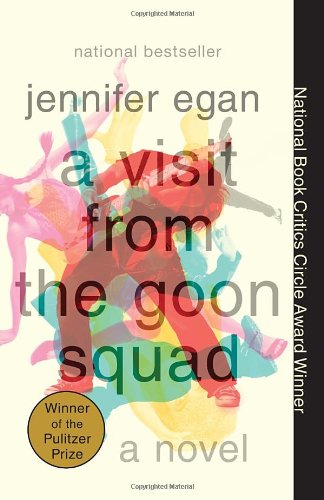
The Mask of Uniformity in The Goon Squad
Cliques are very prominent in today’s schools and society. Webster’s dictionary defines a clique as “small groups of people who spend time together and who are not friendly to other people.” In Jennifer Egan’s novel, A Visit from the Goon Squad, she consistently addresses different cliques. However, she doesn’t reference them as cliques, but as uniforms. A few of these uniforms are Alice’s sister’s green school uniform, the punk look, the typical cholo look and the JV soccer team uniform. In Egan’s novel, all of these uniforms represent stereotypes and “masks” of the people wearing them. The uniforms define the characters and make them who they are.


The cholos wear a mask based around the tough guy, West Side Story look. Their greased back black hair, leather coats and clicky shoes (42). It’s how they identify as a group and differentiate themselves from others.
The JV soccer team moves and works together as a unit. Once they heard Scotty’s music, they all drifted up into the stands to listen. They represent the fans of punk music. They are the type of people who don’t commit to the punk scene, but they enjoy the music.
The green plaid uniforms are used to represent the wealthy and a shift in personalities. Alice’s sisters all attend the all girls’ school Alice used to go to. They wear green plaid uniforms. Jocelyn says that rich children are always blonde (40). Therefore, the green plaid uniforms are a representation of the wealthy. Alice used to be one of those innocent little girls wearing the green plaid uniforms. Her identity was based on those uniforms but eventually she shifted her identity to the punk scene. All of these uniforms are masks that the characters wear to identify with not only themselves, but as a group. Their social interactions and friendships are based around what mask they wear and how they identify themselves.

In the chapter entitled Ask Me If I Care, the narrator Rhea struggles to identify as a punk. The biggest problem for her is her freckles. In her opinion, punks don’t have freckles; they aren’t a part of the stereotypes (Egan 43). Punks should have dark hair, mohawks, dog collars, ripped clothes and dyed hair. Based on this definition, neither Rhea nor her friend Alice is a true punk. Rhea says that Alice has drippy eye makeup, wears ripped jeans and has long blonde hair. By the definition of punk, Alice isn’t a punk either due to her long blonde hair. Rhea references a song entitled The Passenger sung by punk artist, Iggy Pop. She lives her life feeling unwanted and observes her group of friends around her. Throughout the chapter she debates whether punk is real or if it is simply an idea or a concept that people try to obtain. In her opinion, only Scotty is a true punk. His personality, actions and attitude are the closest to being a true punk.

The cholos wear a mask based around the tough guy, West Side Story look. Their greased back black hair, leather coats and clicky shoes (42). It’s how they identify as a group and differentiate themselves from others.
The JV soccer team moves and works together as a unit. Once they heard Scotty’s music, they all drifted up into the stands to listen. They represent the fans of punk music. They are the type of people who don’t commit to the punk scene, but they enjoy the music.
The green plaid uniforms are used to represent the wealthy and a shift in personalities. Alice’s sisters all attend the all girls’ school Alice used to go to. They wear green plaid uniforms. Jocelyn says that rich children are always blonde (40). Therefore, the green plaid uniforms are a representation of the wealthy. Alice used to be one of those innocent little girls wearing the green plaid uniforms. Her identity was based on those uniforms but eventually she shifted her identity to the punk scene. All of these uniforms are masks that the characters wear to identify with not only themselves, but as a group. Their social interactions and friendships are based around what mask they wear and how they identify themselves.
Thursday, October 8, 2015
(Post)Modern Family
Many forms of social media today take on forms of postmodernism. In the popular sitcom television series, Modern Family, the style of the show takes on a postmodern form. The show follows the lives of three very different but related families. The show is able to take on a form that makes it a postmodern sitcom.
For the most part, the show follows the everyday lives of the characters. However, on multiple accounts, the characters are pulled aside to talk one on one with the camera. This form that the show takes on provides a postmodern view.
 Similar to the first story of The Goon Squad, "Found Objects," Modern Family takes on the same form. In "Found Objects," we get the words and actions of Sasha stealing things, but also the commentary that Sasha has on these events. In Modern Family, we see the everyday lives of the characters, but we also get to have commentary about these events by the characters. This "meta-story" form is defined by characters interrupting the flow of the story to provide commentary. In The Good Squad, and Modern Family they take of the meta-story form of post modernism.
Postmodernism is all around us in the media, in many different forms. The postmodern form of Modern Family may go unnoticed, however it provides an innovative form, making it a postmodern television series.

For the most part, the show follows the everyday lives of the characters. However, on multiple accounts, the characters are pulled aside to talk one on one with the camera. This form that the show takes on provides a postmodern view.

Postmodernism is all around us in the media, in many different forms. The postmodern form of Modern Family may go unnoticed, however it provides an innovative form, making it a postmodern television series.
Bo Burnham and His Postmodern Act
Bo Burnham is a comedian with somewhat controversial humor, that also includes postmodern touches in his jokes, giving his show a sense of reality (or lack thereof). Burnham's show "What." is one of my personal favorites and is available on Netflix. All of his jokes are not school appropriate, so I do not suggest watching them as a family thing, although they are all constructed to make you believe one thing and then immediately turn it on it's tail and throw it in the opposite direction.
During one of his sections, he is reading a story out of his book, and in the middle of a sentence turns the book around and says, "The pages are blank why am I lying to you?" and then continues to recite the story with the book on his head. A few sentences later, he gives a little "excuse me," takes the book off of his head, turns a page, and returns it onto his head. Not only is this funny, but it makes a statement, he makes a show of not making a show, if that makes sense. One of his whole bits is a song titled "Sad," all about tragedy, and he has everyone laughing just because he throws a positive spin. He's talking about all these terribly sad events and begins to connect that comedy stems mostly off of tragedy, and blatantly says it in his song.
(Cursing warning)
During one of his sections, he is reading a story out of his book, and in the middle of a sentence turns the book around and says, "The pages are blank why am I lying to you?" and then continues to recite the story with the book on his head. A few sentences later, he gives a little "excuse me," takes the book off of his head, turns a page, and returns it onto his head. Not only is this funny, but it makes a statement, he makes a show of not making a show, if that makes sense. One of his whole bits is a song titled "Sad," all about tragedy, and he has everyone laughing just because he throws a positive spin. He's talking about all these terribly sad events and begins to connect that comedy stems mostly off of tragedy, and blatantly says it in his song.
(Cursing warning)
In another bit, he begins telling a story (the same story in the book mentioned above) with themes of love, and it seems to be heading in the direction of a happy ending, but instead it ends abruptly with the main character (a frog), being eaten by an alligator. Much like a true war story, the crowd is kind of baffled, not knowing if it was the end of the story or not, because it wasn't satisfying, although it was funny how it ended.
A controversial yet brilliant comedian who plays the public with a great sense of postmodernism, making things hilarious even though they shouldn't be, raising the question "What is comedy?"
Ain't No Rest For the Goon Squad
The first story in A Visit From the Goon Squad by Jennifer Egan centers around Sasha, a kleptomaniac trying to get her life back on track. Sasha often gets an uncontrollable urge to take what isn't hers, and unfortunately, is not quite strong enough to combat these desires. Strangely enough, Sasha does not take valuable objects; even when she steals wallets, she doesn't use the money contained in them.
The song Ain't No Rest For the Wicked by the popular band Cage the Elephant focuses on a similar issue. The characters in the song steal and cheat out of necessity, however, as is outlined in the lyric "money don't grow on trees/ I got bills to pay, I got mouths to feed/ Ain't nothin' in this world for free". Aside from this divergence, the characters in the song are strangely parallel to Sasha.
As hard as Sasha tries to control her urges, she can almost never keep them contained. Not once in the story are we given an incident where Sasha suppressed her cravings, although once she was forced to return a wallet that she stole from a woman in the bathroom. Even though Sasha can't control herself, she still wants to change her ways.
In the song, Sasha's feelings bare a stark resemblance to the chorus. With twangy guitar in the background, the narrator belts out "Oh no, I can't slow down, I can't hold back/ Though you know I wish I could". Sasha feels trapped in an endless cycle of uncontrollable impulses and wishing she could "fix" herself, just as the characters in the song do.
The song Ain't No Rest For the Wicked by the popular band Cage the Elephant focuses on a similar issue. The characters in the song steal and cheat out of necessity, however, as is outlined in the lyric "money don't grow on trees/ I got bills to pay, I got mouths to feed/ Ain't nothin' in this world for free". Aside from this divergence, the characters in the song are strangely parallel to Sasha.
As hard as Sasha tries to control her urges, she can almost never keep them contained. Not once in the story are we given an incident where Sasha suppressed her cravings, although once she was forced to return a wallet that she stole from a woman in the bathroom. Even though Sasha can't control herself, she still wants to change her ways.
In the song, Sasha's feelings bare a stark resemblance to the chorus. With twangy guitar in the background, the narrator belts out "Oh no, I can't slow down, I can't hold back/ Though you know I wish I could". Sasha feels trapped in an endless cycle of uncontrollable impulses and wishing she could "fix" herself, just as the characters in the song do.
Wednesday, October 7, 2015
Postmodernism Isn’t Really That New
The term "postmodern" was first used in 1870 by John Watkins Chapman to describe a French painting. Since then, postmodernism has penetrated every art form and provoked new philosophical thought. Many people agree that the postmodern era started after World War II with the spread of mass media and developments in technology.
However, does the fact that postmodernism was not recognized until 1870 mean that it did not exist before the nineteenth century?
One of the most iconic art movements in human history is the Renaissance, and with that came humanist literature. The Prince by Niccolò Machiavelli, a popular piece on the political philosophy of monarchs, is an example of the literature produced during the Renaissance era. Machiavelli specified the ideal qualities in a prince, including a balance between cruelty and mercy, a reputation for liberality and an understanding of human nature. However, Machiavelli concluded his publication with, "it is not essential, then, that a Prince should have all the good qualities which I have enumerated, but it is most essential that he should seem to have them." This facade that he recommended for the ruling class was highly controversial, but also a very popular idea. His book dominated political thought in the sixteenth century and influenced Jean Bodin, Francis Bacon and Jean-Jacques Rousseau.

However, does the fact that postmodernism was not recognized until 1870 mean that it did not exist before the nineteenth century?
One of the most iconic art movements in human history is the Renaissance, and with that came humanist literature. The Prince by Niccolò Machiavelli, a popular piece on the political philosophy of monarchs, is an example of the literature produced during the Renaissance era. Machiavelli specified the ideal qualities in a prince, including a balance between cruelty and mercy, a reputation for liberality and an understanding of human nature. However, Machiavelli concluded his publication with, "it is not essential, then, that a Prince should have all the good qualities which I have enumerated, but it is most essential that he should seem to have them." This facade that he recommended for the ruling class was highly controversial, but also a very popular idea. His book dominated political thought in the sixteenth century and influenced Jean Bodin, Francis Bacon and Jean-Jacques Rousseau.

Although this philosophy is classified as realism, it can be argued that The Prince has postmodern characteristics as well. Through the use of the printing press, Machiavelli was able to distribute his ideas and establish the ideal conduct of a ruler. The actual actions of the prince no longer mattered, just his appearance of leadership did. Machiavelli started a differentiation between how politicians should act and how they should present themselves to the public. His most striking example of postmodernism stated, "...men in general judge rather by the eye than by the hand, for every one can see but few can touch. Every one sees what you seem, but few know what you are."
Machiavelli’s work is not the only postmodern example that existed before the nineteenth century, but I do concede that postmodernism was accelerated after World War II. The ideas of "every one can see but few can touch" existed way before the current postmodern world, but now those ideas dominate our lives through incessant media that did not exist during the time of Machiavelli.
Machiavelli’s work is not the only postmodern example that existed before the nineteenth century, but I do concede that postmodernism was accelerated after World War II. The ideas of "every one can see but few can touch" existed way before the current postmodern world, but now those ideas dominate our lives through incessant media that did not exist during the time of Machiavelli.
Tuesday, December 9, 2014
Music Video Project Response
When assigned the project, I initially had
some reservations. However I found the creative process of planning and filming
to be quite enjoyable. This project allowed each group to interpret the book as
they pleased. The creative freedom given in the assignment presented numerous
options. In my opinion this project was much less stressful than normal
literary analysis assignments. While it required a lot of work, the time spent
creating it did not seem like work at all. The opportunity to work in groups
also gave plenty of insight into other people's interpretations of the text,
which I found to be genuinely interesting. I believe this assignment was not
only quite enjoyable, but also served as a creative platform for many.
Tuesday, November 11, 2014
Jennifer Egan's Writing
Jennifer Egan’s writing changes perspective throughout the book constantly shifting single-minded opinions the reader develops in each chapter. Each story the reader quickly labels each character with certain qualities of their personality: manipulative, depressed, insane, and/or many more. The first chapter shahs, the focus, or perceiver of the chapter easily allows the reader to create opinions of her. She saw the world as a cruel place that everyone had an endgame to rob you of your riches to feed their own “We live in a city where people will steal the hair off your head if you give them half a chance,” –Sasha pg.1. The reader, understandably, views Sasha as insane or bias. Simply her talking for two pages makes her seem manipulative and on l=some judgmental. These opinions may not form through what she says but with the reader making assumptions based on life experiences or even by watching TV. Yet Egan had still to shift the reader’s image.
Yet the reader spends a whole chapter inside Sasha head how would Egan create an opinion such as that if they where simply mentioned. In the second chapter Sasha is introduced as a secretary. Simply her profession can already spark a stereotypical opinion in the readers mind. Then when Bernie mentions her in an alluring way but also says how she has kept him at arms length without hurting his feelings. This makes her seem like a pleasant girl. One who does not think about how people think of her but simply just attracts them. This does not seem like Sasha. Egan has mastered this technique. She uses stereotypes that the reader assumes, passively of course. This allows her to easily shift blame thought the book.
Yet the reader spends a whole chapter inside Sasha head how would Egan create an opinion such as that if they where simply mentioned. In the second chapter Sasha is introduced as a secretary. Simply her profession can already spark a stereotypical opinion in the readers mind. Then when Bernie mentions her in an alluring way but also says how she has kept him at arms length without hurting his feelings. This makes her seem like a pleasant girl. One who does not think about how people think of her but simply just attracts them. This does not seem like Sasha. Egan has mastered this technique. She uses stereotypes that the reader assumes, passively of course. This allows her to easily shift blame thought the book.
Monday, November 10, 2014
"Xs and Os"
"Xs and Os" is told in the point of view of Scotty Haussman. One day, Scotty was sitting on a park bench, reading a magazine that he had stolen. In the magazine, there was an article about his old friend, Bennie Salazar. Scotty learns from this article that Bennie had become an extremely successful music producer with his own label. He then decides to write Bennie a letter congratulating him on his success. Scotty receives a reply five days later. It was clearly typed by a secretary who was being told what to say. Scotty tries not to think about Bennie's success and does so by going fishing. He catches a large bass, one of the greatest fish he has ever caught. In this moment, he decides to go visit Bennie. Before the visit, Scotty dry cleans his jacket, even though it is not dirty. Scotty does this often. He wants people to think he has someplace to go, even if he does not. He believes in Xs and Os, random factors that decide who is "in" and who is "out." This makes him feel as if everyone one is equal. While everyone may be equal, not each person feels equivalent to the next. The idea of random factors break down the social hierarchy into something more simple rather than complex.
During the visit with Bennie, Scotty asks Bennie what happened between "A and B." He says that “A is when we were both in the band, chasing the same girl. B is now”(76). Bennie claims that he worked extremely hard to get to where he was. When Bennie said this, Scotty began to doubt the ideology of the Xs and Os. He and Bennie had the same experiences growing up, so why were their lives so different? The main reason Scotty began to doubt his ideology is because he did not want to feel less important that Bennie. Scotty was so obsessed with the idea of Xs and Os and everyone being equal, that he became jealous of his friend.
During the visit with Bennie, Scotty asks Bennie what happened between "A and B." He says that “A is when we were both in the band, chasing the same girl. B is now”(76). Bennie claims that he worked extremely hard to get to where he was. When Bennie said this, Scotty began to doubt the ideology of the Xs and Os. He and Bennie had the same experiences growing up, so why were their lives so different? The main reason Scotty began to doubt his ideology is because he did not want to feel less important that Bennie. Scotty was so obsessed with the idea of Xs and Os and everyone being equal, that he became jealous of his friend.
Friday, November 7, 2014
"Forty Minute Lunch" Analysis
In chapter nine, Jules turns out to be a well known journalist who is slowly losing his touch at what he does best. It comes to a point where the entirety of his career rests upon how well he does in a report on the one and only Kitty Jackson. Although it is never quite directly stated within the chapter, Jules is unsatisfied as of late with the vapid, empty career that is modern day tabloid journalism. Although the connection is never drawn, it is quite clear that Jules recent downturn in success at his job is obviously a result of his equal level of dissatisfaction with not only his job but also his life.
A clear turn of events occur in the interview with Kitty Jackson and is visible in part because of Jules internal dialogue. At a point in the interview when he realizes he is unlikely to catch a unique or interesting interview from this lunch, His interview becomes almost sociopathic. He begins to wish to not only have sex with her but “fuck her and then kill her”. His thoughts become actions when he attempts to strangle kitty after relocating the interview to the streets.
This aggressive action with sexual undertones may seem to some readers as unprovoked and without reason. Of course Kitty did nothing to bring this upon herself and I will not argue against this, however, Jules has been losing it since much earlier in the story. His earlier self destructive tendencies in the story convey his building anxiety and dissatisfaction. However, the interview with kitty in a way to him symbolizes the end of his prosperous career which adds even more pressure. It is when he finally realizes he will almost certainly be fired that he snaps. It is also unfortunate that his high pressure interview occurred with someone so famous and with a life so seemingly perfect as Kitty Jackson. Her beauty and success so starkly contrasted with his own appearance and success that this surely was partially the reason for taking out his frustration on Kitty.
In this way, Jules was not a psycho or a pervert, instead he was a man frustrated with his past, present, and future life taking it out on the person he wishes to be.
Goon Squad Video Analysis
As you all know, this past week we all had to take a chapter from A Visit From the Goon Squad and create a musical interpretation of it. The chapter my group choose was "X's and O's". Throughout the chapter we finally found out what happened to Scotty when he disappeared from the group, and get an interesting look into the way he thinks. Scotty believes that the human experience is purely made up of X's and O's and that him seeing a situation is almost the same as him being in that situation.
As a group, we noticed that Scotty seems to just be in his own little bubble as the world moves around him. Everyone of his friends is going on to do different things with their lives while he contemplates what he believes are minute differences between him and his former friend, Benny. We felt that this chapter had a feeling of being lost. While the world continues to move around Scotty, he has no control of anything outside of his small little bubble. No matter how many X's and O's you try to break it down into, the world keeps moving with or without you.
As a group, we noticed that Scotty seems to just be in his own little bubble as the world moves around him. Everyone of his friends is going on to do different things with their lives while he contemplates what he believes are minute differences between him and his former friend, Benny. We felt that this chapter had a feeling of being lost. While the world continues to move around Scotty, he has no control of anything outside of his small little bubble. No matter how many X's and O's you try to break it down into, the world keeps moving with or without you.
Subscribe to:
Posts (Atom)