Enjoy!

Showing posts with label Poetry. Show all posts
Showing posts with label Poetry. Show all posts
Thursday, February 23, 2017


Monday, February 20, 2017
Mockingbird
In the song “mockingbird” by Eminem he tries to explain to his two daughters Hallie and Lainey who are the audience of this song, why the bad things in their childhood happened. He also tries to explain to his kids why he wasn't there, why him and his wife divorced and his whole point of view of them now. He gets this messages across by personifying life, using anaphora, and switching the points of view from him to his daughter.
In this verse Eminem uses anaphora, repeating the beginning of a sentence and changing the end, to explain to how his daughters has changed in his eyes. He also personifies life in the verse by assigning body movements to it and saying that life mended and shaped what his daughters have become today.

We're all we got in this world
When it spins, when it swirls
When it whirls, when it twirls
Two little beautiful girls
He also uses personification to explain their mothers drug habit to them. In this verse he personifies her drug addiction as this force that overtook her and that was so strong and quick that no one could stop it or “grab it”.
mamma developed a habit
And it all happened too fast for either one of us to grab it
In this verse he explained what happened during christmas by switching the point of view from him to one of his daughters and explained the entire situation from her eyes. By doing this i think that he gave the audience a snip it of his daughters reaction to all the things going on in their lives.
I remember back one year when daddy had no money
Mommy wrapped the Christmas presents up
And stuck 'em under the tree and said some of 'em were from me
'Cause daddy couldn't buy 'em
I'll never forget that Christmas I sat up the whole night crying
Cause daddy felt like a bum
Friday, February 17, 2017
The Poetry in Music
When I was given the assignment to pick a song where I would have to defend it as a work of poetry I had to think about what I listen to. And the only thing that could come to mind that I listen to was country music. Specifically Church Bells, sung by Carrie Underwood and written by Hillary Lindsay, Zach Crowel, and Brett James.

Like most country songs, Church Bells tells a story. The story told is one about a young women of a lower class who marries up because of her looks. Her husband ends up being physically abusive, everyone around them thinks that they have a perfectly fine relationship, she prays and then she kills him.
However, the song definitely draws the listener into an experience unlike any other. The song uses a show don't tell language for the story which makes it even more appealing from the verses to the chorus the song uses vivid imagery.
She could hear those church bells ringing, ringingThe chorus above provides the strong motif of church not only within this song but in most of her songs. Underwood grew up in Oklahoma going to her local southern Baptist church. She, herself, would sing in her church choir and would read and watch religious books and movies. Church today still has a big influence over her life deciding which movies she features in.
And up in the loft that whole choir was singing, singing
Fold your hands and close your eyes
Yeah, its all gonna be alright
And just listen to those church bells ringing, ringing
Yeah, they're ringing
It was all roses, dripping in diamondsThe vivid imagery supplied by the song writers, makes it so the listener can not only just picture what but is actually there at this wedding. Each verse is filled with unique elements of the story building up to the end.
sipping on champagne
she was all uptown, wearing that white gown
taking his last name
Poetry is supposed to involve your senses and broaden your experiences. I think this song really captures both of these elements making it also a beautiful piece of
The Poetry of Tool's "Parabol" and "Parabola"
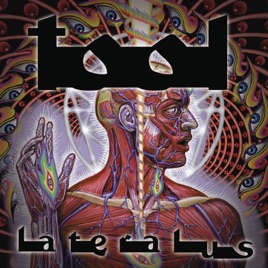
Tool is often considered the most prolific and gifted progressive metal bands of all time. Their intense, almost arcane music is also often thought of to be more of a piece of art rather than a song, intended to be consumed in one sitting. Because of this, Tool's six albums over 27 years are (purposefully) released on only certain music platforms, making them an almost treasured rarity. The artistic and audibly gratifying tracks from Tool can all arguably be deemed poetry, but the songs "Parabol" and "Parabola" on the album Lateralus are particularly representative of this.
The two songs, a combined nine minutes, are firstly unique in that because the album is intended to be listened to in one go, the first song, "Parabol," leads directly into the next song, "Parabola." "Parabol" is a purposeful misspelling on "parable" which is a basic story with a moral and religious connotation. almost a lullaby; its slow, melodic guitar and muffled vocals create a tired and comfortable atmosphere. With lines:
Wide eyed and hopeful. Wide eyed and hopefully wild
contradicted to the soft music it is sung over is almost forcing to have the listener feel two things at once, much like poetry does when it is read versus when it is spoken. The song ends with the powerful lyrics:
This body holding me, reminding me that I am not alone in
This body makes me feel eternal. All this pain is an illusion
As "illusion" drags on, it gets progressively louder and filled with emotion, eventually marking the start of "Parabola," with little obvious indication of a true start or end. The songs' themes of transcendentalism and spirituality are highlighted in "Parabola" as it lyrically emphasizes lines:
Recognize this as a holy gift and celebrate this chance to be alive and breathing
A chance to be alive and breathing
The song ends with an slightly altered version of the reoccurring lines:
This body holding me reminds me of my own mortality
Embrace this moment, remember, we are eternal
All this pain is an illusion
The content ending to "Parabola" is similar to the lines earlier, but more poetic in that is is contradicting itself directly as it's saying the body is mortal, it is only temporary. But, our memory, our experience, as humans are eternal and the suffering is merely exclusionary and temporary.
Music is poetry, and I think the members of Tool are all poets and that their work is exemplary of the similarities of poetry and music.
Dirty Harry - A Real War Poem
The song immediately starts with the chorus, preformed by the main vocalist 2D and the children's choir. It goes as follows.
I need a gun to keep myself from harm
The poor people are burning in the sun
But they ain't got a chance
They ain't got a chance
I need a gun
Cos all I do is dance
Cos all I do is dance
Right now, the speaker(s) of the words is just anybody who dislikes the fighting that is going on, on either side of the war. They speak about needing to get weapons to protect themselves from the fighting, even though all they want to do is dance in the safety of peace. They are mostly focusing on the despair of the innocent residents of the middle east who are subject to the power of America. The word "dance" appears multiple times in this song, and the dancing represents freedom. The chorus repeats another time, then there is a short section of pure music, brought to an end by a yell. The yell marks the start of the meat of Dirty Harry, the rap.
Referring back it the video, we can see that the rap is said by someone who appears to be a US army man, judging from his dress. This is a shift in the song, as the speaker has now changed from a spectator in the war, to a participant. He knows something is going on with this war, something that isn't morally sound. He states how he is "a peace loving decoy/ready for retaliation." This refers to how the soldier believes they are fighting for some sort of reason, and he is struggling to accept why they are there. He believes that he is being mislead, but is still prepared to fight for his life. He gives several examples about the war's horror, like being buried in a pine box somewhere in the desert, and how it is "impulsive" and he "don't ask why or wonder" what all of this is about. He goes on about his orders are to kill and offer no remorse, and he obliges, but is being torn apart by his actions. He is "filled with guilt/from the things that i've seen."
He also says the line "I'm the reason why you fill up your Isuzu." The line has two different ideas behind it; An Isuzu is a motorcycle, a machine that uses oil in its primary functions, driving home our setting of the Iraq and Afghanistan wars, as well as the fact that we are somehow able to relax in luxury while he is out fighting for us.
My favorite, and the most striking part of this poem comes in the last stanza were it reads:
At night I hear the shots
Ring so I'm a light sleeper
The cost of life,
it seems to get cheaper
out in the desert
with my street sweeper
The war is over
So said the speaker with the flight suit on
Maybe to him I'm just a pawn
So he can advance
Remember when I used to dance
There are quite a few things going on here. It starts off with some striking lines about the futility and immorality of the fight. It then speaks about President Bush directly referring to his Mission Accomplished speech when he declared the end of the Iraq war. The speech was controversial because there was still fighting going on in Iraq. The soldier believes he is used in a war he has no business in, and all he wants to do is dance, as in go home and relax. He uses the word "pawn" for a few different reasons as well. A pawn often represents something of little work, but also at the same time it is used to better everything else at its own expense, which is very similar to how the soldier is felling caught up in all of this pointless action.

Thursday, February 16, 2017
Poetry on "Earth"
The song "Earth" by Sleeping At Last is an example of poetry incorporated into modern music. The purpose of the song is to highlight the odd isolation of the human condition - how we are all trying to work through life's struggles alone and we aren't doing all that well but we keep going and pretend everything is just fine. The frequent use of figurative language such as personification and hyperbole, as well as multidimensional word choice, add to the poetic meaning of the song, creating a deeper meaning that truly involves the listener in the emotion of the poem.
The opening line of the song is "I dig 'til my shovel tells a secret", which uses personification as a poetic device. The image of a shovel telling a secret emphasizes how isolated the singer is, all he has to talk to and confide in is this tool rather than another person. Later in the song, the line "echo wide as the equator" again creates a sense of isolation - the whole world is empty and the echo just keeps going, even that is abandoning the speaker. Conversely, this line also creates a sense of unity. The speaker's experience is echoed across the globe; everyone experiences struggles and tries to deal with them alone and no one really succeeds.
The artist also creates vivid and expressive imagery by using multidimensional language. One such example is the use of the word "tremble" in the line "fault lines tremble underneath my glass house". Tremble creates a sense of wariness, like something is about to break and give way, a sense which is certainly aided by the image of a glass house. However, it also creates a sense of fear and almost timidness, which would probably be more related to the afraid speaker than the impending destruction.
Another example of multidimensional language is the word 'exonerate' from 'I bend the definition / of faith to exonerate my blind eye". Exonerate can have two meanings - one is to excuse something from wrongdoing. This definition would apply to the speaker's attempts to ignore the mistakes he's made and the mess he's made, even though he knows it's not right to do so. He pushes away the negatives and makes excuses for himself so he can keep doing things the same way, even though he knows it might benefit him to take another course of action. This ties into the second definition, which is to excuse someone from duty. Perhaps the speaker feels as though this system of faking it even as his life is in shambles is less of a choice than it is a necessity in order to keep moving forward. He knows it is a precarious situation but he doesn't know quite how to take a new path, but he hopes that he will be exonerated and given a chance to re-do things and fix his life up.
"Earth" by Sleeping At Last is an example of musical poetry. The song itself is an insight into the troubled nature of human existence and how close we all are to falling apart, yet we keep soldiering on until the destruction gets too great and we are forced to stop and begin again in a new light. The artist uses personification and hyperbole to help the listener visualize and relate to the image of humanity being presented, as well as multidimensional (and multidefinition-al) language to accentuate the nuanced emotions that the song captures.
The opening line of the song is "I dig 'til my shovel tells a secret", which uses personification as a poetic device. The image of a shovel telling a secret emphasizes how isolated the singer is, all he has to talk to and confide in is this tool rather than another person. Later in the song, the line "echo wide as the equator" again creates a sense of isolation - the whole world is empty and the echo just keeps going, even that is abandoning the speaker. Conversely, this line also creates a sense of unity. The speaker's experience is echoed across the globe; everyone experiences struggles and tries to deal with them alone and no one really succeeds.
The artist also creates vivid and expressive imagery by using multidimensional language. One such example is the use of the word "tremble" in the line "fault lines tremble underneath my glass house". Tremble creates a sense of wariness, like something is about to break and give way, a sense which is certainly aided by the image of a glass house. However, it also creates a sense of fear and almost timidness, which would probably be more related to the afraid speaker than the impending destruction.
Another example of multidimensional language is the word 'exonerate' from 'I bend the definition / of faith to exonerate my blind eye". Exonerate can have two meanings - one is to excuse something from wrongdoing. This definition would apply to the speaker's attempts to ignore the mistakes he's made and the mess he's made, even though he knows it's not right to do so. He pushes away the negatives and makes excuses for himself so he can keep doing things the same way, even though he knows it might benefit him to take another course of action. This ties into the second definition, which is to excuse someone from duty. Perhaps the speaker feels as though this system of faking it even as his life is in shambles is less of a choice than it is a necessity in order to keep moving forward. He knows it is a precarious situation but he doesn't know quite how to take a new path, but he hopes that he will be exonerated and given a chance to re-do things and fix his life up.
"Earth" by Sleeping At Last is an example of musical poetry. The song itself is an insight into the troubled nature of human existence and how close we all are to falling apart, yet we keep soldiering on until the destruction gets too great and we are forced to stop and begin again in a new light. The artist uses personification and hyperbole to help the listener visualize and relate to the image of humanity being presented, as well as multidimensional (and multidefinition-al) language to accentuate the nuanced emotions that the song captures.
Stereo Hearts
In 2011, the song "Stereo Hearts" by the Gym Class Heroes was released as a single. I remember back in sixth grade when this song came out, and it was my mission to memorize all of the lyrics. This song was not only extremely catchy, but it has a deeper meaning of when you get knocked down, you just have to keep getting up and fighting through the adversity of life.
 The artist and lead singer of this song, Travie McCoy, is expressing how his heart has been broken but he's right back in the game talking to the next girl.
Another metaphor that Travie uses is to compare people to cars on an interstate. What he is trying to portray is that you should cherish your relationships while you have them, because you never know when they could slip through your fingers.
Travie McCoy is trying to get across that taking friends and significant others for granted is exactly how you lose them. This metaphor is most likely relatable to a majority of teenagers in high school. Off the top of my head I can think of about fifteen cases of people getting left in the dust by their friends because of the way they treated them. No one has time to deal with drama, especially when there are a million other things to worry about in high school, so they just ditch the friend that is causing the problem.
Through the multiple uses of metaphors, it is clear how the hit single, "Stereo Hearts", by The Gym Class Heroes can be seen as poetry. The idea of getting a statement out in the world through music is truly moving to me and shows me that poetry is much more than just a two week unit in english class.

Furthermore, I apologize for any skipping tracksWhat Travie is trying to get across is that the reason he seems nervous is because he has recently had his heart broken and he is scared that it might happen again. Although this is the message getting across, he doesn't just flat out say that he is nervous. The artist uses a metaphor, comparing himself to a record, saying although there is scratches, or rough memories, they won't effect him in the present day.
It's just the last girl that played me left a couple cracks
Another metaphor that Travie uses is to compare people to cars on an interstate. What he is trying to portray is that you should cherish your relationships while you have them, because you never know when they could slip through your fingers.
Appreciate every mix tape your friends make
You never know we come and go like on the interstate.
Travie McCoy is trying to get across that taking friends and significant others for granted is exactly how you lose them. This metaphor is most likely relatable to a majority of teenagers in high school. Off the top of my head I can think of about fifteen cases of people getting left in the dust by their friends because of the way they treated them. No one has time to deal with drama, especially when there are a million other things to worry about in high school, so they just ditch the friend that is causing the problem.
Through the multiple uses of metaphors, it is clear how the hit single, "Stereo Hearts", by The Gym Class Heroes can be seen as poetry. The idea of getting a statement out in the world through music is truly moving to me and shows me that poetry is much more than just a two week unit in english class.
See Me Now
The song "See Me Now" by Kanye West in the album My Beautiful Dark Twisted Fantasy features artists including Beyonce, Charlie Wilson, and Big Sean. The title indicates the meaning of the song, which is about Kanye becoming a successful artist. Although not everyone has the same story as West, some of the lyrics are relatable for everyone. Many people are told that they will never become successful, and this song proves those who questioned their success wrong. It also defies racial stereotypes about black males, since African Americans are often stereotyped as being lazy and unsuccessful.
West starts off by referring to himself as "Socrates, but my skin more chocolatey," which shows his thoughts on his success, while acknowledging the fact that he's black. After stating the fact, he brags about his new lifestyle, saying,
While much of the song focuses on how West now has nice things and how his lifestyle has changed, he makes sure to remember his parents. Beyonce sings,
West starts off by referring to himself as "Socrates, but my skin more chocolatey," which shows his thoughts on his success, while acknowledging the fact that he's black. After stating the fact, he brags about his new lifestyle, saying,
I might walk into Nobu wit' no shoes,
He just walked into Nobu like it was Whole FoodsThe high-end Japanese restaurant, Nobu, is well known for spotting celebrities. By saying that he might walk into a fancy restaurant with no shoes, is a way of saying that he is higher or better than everyone now that he's successful. The second line is a little bit ironic because Whole Foods is normally considered high quality, but in this instance, it is being put down since Nobu is even nicer. This could be considered hyperbole because West is exaggerating about walking into a fancy restaurant with no shoes; he most likely wouldn't actually do that. But it gives us an idea of how successful he has become, that he could even make a joke about that.
While much of the song focuses on how West now has nice things and how his lifestyle has changed, he makes sure to remember his parents. Beyonce sings,
I know one thing, my momma would be proud,
And you see me lookin' up
Cause I know she's lookin' down right nowWhile West knows that he has become a big deal, he will not forget how he got to the top. He makes sure to thank his father when he says,
"Be successful", that's what dad told me,
So everything I D-O now I O-DThis is a clever use of word choice because the word "do" spelled backwards is "o-d," as in "overdose." While most people think of medicine when they say, "OD," Kanye took this opportunity to explain how he became successful. He's saying that his father taught him to try his best at everything and work hard. The quote shows that every word is important in poetry because it contributes to the meaning of the song as a whole.
Love, Love, Love : An Analysis of Purple Dinosaur

In the first verse of the rap, we see NBD’s poetic phrases. He spits,
But baby I know why the caged bird sings,
‘cause only love can make the type of bell that freedom rings
This line references Maya Angelou’s autobiography I know why the caged bird sings. In this book, she talks about how racism and sexism had trapped her in a “cage”. What this line is saying is that by loving each other a little more, we can break out of this “cage” and make life better for everyone.
The next poetic line is seen in the second verse of the song. NBD raps,
The final poetic line is seen in the last verse of the song. NBD exclaims,
The next poetic line is seen in the second verse of the song. NBD raps,
Sometimes I need a spirit bomb like I was gokuThis line references the spirit bomb attack in the anime Dragon Ball. This attack is the most powerful thing in the dragon ball universe, but takes multiple people to activate. This line shows that sometimes we need other people in order to love one another.
The final poetic line is seen in the last verse of the song. NBD exclaims,
And the saddest news, how you deny your brother water when your glass is fullThis line speaks to America in the current day, as President Trump has implemented the “Muslim ban”. This act denied the immigration of people from several Muslim majority nations. In this line, NBD talks about this simple thing : water. This is a multidimensional word. Water, which is the most basic thing to life, is sometimes incredibly difficult to find in deprived nations. By not aiding other nations that are struggling to survive, we are not allowing nations to form relationships with one another. At the same time, the word “water” is used to reference the basic rights of an American. Over the past few years, and even today in America, African American and Muslim rights have been slowly taken away, while white rights are always "full". This “denying of water” is referencing something more than a restaurant interaction.
Let Her Go

The amazing story told through this song touches on losing a love that he once had and only realizing how much this love meant to him once it was gone. This leads him to sing about regret and leaves you with the thought of appreciating the people in your life while you still have them.
A poetic device that Passenger uses repeatedly is personification. He talks of love as it's a living thing, that can move and breath. One line says, "Cause love comes slow and it goes so fast," by using personification he is able to make the love he is talking about more relateable and gives the song a new depth.
Throughout the song metaphors are put in place, as well as other versions of comparisons. A lasting comparison that he makes is to the contrast of lightness and darkness, "But you only need the light when it's burning low" as well as, "Only miss the sun when it starts to snow." These straight cut, extreme opposite contrasts help to get his point across of the seriousness of his situation and helps listeners to be able to understand the emotions that are being sung, and sympathize with them.
All these feed into the imagery of the song, without the personification and the many comparisons, metaphors, and contrasts, the musician's point would have never truly gotten across. There is imagery present when talking about the previously mentioned candle burning out, like a love that is just not the same and is coming to an end. Or when he wrote, "Staring at the ceiling in the dark. Same old empty feeling in your heart," this takes everyday actions and uses relateable emotions to gain sympathy and empathy from the listeners themselves.
Overall "Let Her Go," can most definitely be argued to be a piece of beautiful poetry, about the affects of a loss of a relationship. He is writing these wonderful lyrics to tell people to cherish what they have, and who they have in their life now because who know who will be there down the road.
Let Her Go: A Universal Truth

"Let Her Go", which is on the album All the Little Lights by Passenger and debuted in 2012, is a beautiful song whose words create a new and relatable way to allow the listener understand what it means to lose things that you take for granted. This idea forms the quite evident deeper meaning of the song: you do not know what you have until it is gone. This song is a form of poetry because is uses poetic devices such as personification, hyperboles and repetition and has a deeper meaning than the words lead on.
"Let Her Go" is poetry in the form of music because it uses poetic devices and the words lead to a deeper meaning for the song as a whole. This idea is shown when Passenger sings about how he cannot seem to help himself from ruining everything when he says, “Everything you touch surely dies.” Not only does the artist use the words to disguise his self-doubt, but also uses a poetic device, a hyperbole, to make a striking line. The verse is a hyperbole because, as many things in his life may be unsuccessful, everything he touches does not actually die so he is making an overstatement. This verse helps establish the theme of the song because the artist believes he ruined his relationship and cannot forgive himself because of it. The next poetic line uses personification and imagery to continue the theme of self-reflection and remorse as it says, “Staring at the bottom of your glass/ Hoping one day you’ll make a dream last/ But dreams come slow and they go so fast.” Personification is used in this verse because a “dream” is doing the actions of a person, such as walking and running. This line is also a great example of imagery because it creates the image of a remorseful man, drinking away his feelings and missing the love of his life. These lines help establish the greater meaning of the song because the artist is at a low point in his life because he did not realize what he had until he lost it. Finally, in the first few lines of the song and repeated throughout, the artist uses repetition as a poetic device as he sings, “Only know you’ve been high when you’re feeling low/ Only hate the road when you’re missing home/ Only know you love her when you let her go.” The line displays the deeper meaning of the song as a whole as it says that the only time you appreciate the things that you have is when you do not have them anymore, such as an underappreciated good day when you are having a bad one. This is the most striking verse of the whole song and is repeated throughout to emphasize the main idea of the song, which is to tell people to appreciate the things they have before they are gone.
The use of poetic devices in the song "Let Her Go" justifies the idea that it is a form of poetry in a musical sense. The poetic devices also help to emphasize the greater meaning behind significant words. In conclusion, "Let Her Go" by Passenger is an extremely poetic song because it uses a number of poetic strategies and reflects on a universal truth: overall, you can only appreciate love when it is lost.
Wednesday, February 15, 2017
Multi-Lingual Music is Poetry

In this particular song she takes the listener on a trip through two different locations, France and New York. She references Bowery, Lexington, and Bronx in New York, Paris is spoken of with the assistance of French lyrics. The French phrase repeated in the chorus is "Ne me quitte pas, mon cher", which translates to "Don't leave me, my dear," hence the title of the song. Out of context, this lyric gives of a desperate and longing tone of someone who is begging someone not to leave. Playing the actual song, however, it is clearly given the opposite vibe. Spektor is cheerfully singing and humming to the tune of trumpets and drums. The verses describe supposed unhappy situations, yet they're followed by a pleasant alternative. An example of this is the line, "The kids go sledding down snow covered slopes... And yes, they know that it will melt. And yes they know New York will thaw. But if you're a friend of any sort. Then play along and catch a cold."
Spektor's "Ne Me Quitte Pas" supports the claim that music is poetry. She incorporates a variety of artistic methods into this song, using repetition and a satirical tone in her lyrics in contrast to her instrumentals. Songs and poetry in a foreign language typically steer uneducated audiences away. But when they take the time to understand the meaning of the French and the tone of the song as a whole, it is clear how talented Spektor is. Poetry isn't supposed to be traditional, it can be interpreted and manipulated by the audience. Since the French included in this song heightens this fact to non-French speakers, makes multi-lingual music being classified as poetry impossible to deny.
Why the song ¨Take me to Church¨ is poetry

Hozier uses the song as a metaphor to compare a lover to his religion. Take me to Church's deeper meaning relates to the contradiction of churches treatment of homosexuality and sexual orientation and how the church thinks it is wrong to not follow the rules. It is also about how religious organizations look down on people and shames people who do not follow the normal rules Throughout the song, the love takes the place of religion. In the song he says,
"I was born sick, but i love it".To me this is a symbol that relates to the theme of the song because it is saying that it's ok to undermine humanity and to not follow the rules. It is ok to be different and not follow the church's strict rules regarding homosexuality. He is ok with undermining the church because he likes being who he is. Another line in the song reads,
"I'll worship like a dog at the shrine of your lies".Here he uses a simile to compare himself to a dog and it relates to the larger theme because he is saying how he worships to what the church thinks is wrong. He is the opposite of the church as he is ok with it. Another example of figurative language right after that is,
"I'll tell you my sins, so you can sharpen your knife."I think this is an example of imagery because it really puts the picture in your head of the church getting mad and punishing someone who does not follow their rules. It is also a reference to violence and persecution that follows someone that is admitting a sin and in this case it's sexual orientation. Finally, towards the end of the song a line reads,
"There is no sweeter innocence than our gentle sin".Here, i think he uses a metaphor to say that their is nothing better than sinning a little bit because it makes you innocent. In this case, being homosexual is a sin to the church but being open about it makes him free.
While the song may not seem like poetry at first, if you look deeper the song contains a lot of figurative language and themes that come up. The songs use of figurative language and underlying theme allow for the song to be identified as poetry.
Monday, August 1, 2016
Welcome!
Welcome to the weblog for our American Literature class. Here's the place we will be continuing conversations from class and starting new ones. We'll be discussing and debating current events, historical controversies, and literary conundrums. We might even see a little poetry.
So, what's a blog? And how will we be using it class? For information on blogging and how to join and post to our blog, see "All About Blogging."
We're looking forward to a great year.
Make sure you check your e-mail for your invitation to join the blog. Also – and this is very important – the first step you should take after you accept the invitation is to edit your user profile so that you control how your identity and your communication preferences. Click on the pull-down menu next to your name in the upper right corner of the browser and click on “Blogger Profile.” Then click on “Edit Profile.”
You can fill out as much of it as you want, but the only requirement is -- under “Identity” -- make sure your “Display name” is your first name and last initial only -- so we provide some anonymity while still allowing your classmates and teacher to be able to identity who you are. For example, change “Bernie Heidkamp” to “Bernie H.”
So, what's a blog? And how will we be using it class? For information on blogging and how to join and post to our blog, see "All About Blogging."
We're looking forward to a great year.
Make sure you check your e-mail for your invitation to join the blog. Also – and this is very important – the first step you should take after you accept the invitation is to edit your user profile so that you control how your identity and your communication preferences. Click on the pull-down menu next to your name in the upper right corner of the browser and click on “Blogger Profile.” Then click on “Edit Profile.”
You can fill out as much of it as you want, but the only requirement is -- under “Identity” -- make sure your “Display name” is your first name and last initial only -- so we provide some anonymity while still allowing your classmates and teacher to be able to identity who you are. For example, change “Bernie Heidkamp” to “Bernie H.”
Wednesday, January 6, 2016
Sunday, December 20, 2015
Tame Impala's Poetry
Poetry: literary work in which special intensity is given to the expression of feelings and ideas by the use of distinctive style and rhythm, and by that definition Elephant by Tame Impala is truly poetry.
Elephant is about a man who tries to be the coolest guy ever, but it is all a charade. The band uses a lot of colorful language and metaphors in order to express this point, much like a poem would. The song starts with a metaphor that gives the song its name. "Bet he feels like an elephant, Shaking his big grey trunk for the hell of it'" The metaphor of him being an elephant gives the listener the visual of his confident strut and his giant personality. The lyrics go on to further express how cool this "elephant man" thinks he is. " You know that you're dreaming about being loved by him, Too bad your chances are slim." Women are constantly attracted to him, but he has no time for all of them. In those first two lines Kevin Parker, the band's writer, recorder, producer, musician, and lead singer, has used his poetic lyrics to beautifully paint the scene. "He's got friends but they got the feeling, Wouldn't care too much if he just disappeared, Oh, look, see there he is now coming down the stairs,(Here he comes)." This is where the man's facade starts to show itself. He has friends, but they don't really care about him, they are just sort of there, and they to put on a facade when he comes. The final lyrics of the song truly are poetic. "Somebody grabbed his collar, He cried the whole way home,He won't remember a thing 'til it starts again,That's how it is 'til the end (yeah)." This is the climax of the song and probably its most poem like moment. The man's facade is shown to the world, yet he keeps it alive, losing his redemption as a character. Followed by the music you feel like the whole song is ready to start again.Finally the most assuring piece of evidence that Elephant is poetry are these lyrics. "He pulled the mirrors off his Cadillac (yeah), 'Cause he doesn't like it looking like he looks back, He talks like his opinion is a simple fact." That is one of the most striking lines is any form poetry, so it would only make sense it it came from a poem.
Another element of this song that cements it as poetry is the use of music. The performance of poetry is just as important as the actual written words of a poem and Parker keeps that in mind. The song has a lack of lyrics for a majority of the song. That is so that the song can reflect the man they are describing. The man is full of himself and thinks he is so cool, but there is no real substance to him. Filling the song with mostly instrumental bits shows how something can sound nice but really be thin on substance, like the the man described in the song.
Elephant is filled with striking lines, figurative and elegant language, and masterful performing. Therefore poetry is the only word able to describe it
Tuesday, December 15, 2015
Brad Paisley's "Accidental Racist" is Just Plain Racist
The new duet between country singer Brad Paisley and rapper LL Cool J, "Accidental Racist," has been in the spotlight recently due to it's (almost satirically absurd) racial controversy. Although Paisley's intention of taking on self proclaimed "progressive" ideas was not designed to offensive, the message didn't come across quite so clearly. The song was meant to be an exploration of race, with Brad Paisley and LL Cool J offering different perspectives.
The hybrid country-pop song begins by Paisley trying to explain his affinity for Confederate flag apparel to a black man. He claims he's "no racist," and wants to leave America's history in the past. The country singer goes on to say that he is "caught between southern pride and southern blame." All of this is states in a casual conversation with a black man, and comes across highly insensitive. A conservative, southern, white male randomly striking up a conversation with a black man and defending his Confederate pride is extremely inappropriate.
The most absurd part of the song begins with LL Cool J's first verse:
"Dear Mr. White Man, I wish you understood
What the world is really like when you're livin' in the hood
Just because my pants are saggin' doesn't mean I'm up to no good."
These blatant stereotypes of Paisley's idea of a typical black man are unbelievably racist. Paisley claims his lyrics were written with intentions of rejecting racism, yet by enforcing these racial stereotypes he is doing exactly the opposite.
But wait for it - the chorus gets even more politically incorrect:
"I'm just a white man
(If you don't judge my do-rag)
Comin' to you from the southland
(I won't judge your red flag)
Tryin' to understand what it's like not to be..."
If you couldn't already guess from Paisley's absurd "standards" of a typical black or white man, let it be know that LL Cool J sings the lyrics in the parenthesis. It's shocking how in this day in age a song was allowed to be produced as offensively racist as Paisley's "Accidental Racist."
"I'm sure there are people who would criticize it for its naiveté," Paisley said. "But honestly I prefer to be naive if it means hopeful. The most naive of us might actually achieve something because they're too naive to know that that's not possible." No, Mr. Paisley, you don't occasionally come across as an "accidental racist," you are just plain racist.
I guess the rest of us will have to accept Paisley's "naive" perspective on racism for now, as we search for a more politically correct song that might actually have some intelligent ideas about race in America.
The hybrid country-pop song begins by Paisley trying to explain his affinity for Confederate flag apparel to a black man. He claims he's "no racist," and wants to leave America's history in the past. The country singer goes on to say that he is "caught between southern pride and southern blame." All of this is states in a casual conversation with a black man, and comes across highly insensitive. A conservative, southern, white male randomly striking up a conversation with a black man and defending his Confederate pride is extremely inappropriate.
The most absurd part of the song begins with LL Cool J's first verse:
"Dear Mr. White Man, I wish you understood
What the world is really like when you're livin' in the hood
Just because my pants are saggin' doesn't mean I'm up to no good."
These blatant stereotypes of Paisley's idea of a typical black man are unbelievably racist. Paisley claims his lyrics were written with intentions of rejecting racism, yet by enforcing these racial stereotypes he is doing exactly the opposite.
But wait for it - the chorus gets even more politically incorrect:
"I'm just a white man
(If you don't judge my do-rag)
Comin' to you from the southland
(I won't judge your red flag)
Tryin' to understand what it's like not to be..."
If you couldn't already guess from Paisley's absurd "standards" of a typical black or white man, let it be know that LL Cool J sings the lyrics in the parenthesis. It's shocking how in this day in age a song was allowed to be produced as offensively racist as Paisley's "Accidental Racist."
"I'm sure there are people who would criticize it for its naiveté," Paisley said. "But honestly I prefer to be naive if it means hopeful. The most naive of us might actually achieve something because they're too naive to know that that's not possible." No, Mr. Paisley, you don't occasionally come across as an "accidental racist," you are just plain racist.
I guess the rest of us will have to accept Paisley's "naive" perspective on racism for now, as we search for a more politically correct song that might actually have some intelligent ideas about race in America.
Monday, December 7, 2015
Holiday
"Holiday" is a single straight off of Green Day's wildly successful 2004 album, American Idiot. The entire album can be seen as a deconstruction and criticism of the modern age, and that can be seen in its 2009 spiritual sequel 21st Century Breakdown. "Holiday" specifically was written as a response to the Iraq war, and Bush's presidency in general. The lyrics juxtapose images of the comfortable American lifestyle with the horrors of the war.

Take the second stanza: "Hear the dogs howling out of key/To a hymn called 'Faith and Misery' (Hey!)/And bleed, the company lost the war today". Here, Green Day looks first at Iraq, and how in this time of war they can do nothing but scream and pray. Then it cuts to corporate America, and shows that they're more concerned about losing profits than they are about losing lives. "Bleed" also has a double meaning here, referring to both corporations losing money and literal people bleeding in the streets.
For the hook, Green Day parodies American politicians, using a persona of the Representative of California. "Sieg Heil to the president Gasman/ Bombs away is your punishment/ Pulverize the Eiffel towers/ Who criticize your government/ Bang bang goes the broken glass and/ Kill all the fags that don't agree/Trials by fire, setting fire/ Is not a way that's meant for me" These lines reference the scare tactics used by politicians to get government support for war. Terms like "Sieg Heil" and "Gasman" compare Bush to Hitler. Here, the motif of fire is used both to represent a struggle, as well as soldiers literally setting Iraq on fire.

"Holiday" is poetic because it uses analogies and imagery to criticize a massive and well-established system. It focuses on its use of language to express the frustration felt by millions of Americans during and after the war. The last line sums it up best: "this is our lives on holiday." Us Americans don't have to worry about our own destruction because our lives are so comfortable. Being able to communicate something like that in such a short line shows true mastery of language.
The Good Left Undone- An analysis
"The Good Left Undone" by Chicagoan band Rise Against is a gold mine of imagery, multidimensional language, and metaphors. Before I go into detail, take a listen to the song here:
I think my favorite lyric from this song goes as this: "So I tell myself, tell myself, it's wrong.
There's a point we pass from which we can't return.
I felt the cold rain of the coming storm." Rise Against is a band known for it's advocacy of being eco-friendly and trying to stop us from destroying the only world we have. This is evidenced perfectly in these lines because they're saying that we don't have forever to save the planet from the destruction we're forcing upon it and if we don't stop soon it could be the end. Imagery also runs rampant in this song. There's so much that it's hard to pick just one example of this, but I decided on the following lines:
"In fields where nothing grew but weeds,
I found a flower at my feet,
bending there in my direction.
I wrapped a hand around its stem,
pulled until the roots gave in,
finding there what I've been missing."
Whenever I hear this line, I can't help but imagine the desolate fields and the distressing image of only a small sign of hope being found in it. To me, at least, this piece of music can easily be described as poetry because of the large amount of imagery found in it as well as the real topics and meaning behind it.
I think my favorite lyric from this song goes as this: "So I tell myself, tell myself, it's wrong.
There's a point we pass from which we can't return.
I felt the cold rain of the coming storm." Rise Against is a band known for it's advocacy of being eco-friendly and trying to stop us from destroying the only world we have. This is evidenced perfectly in these lines because they're saying that we don't have forever to save the planet from the destruction we're forcing upon it and if we don't stop soon it could be the end. Imagery also runs rampant in this song. There's so much that it's hard to pick just one example of this, but I decided on the following lines:
"In fields where nothing grew but weeds,
I found a flower at my feet,
bending there in my direction.
I wrapped a hand around its stem,
pulled until the roots gave in,
finding there what I've been missing."
Whenever I hear this line, I can't help but imagine the desolate fields and the distressing image of only a small sign of hope being found in it. To me, at least, this piece of music can easily be described as poetry because of the large amount of imagery found in it as well as the real topics and meaning behind it.
Is Adele's Music Poetic?
Adele is an English singer and songwriter prominent in today's music world. She is best known for her debut album, "19," which was released in 2008. Following her successful debut album, Adele released "21" and "25". The titles of her album indicate her age during the time she released that album. Adele is primarily known for singing of sorrow, sadness, and breakups with a touch of soul added to the rhythm of music. One of her most successful songs from her second album, "21", is "Rolling in the Deep."
In her song, "Rolling in the Deep", Adele uses hyperbole to convey her feelings during a breakup. She states, " There's a fire starting in my heart / Reaching a fever pitch and it's bringing me out the dark." While it is not likely one will have a fire start in their heart in their lifetime, Adele does an excellent job using words to express how mad and hurt she was during this time in her life. Adele adds to her poetic sound when she says, "You had my heart......inside of your hand". Again, Adele uses exaggeration to explain how her ex-boyfriend had all of her and her love all to himself. By using hyperbole in her song, Adele gives her audience a deeper glimpse into her feelings and what she really experienced during a breakup.
Adele's cohesiveness also makes her music style similar to that of poetry. Adele's lyrics flow nicely together to tell a story that makes sense. This appeals to fans because they feel like they either know Adele or can relate to her. In her song, Adele states, " The scars of your love, remind me of us./ They keep me thinking that we almost had it all/ The scars of your love, they leave me breathless/ I can't help feeling../ We could have had it all". Here, Adele nuisances her lyrics together to tell a story. This is effective because one is able to easily identify the story Adele is telling with respects to the line breaks.
In her song, "Rolling in the Deep", Adele uses hyperbole to convey her feelings during a breakup. She states, " There's a fire starting in my heart / Reaching a fever pitch and it's bringing me out the dark." While it is not likely one will have a fire start in their heart in their lifetime, Adele does an excellent job using words to express how mad and hurt she was during this time in her life. Adele adds to her poetic sound when she says, "You had my heart......inside of your hand". Again, Adele uses exaggeration to explain how her ex-boyfriend had all of her and her love all to himself. By using hyperbole in her song, Adele gives her audience a deeper glimpse into her feelings and what she really experienced during a breakup.
Adele's cohesiveness also makes her music style similar to that of poetry. Adele's lyrics flow nicely together to tell a story that makes sense. This appeals to fans because they feel like they either know Adele or can relate to her. In her song, Adele states, " The scars of your love, remind me of us./ They keep me thinking that we almost had it all/ The scars of your love, they leave me breathless/ I can't help feeling../ We could have had it all". Here, Adele nuisances her lyrics together to tell a story. This is effective because one is able to easily identify the story Adele is telling with respects to the line breaks.
Subscribe to:
Posts (Atom)