Showing posts with label Race. Show all posts

Tuesday, April 4, 2017

Stereotypical but Not Stereotypes

Left to right: Mary Jackson, Katherine Johnson,
Dorothy Vaughan
Hidden Figures, a recent movie about the women “computers” at NASA who sent the first American into space, is one example of a new trend of gender stereotypes in media. Previously, a revolutionary female role consisted of the Ultimate Kick-A** Take No Shit Anti-Stereotype woman, but now media is beginning to show women who do stereotypical things while still on the whole defying stereotypes. In Hidden Figures, each of the three main female characters all have a story line revolving around her home life, as mother or wife, which is balanced with the story of their intelligence and their jobs. The movie attempts to show this balance with a few of the men, but unfortunately almost all of the male characters have male stereotype as their whole identity, making Hidden Figures portrayal of male gender roles far less progressive.

Early on in the movie, there is a transition scene in which the women drive home from work together, and then we are shown a snippet of each of their home lives. They are all mothers and wives (or widows). This scene demonstrates the domesticity that these women possess, the role of the mother and the wife that they all play. There is no woman in the movie who does not fall into these roles. However, given that the scene just before was them at work defying every feminine stereotype of submissiveness and non-ambition, the viewer is left with a stark contrast that only goes to show how women are multidimensional 
and can be both stereotypical and not at once.

Another place where the domestic stereotype is both proven and disproved is in one of the main storylines of Katherine Johnson finding a second husband, Jim. At first glance, this appears to reflect the age-old trope that a woman is nothing without a man. However, when her prospective love interest says something sexist, Katherine is immediately enraged and stops pursuing him. Jim is then left to win Katherine’s love, a complete role reversal of the trope originally hinted at. While the overall endgame of marrying off the woman is there, some credit is due in reversing the traditional gender roles and giving the woman agency over her love life, again showing both women and men defying stereotypes to an extent.

Jim is one of the few token men who treat Katherine and her colleagues with true respect. When Jim slips up and says the infamous line, “They [NASA] let women do that kind of work?”, he immediately regrets it and works to apologize to Katherine. The other man who breaks the mold is Al Harrison, the head of the research center where the women work. He commends her for her intelligence, takes her opinion into consideration, and works to make NASA a welcoming place for her and the other women.

However, these two seem to be the few token “good” men. The rest of the men working at NASA are rude and derogatory towards Katherine, because of both race and gender. Being the supposed epitome of STEM workers, they fall into the geek stereotype, where they think they are infinitely smarter than any woman and refuse to listen to any evidence that would convince them otherwise. Though there are a few defiant male roles in this movie, the majority of them do fall into a sexist and tired stereotype. 

Certainly in the past few years we have been seeing a lot of media with women who break the mold by departing from the stereotype as much as humanly possible. Hidden Figures takes a new spin in which women are allowed to fit stereotypes and still be unstereotypical. However, the movie also falls trap to the more broad trend that men’s roles have not changed nearly as much. Men in media are still subject to heavy stereotyping, and those who break the mold tend to be token outliers rather than the norm in any given work.

Saturday, March 25, 2017

Culture analysis on race

In the 2005 comedy Next Friday it follows a young black male named Craig as he leads a hard life. In this comedy stereotypes are overused and project black people as lazy workers and as people that are destructive to their own property and to society as a whole. In this movie the producers try to use racial stereotypes such as the brute and mammy in light hearted funny tones, but all they are doing is enforcing the bad views through the characters and themes in this movie.

In this movie the writers are delivering stereotypes through the characters. Next Friday is about a young man named Craig who moves into a predominantly white neighborhood with his black cousins to get a better life. This sends the message that you cannot have a good life without moving to someplace that is predominantly white. In the first part of the movie it showed that the only reason uncle elroy could afford his house was by winning the lottery. Showing that the only way that a black person could afford to live in a good house in a good neighborhood is not by hard work but by pure luck. In many cases when black people moved into a predominantly white neighborhood the white people began to move out. This is because of a common belief that a black person cannot maintain the things they have and that they mess up their surroundings. This is portrayed when Craig's cousin day day buys a new car and within the first ten minutes of the movie ruins it.
They also show stereotypes from the past when Craig flirts with Carla, the Mexican neighbor. After witnessing this her brother says “she has jungle fever” this is referring to when they believed that blacks were monkeys and inferior. The stereotype of the mammy and the brute also occurs with uncle elroy's wife sugar and deebo, a African man who escaped from prison. Every Time you see sugar she is in the house, she makes the food and is always looking to satisfy her husband. They also introduce a character named deebo who is a prison escapee who closely symbolizes the brute. They portray deebo as a strong illegal criminal who would do anything to hurt someone. Deebo is portrayed as savage like, dumb and violent. This is a stereotype that whites used against black men to prove that they were inferior.
In this movie it shows that even today society uses many stereotypes to falsely depict black people as someone that people should be afraid of, not trust and teaches people to be cautious when letting blacks into our society.

Friday, March 10, 2017

New Girl's Relationship With Race

Image result for new girl winston coachNew Girl’s relationship with race has, for a while now, been one that the show’s viewers are quite skeptical of. A show that at face value seems harmless may actually be more complex than originally thought. In the very first episode, viewers are introduced to Coach, a young adult black male character with a habit of forgetting to use his inside voice and who works as a personal trainer at a local gym. Coach’s aggressive nature and highly physical mentality seem to promote racist stereotypes, which raises many questions. In the second episode, however, Coach is gone. Only returning to the show for one or two episodes per season, the writers explained Coach’s absence through having the other characters discuss his sudden move to Santa Monica. Later that same episode, Coach is replaced with another black male roommate named Winston Bishop. Winston had just returned to the United States from Latvia, where he had a professional career in basketball. Already, viewers began to feel sick at the immediate perpetuation of black stereotypes.

Then, however, things became more interesting. During the second season in an episode called “Cabin”, Schmidt, one of Winston’s roommates begins to fret over the idea that because Winston was the only person of color living in their apartment, Schmidt and his other roommates (Nick and Jess) were not allowing Winston to be his “blackest self.” Realizing the extent of Schmidt’s racist ignorance, Winston decides to teach him a lesson. He begins to lie to Schmidt, describing his days in the ‘hood smoking crack with his enormous, poor family.’ In a game that ends up going farther than either of them expect it to, Winston and Schmidt find themselves driving around in the projects looking to buy crack cocaine. After a scene of pure comical chaos, Winston finally breaks it down for Schmidt, explaining how ignorant it is to assume so many things about him and his past based solely on the color of his skin.

While some accuse this episode of getting away with blatant racism, others believe the opposite, seeing the benefits of an episode like this one, resisting black stereotypes and poking fun at white stereotypes at the same time. Winston, as a character, is always resisting racial and even gender stereotypes. From being revealed to actually not being good at sports, to being an excellent babysitter, to willingly spending time with groups of girls on a girls night just for fun, to remaining faithful to all of his partners, to even take a break from relationships for an entire season in order to spend more time taking care of his cat.

With Winston alone, New Girl is making great and progressive strides all the while remaining subtle and brilliantly funny.

Wednesday, March 8, 2017

"Star Wars: The Force Awakens": The Hidden Racism


CAUTION: Explicit Language

Building off of the most popular series of science-fiction action epics in movie history, Star Wars: The Force Awakens was an incredible smash hit. The box office was immense, bringing in two billion dollars and having an astounding profit of over 780 million. The film was also met with extremely positive reception from critics and audiences alike. The film, though, still struggles with several instances of racial stereotypes and cliches through the use of the main character, Finn, who fell into a stereotypical black character. It only makes it worse that the character was an attempt change a large aspect of the Star Wars franchise, but seem forced and superficial.

The film features a few major characters. Finn is a former Stormtrooper, and he is also the film’s only black character. He was torn from his family to be forced to work for the First Order, until he reaches a point where he can escape after refusing to kill for his captors. As great a story as this may be cinematically, it is all too reminiscent of slave stories. Finn has been fully stripped of his identity in order to make him utterly subservient, in the same way many slaves were through familiar separation and degradation. Even when he managed to break free he is hunted down ruthlessly by his white captors. Only through the help of Rey is he able to evade capture, showing that he is still dependent on the help of more “privileged” (force sensitive) whites for survival. Although he is eventually able to fight his oppressors, in a story akin to that of Frederick Douglass, Finn remains unable to reunite with the community and family he has been torn away from.

In addition to the way his backstory is presented in a somewhat historically insensitive way, Finn as a character falls into some stereotypical traps and has an unfortunate and all too common lack of any sort dramatic agency. He is somewhat clueless, lost, but not so much so where it could be considered incompetent or intentionally stupid. What does resonate with the feelings of potential tokenism and helplessness, is that Finn seems only able to succeed when he is rescued by white people and then he is able to find his way from there.

Compared to the rest of what is widely considered to be an amazing movie, especially as it fits so well with the rest of the “Star Wars” series, is often considered to not be a huge deal. It can not be ignored, however, that some themes and stereotypes are still prominent in even films as popular and successful as “Star Wars.”

Tuesday, March 7, 2017

Dexter the Stereotype Killer?


Image result for dexter

A murderer was always portrayed as the “bad guy”until the television series Dexter was released in 2006. This show takes place in Miami, where the main character, Dexter, lives. Dexter is a natural born killer who’s father raised him to kill by a certain code, only killing criminals.

The show starts out with Dexter killing someone, leaving you feel uncomfortable about him. As the show progresses, however, you build a connection with him. You find yourself hoping he doesn’t get caught. This is mainly due to the normal life the writers of the show make him live. Dexter has many friends and co-workers that you learn to love, and some that you learn to hate. The show features characters of many different ethnic backgrounds, which a lot of series don’t.

However, what’s often overlooked is the sheer number of stereotypes that are woven into the heart and base of the show itself. Therefore, although Dexter incorporates racial diversity in the show mainly promotes stereotypes by what they often make the characters do or say depending on their race.

Right off the bat, the show starts with having the main character as a powerful white male in his thirties and pushes minorities to the side with slightly more minor roles. However, there is a few characters that defy stereotypes, for example Lieutenant LaGuarda. She is a powerful latina who runs the entire police department, yet while the show progresses, her character does too. They end up protecting her as a loud, annoying, emotional woman, who let’s her personal issues affect her work and let’s love interfere with official police work.

As well as Vince Masuka, an asian science geek, that’s socially awkward, and always ends up creeping people out. He always is shown in the lab typing away, or blabbering on about some science innovation and the rare times they shoot him outside the lab, he is hitting on girls and getting shot down due to him lack in social skills.

One of the biggest stereotypes on the show is Jamie Batista. She is the captain of the force’s sister, and plays a stereotypical role of a hispanic nanny and caretaker. She takes care of Dexter’s son every single day and is always willing to drop whatever she is doing to come help him no matter what the case or what time of night.
Overall, Dexter promotes many more stereotypes than it demotes, when it comes to latinos, asians, and even some whites. This is seen in social media and entertainment  everywhere, not just in Dexter. However, this being said, progress has been made in the right direction, and it will hopefully continue to progress.

The Mammy Stereotype in Grey's Anatomy


Image result for dr bailey


Grey’s Anatomy
is a well-known drama series about a group of medical interns in a renowned surgical program. The cast of Grey’s Anatomy is primarily white, though three or four of the lead roles are filled by minorities. Each drama-filled episode of the show follows two main story lines: one diving into the complex personal and sexual lives of the interns and doctors, and one looking at medicine and patients. It does not take a long time to notice the patterns between which characters are in romantic situations and which characters’ identities are solely developed through interactions within the hospital. Throughout the entire show, especially prominent in the first and second seasons, the personal lives of white female doctors become the main focus. Through this focus on white females and the in the desexualtion of black, female doctor Miranda Bailey through her lack of love life within the show, Grey’s Anatomy reinforces the archetype of the Mammy.

The Mammy was a big, fat, fast-talking, dumb, black slave woman who took care of the big house and any children on the plantation. She was not beautiful or sexy, nor was she the object of any man’s desires. In Season 2 Episode 12 Grey’s Anatomy, the desexualization of Dr. Bailey is briefly addressed when, after years of friendship, one of her co-workers has no idea that she has been married for years. When asked by her friend why she never mentioned her marriage at work, Dr. Bailey replied, “You never asked.” On the surface, and probably to most people viewing the episode, this interaction seems like an issue of bad friendship. However, The disinterest of this white male lead in Dr. Bailey’s personal life, especially when he is heavily involved in the personal lives of most of the white female doctors, shows the inherent dismissal of her as a desirable woman because of the color of her skin. In that same episode, Dr. Bailey is called back to the hospital for an emergency and she is wearing a dress. Upon seeing her, one of the white male interns says, “Wow, you look like a girl!” This same intern slept with countless white female doctors who he had no trouble seeing as girls, though he interacted with them in the same professional setting that he saw Dr. Miranda Bailey in every day. The discussions of Dr. Bailey’s life outside of the hospital last for a total of forty two seconds of the episode and the scene immediately switched to one following the love story of a white female intern and the date between Dr. Bailey and her husband was never talked about again. Dr. Bailey grew to a character defined by her job and strict work ethic, incapable of having a story line revolving around her personal life or love in general. The Mammy archetype being reinforced through the character Dr. Bailey was so deeply rooted in the writing of Grey’s Anatomy that it was not only demonstrated through her interactions with white male characters, but also in the overall structure of the show which managed to story lines of love when it came to its dark characters.

The character of Dr. Miranda Bailey was developed in 2005 when Grey’s Anatomy first aired, and although it ran until 2016 and Dr. Bailey’s character had plenty of time to grow more complex or dive into her personal affairs, her story lines remained primarily professional. Since Grey’s Anatomy, however, shows like Scandal, featuring a black female lead with a personality far beyond sassy or mean and professional have been developed. This growing variety, depth, and complexity in the roles obtained by black women is important in preventing the enforcement of stereotypes that can be traced all the way back to the Jim Crow South.


The Indian Woman in Movies


Miss India America begins with what seems like what would be a show about an ambitious Indian girl, Lily, who has her whole life planned out, and never lost until she loses her boyfriend, a supposed petroleum engineer. She does puts herself in the only situation that makes logical sense. She enters a beauty pageant so she can win Miss India California and then go on to win Miss India National, which just so happens to be the title that Reshma, her ex- boyfriend's current girlfriend, holds. 

Lily is presented as not only the stereotypical smart Indian but also as the stereotypical female that is presented in rom-coms, high achieving, wants to be a brain surgeon (like her father) and incredibly needing her boyfriend. Almost every single parent has a strong accent and high scholarly jobs: doctors, engineers, physicists. Most of the parents also play the typical indian parents that culture makes them out to be, pushes ideas forward, family is everything and so is tradition

In the pageant; however, Lily meets a variety of people who challenge the traditional Indian stereotypes. Sonia, who appears will be the antagonist, is actually friendly and kind to Lily, Lily actually becomes the one who sabotages Sonia and despite sabotaging her Lily still wins the pageant. One of the competitors is really perky and also really into tennis One of the judges is a famous Indian actor who is a drunk who distraught over an ex girlfriend. The dancer who teaches Lily who is presented as the “perfect Indian daughter” has a secret white boyfriend, and does not get along with most of the female characters. And one of the judges is a famous Indian actor who is a drunk who distraught over an ex girlfriend.

After the pageant Lily acknowledges her mom as a writer, she writes poems and while she is successful, her job is more free and artistic than the other parents. And. while competing nationally instead of trying to appeal to “Traditional Indian Beauty” she presents herself as who she actually is instead of that Idea. Lily never gets back with her boyfriend or finds a new guy.

In Space, No One Can Hear You Racially Stereotype

Star Wars: The Force Awakens (TFA) is generally regarded as a groundbreaking film for its leading roles being acted by a black man and a latino man, both of whom break the stereotypes that men of color are violent, sexual, and emotionless. However Kylo Ren and his potential redemption arc perpetuate the idea that white male criminals are simply “troubled boys” who will be excused their crimes, contrasted with the demonization and imprisonment of men of color.


Iconic opening scene to TFA. At 2:15 Finn is smeared with the blood of his fallen comrade
which causes him to make his choice not to kill (shown at 3:54).

Before the movie premiered, media buzzed with the news of a black stormtrooper, setting the stage for TFA’s series of broken stereotypes. Having two actors of color in leading roles defies the Hollywood standard that white people are the ‘default’ hero. Finn, the black stormtrooper, again broke the mold in the opening scene when he decided “[he] wasn’t gonna kill for [The First Order]” after being ordered to massacre a town. Finn’s refusal of violence contrasts the idea that black men are inherently aggressive and dangerous. His compassion for Rey to the point where he risks his life to save her from Kylo Ren, destroys the idea that black men are emotionless. It also breaks pattern by being an interracial relationship. Poe, another lead, is played by Guatemalan actor Oscar Isaac, who has stated that he is working to make Poe defy the stereotype of the ‘Latin Lover’ by making the
role about Poe’s piloting skills rather than romance.

Despite TFA’s progressive portrayal of men of color, the movie and its fanbase enforce the stereotype that white criminals are not responsible for their actions. Kylo Ren leads a violent, terror-based regime, which should seem an obvious crime. Yet Kylo’s parents deny that their son is responsible for so much destruction, claiming that “it was Snoke [who] seduced our son to the dark side” rather than Kylo’s own choice. The fanbase has added onto this portrayal of Kylo with a steady stream of fan theories surrounding the Kylo Ren Redemption Arc, all of which boil down to “Kylo did some bad things, but chose good in the end so it’s ok”. That people are willing to excuse Kylo of murdering innocents and showing no regret for his actions seems to reflect the stereotype that white men who do bad things can be forgiven, no matter the heinousness of their crime. Although TFA defies stereotypes about black and latino men, the movie enforces stereotypes that white people can be redeemed from even the most vile crimes.

Diversity in Star Wars

Image result for the force awakens
In the movie Star Wars- The Force Awakens, race stereotypes are enforced and denied. This movie came out in 2015 and has definitely come a long way since the first Star Wars movie, A New Hope, in 1977. In A New Hope there were no main characters that were African American. However, in this recent Star Wars movie, Finn is an important character (not a main character) and is African American. The main character, Han Solo, however, is white. Han is seen as the superior man in this movie, which plays into the white male stereotype. However, Finn is not portrayed as the stereotype, he is seen as kind and gentle instead of aggressive, and falls for Rey, the female main character. This movie shows and breaks stereotypes at the same time by promoting the white masculine man who is usually the main character in action movies, while also showing a kind and caring black man as an important character in the movie as well.

During the movie, Han is portrayed as the wise man with the knowledge and skills to keep you alive. Han was a chief figure in the Rebel Alliance and has power in this movie. When they are on the Falcon, the Rathtars come and Rey asks “What are you going to do,” Han replies “Same thing I always do, talk my way out of it.” This shows Han’s power. When Finn first meets Rey, he runs over to save her because she is being attacked by people who want BB-8. Finn wanting to help defies the aggressive and intimidating label put on African American men. Finn asks Rey, “What happened to you. Did he hurt you?” when they find Rey during one of the scenes. This shows his gentleness and love towards Rey.

In most action movies, like Indiana Jones and the Mission Impossible movies, the main character is a white man. This movie does play into that stereotype while also taking a new path, a path that is putting African American men as characters that are not always the “bad guys,” but as the same roles that the white actors play.

Wednesday, February 1, 2017

"With Apologies to Jessie Jackson" Satirical Analysis

The first episode of South Park's 11th season titled, "With Apologies to Jessie Jackson", takes on a touchy subject about the use of the N-word.  At the beginning of the show Stan's dad, Randy, appears on wheel of fortune and has to guess a word that relates to "Somebody who annoys you".  He was given the letters n_ggers, and he guessed the N-word.  The audience was silent and he soon found out that the actual word was naggers.  The rest of the episode involves Randy trying to ban the use of the phrase "N-word Guy" while his son, Stan, tries to apologize to the only African American at school who's name is Token. 

This episode is a perfect example of a satire about race.  An example of satire in the episode is when Randy is giving a speech to an all black audience and he says, "When people call me N-word guy their bringing up a painful chapter of my history and all the negativity that went along with it...you just can't imagine how that feels".  When Randy is saying this he is referring to himself and what he said on Wheel of Fortune but that is actually how every black person feels when people say the N-word.  The truth is that no one can feel what African Americans feel when that word is said because we aren't them.  So we have to respect that. Another example of satire is when Stan tries to tell Token he is sorry that his dad used the word but Token tells him that he does not understand.  Towards the end of the episode, Stan finally realizes that he will never understand how bad the use of the word is and he will not understand how a black person feels when someone uses it.  It is easy for someone who isn't African American to say that they get it but in reality they never will.  Only African Americans will truly understand how it feels to be called that word and we have to respect that.  The writers conclude that it is necessary for Whites to understand that they will never experience what someone of another race feels when it comes to racism.  

While this episode may be funny and laughable it does a great job of showing the words impact on individuals and how some people may never truly understand what the word means and how much it hurts.  

Friday, October 21, 2016

The Most Diverse Country and its Political Representation.

Image result for U.S. state senators


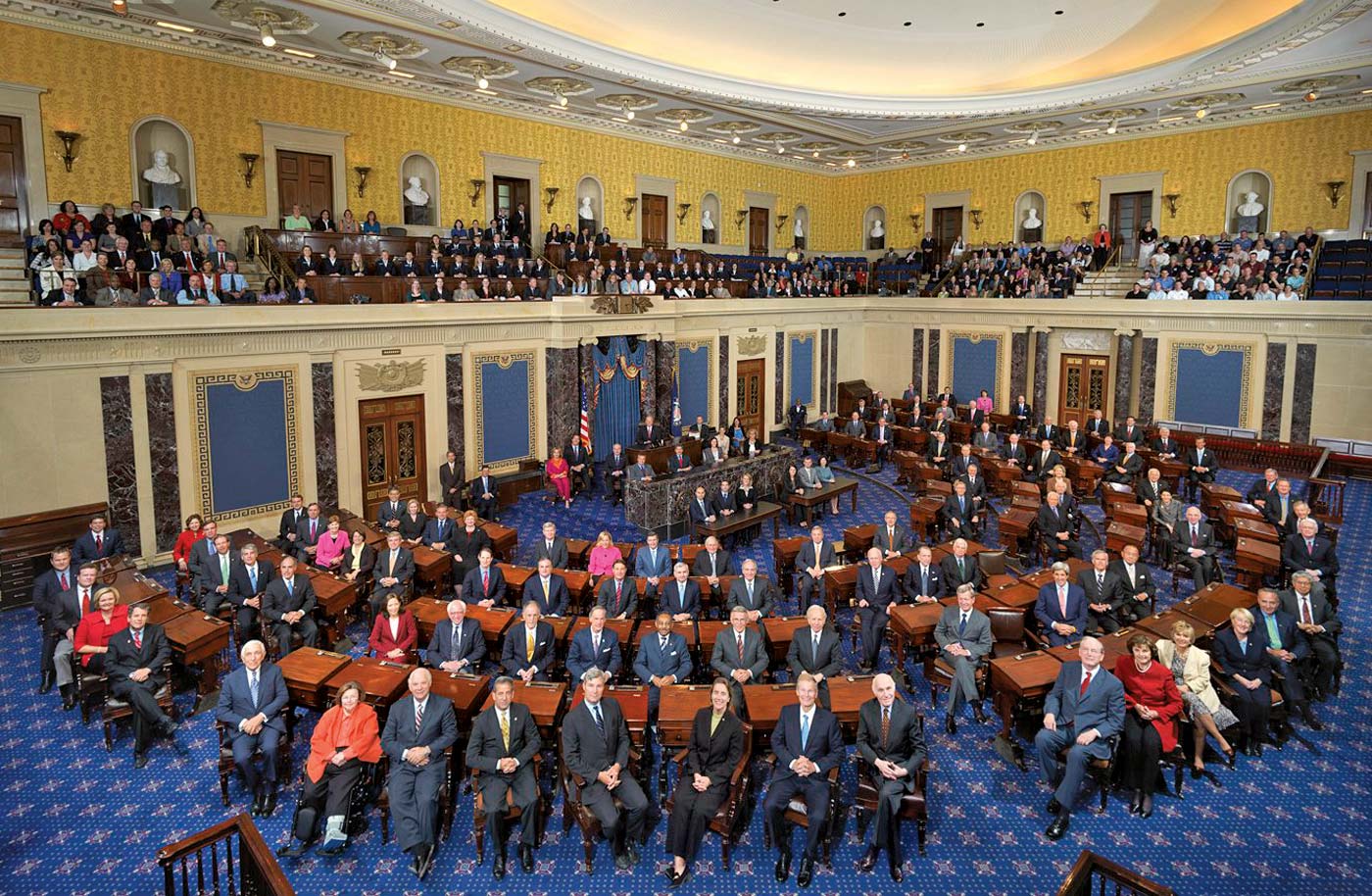
The United States of America is the most ethically diverse country by population. However the government is not diverse at all. Countries around the world have more diverse governments than the U.S. A country that is roughly 50% female has had no female leaders and a congress that is 81% male.

Politicians in the U.S. serve a wide assortment of different minority groups. Each group has its own needs; Mexican immigrants require different things than disabled people. When we have a government that is mostly white upperclassman we aren't really able to get any other perspectives besides a white upper class male's.
Part of this problem is that the voting turnout in the United State's is really low. But this is usually because they feel forgotten buy their government.

Another part of the problem is that both women and people of color face much more prejudice than their white male candidates. There are even recent examples of this happening during the current election campaign with Clinton and the past two with President Obama. Hillary Clinton has faced so much hate from the media on her appearance that male candidates would have never even thought of receiving. Trump has also taken advantage on the fact that she is the woman by saying she is not well suited or "does not have stamina."  Obama has been called racial slurs, and many people even claim that he was not even born in the U.S. 


Tuesday, September 6, 2016

Founding Falsities: Why Hamilton the Musical is Not a True American Story


Image result for hamilton the musical poster
Hamilton is one of Broadway’s top shows, receiving acclaim for its cast diversity. Critics say it has revolutionized the definition of a Broadway musical. However, Hamilton plays into the ideology of the ‘self-made man’ and fails to address elitism and racism in American politics. Hamilton picks and chooses details from the past to manufacture a false, though entertaining, story of America’s origins.

Alexander Hamilton’s story is one of a rise from poverty to fame. However, from the political elitism of colonial times to the Industrial Revolution’s business monopolies, patterns have shown that to rise through the classes is an exception, not a common truth. Yet the musical emphasizes how Hamilton was “non-stop”, as though hard work, rather than luck, can pull someone to elite status. It also ignores Hamilton’s elitism. He thought that the masses of people were untrustworthy and power should be given to a trusted - and rich - few.


Hamilton is also a false story because it ignores that most of the founding fathers actively supported slavery. The author, Lin Manuel Miranda stated that Hamilton allows people to, “leave whatever cultural baggage [they] have about the founding fathers at the door” - which is exactly what makes the story false. The lyrics mention John Laurens’ abolitionism but barely acknowledge Jefferson’s affair with Sally Hemmings. Alexander says of the South’s economy, “we know who’s really doin’ the planting”; but this is the only time slavery is mentioned in a political context. It seems as though Miranda is mentioning slavery just enough to be deemed politically correct, but little enough that listeners can forget that the founding fathers were white slave owners and their politics relied on slavery.

Poverty and racism are still around today, and they are entwined within each other. Systematic racism gives people of color unlivable wages, evicts them from their homes, and arrests them disproportionately more than white people. Classism and racism have been ingrained in American society since before the country even existed, and no matter how inclusive the casting call for Hamilton is, the musical forgets these issues and tells a false story of American history.

Thursday, February 11, 2016

Immigration


Immigration is a major issue in the United States. Some presidential candidates feel that immigrants should be deported, banned, and blocked from coming to the United States. Other candidates have different approaches to the situation. There are many ways that the US immigration policy can approach this situation.

Although immigration is a huge problem to these candidates, the methods in decreasing immigration should not be as dramatic. Immigrants that are already in the United States should not be the main focus right now. The US immigration policy should focus on keeping more immigrants from coming to the United States. Security at the border should be increased to ensure that no immigrants will pass through illegally. For undocumented immigrants, they should be given a year to become citizens of the United States and prove citizenship.

All Muslims should not be discriminated against. Every Muslim does not have the intentions of harming the US and its citizens. Unless suspicious activity is suspected, Muslims should be left alone. They should be treated as equal as every other American citizen. The US immigration policy should include that all Muslims must be documented in order to stay or come to the United States. 

Sunday, November 22, 2015

Key and Peele: The Substitute Teacher

In Key's and Peele's satirical episode of "Substitute Teacher" (seen below), Keegan-Michael Key plays the role of a black substitute teacher to a classroom of white students. Immediately, Key is seen establishing strict order in the classroom, and takes attendance. Key repeatedly mispronounces the students' names, for example, stating that 'Jaqueline' is 'Jac-qually,' 'Blake' is 'Bla-lack-ay,' 'Denise' is 'Dee-nice,' and 'A-a-ron' is 'Aaron.' This example in the clip may also apply to how white individuals may pronounce the names of black individuals. This element of the sketch suggests the difference between the 'standard English' and 'black English' dialect. The language is similar, but the way the language is said varies. This exaggerated distinction in the clip represents how dialect should not matter when discussing/referencing superiority over another race. Additionally, the way the names are said may be different (but are not incorrect) for different people due to one's cultural background.


Key increasingly gets angry when the students are hesitant to correct him (in their eyes what they believe is the correct way) or to reply, 'here.' He claims that the next person to say some silly name 'will feel his wrath.' The clip uses an element of satire, hyperbole, to exaggerate the substitute's aggressive response of when the student corrects him. Key continues to disregard what the student says, assuming what he says is always right. Furthermore, when Key hears how Blake speaks his name, Key becomes wildly irritated. Key says, 'Do you want to go to war, Bla-lack-ay? Because we could go to war, I'm for real. I'm for real.' The form of irony used, dramatic, is shown through Key's statement of war, and how we, as the audience, know the war he claims may be the civil war (given him being black and the students white). This usage of dramatic irony demonstrates how ridiculous people may seem when they become too obsessed with the many versions (dialects) there are to express words. Additionally, how absurd that the little differences may be the ultimate concerns that divide us among different races.

Friday, November 20, 2015

Key & Peele- Racial stereotypes

In the video done by Key & Peele, called ¨Alien imposters,¨ they bring up the issue of racial stereotypes and how they define how people relate to one another. In the video, the world is taken over by aliens who can make themselves appear to be human and have some sort of superficial human knowledge. There are two human survivors, who are both black males. They use common racial stereotypes to guess who is human and who is an alien that appears to be human 
Their first interaction is with white male redneck, who appears beyond a pile a trash, saying they created a community of survivors and he inquires if they want to join. They both look at each other as one of them was confused as to what they should do, but the other slowly turns to face the red neck again and lifts up his semi-automatic gun and fires several times. As the creature falls, it turns into its true alien form. The first man, Keegan, asked, "How did you know!?" in a very confused manner. The man who shot the alien, Jordan, says in sarcastic tone, ¨A redneck wants us to join his community of survivors, really, us?" Here he is referencing to the stereotype that all why rednecks hate black people. This comes from the before and after the civil war.  Southerners, or ¨Rednecks,¨ wanted to keep slavery alive; they thought very little of black people, as if they were animals, and they treated them accordingly. By bringing this stereotype, they are challenging us to let go of the past and not make assumptions about someone, just because of their heritage or where they are from.  

Their third encounter is with a white female. As they turned the corner with their guns ready, the girl seems them and immediately tosses her hands up saying ¨Don't hurt me, uh uh, my best friend is black and I uh love JayZ, and my favorite movie is think like a man.¨ Clearly she not scared just because two men have guns, but because two black men have guns. They turn their heads to faces each other and sit there for a second, before Jordan says ¨She´s good.¨ They ask what her name is and she responds with Emily. You hear a slight laughter in their voices as they say simultaneously, ¨Of course it is.¨ This stereotype determines who is dangerous and who is not. They convey this stereotype through the fact that Emily is scared that there are two black men in front of her. My guess is that if someone were in an apocalyptic scenario, they would be glad to see other humans, specifically those carrying guns, that could provide safety. They are challenging the stereotype, that someone can be deemed dangerous or not, sole based on their skin color. We all have reflags that warn us about certain person or situation, but skin color should not be one of those flags.   

I believe the point of this video, was challenge and destroy stereotype that involves race in America. There are several more examples of this in the video, but these two strongly portray their idea that stereotypes need to be broken down and taken out of our society