Showing posts with label Film. Show all posts

Saturday, March 25, 2017

Culture analysis on race

In the 2005 comedy Next Friday it follows a young black male named Craig as he leads a hard life. In this comedy stereotypes are overused and project black people as lazy workers and as people that are destructive to their own property and to society as a whole. In this movie the producers try to use racial stereotypes such as the brute and mammy in light hearted funny tones, but all they are doing is enforcing the bad views through the characters and themes in this movie.

In this movie the writers are delivering stereotypes through the characters. Next Friday is about a young man named Craig who moves into a predominantly white neighborhood with his black cousins to get a better life. This sends the message that you cannot have a good life without moving to someplace that is predominantly white. In the first part of the movie it showed that the only reason uncle elroy could afford his house was by winning the lottery. Showing that the only way that a black person could afford to live in a good house in a good neighborhood is not by hard work but by pure luck. In many cases when black people moved into a predominantly white neighborhood the white people began to move out. This is because of a common belief that a black person cannot maintain the things they have and that they mess up their surroundings. This is portrayed when Craig's cousin day day buys a new car and within the first ten minutes of the movie ruins it.
They also show stereotypes from the past when Craig flirts with Carla, the Mexican neighbor. After witnessing this her brother says “she has jungle fever” this is referring to when they believed that blacks were monkeys and inferior. The stereotype of the mammy and the brute also occurs with uncle elroy's wife sugar and deebo, a African man who escaped from prison. Every Time you see sugar she is in the house, she makes the food and is always looking to satisfy her husband. They also introduce a character named deebo who is a prison escapee who closely symbolizes the brute. They portray deebo as a strong illegal criminal who would do anything to hurt someone. Deebo is portrayed as savage like, dumb and violent. This is a stereotype that whites used against black men to prove that they were inferior.
In this movie it shows that even today society uses many stereotypes to falsely depict black people as someone that people should be afraid of, not trust and teaches people to be cautious when letting blacks into our society.

Monday, August 1, 2016

Welcome!

Welcome to the weblog for our American Literature class. Here's the place we will be continuing conversations from class and starting new ones. We'll be discussing and debating current events, historical controversies, and literary conundrums. We might even see a little poetry.

So, what's a blog? And how will we be using it class? For information on blogging and how to join and post to our blog, see "All About Blogging."

We're looking forward to a great year.

Make sure you check your e-mail for your invitation to join the blog. Also – and this is very important – the first step you should take after you accept the invitation is to edit your user profile so that you control how your identity and your communication preferences.  Click on the pull-down menu next to your name in the upper right corner of the browser and click on “Blogger Profile.” Then click on “Edit Profile.”

You can fill out as much of it as you want, but the only requirement is -- under “Identity” -- make sure your “Display name” is your first name and last initial only -- so we provide some anonymity while still allowing your classmates and teacher to be able to identity who you are. For example, change “Bernie Heidkamp” to “Bernie H.”

Friday, March 11, 2016

Men appear Women appear

In a passage from Ways of Seeing by John Berger, he states that "men act and women appear". Although women are over-sexualized in media, the same can be said for men. Therefore a more accurate critique of modern american culture would be "men and women both appear".

While women are more noticeably reduced to sex objects in pop culture, but both sides are portrayed that way. Women in film are shown to always have attractive body, and a sexual nature to them, whether in films like James Bond or Transformers. Many argue that because of this women are being demeaned and not properly represented, but this is true for men also. Actors like Channing Tatum and Ryan Reynolds have built their careers around their looks before their acting chops could catch up with their stardom. Admittedly women are more blatantly shown in this light, due to the male target audience, but with a closer look both genders are shown in similar over-sexualized ways. The main reason it is less obvious for men is that the male characters are given more depth behind their characters, which is the real problem with gender in film.

The over-sexualized nature of both genders is also revealed in music. Both women and men artist surround themselves with attractive people, to appeal to their audiences. In many modern rap videos there are women and men both in revealing clothes and suggestively dancing. Like in Rhianna's Work and LMFAO's Party Rock Anthem.Sadly, similarly to film there is a much larger male target audience leaving women more susceptible to the stereotyping.

Women are trapped in a state where they are seen mostly as sex objects in media, but it isn't because of over-sexualization. It is because women aren't given a chance to develop themselves beyond their appearances. Therefore the over-sexualization isn't the problem. The problem is media's reliance on sex as the way to define women. That is where the real change needs to come from.


Tuesday, November 10, 2015

New Stereotype for a New Generation

The Happy Sambo, Jim Crow, Mammy, The Brute, and so on. These are some of the stereotypes that have been tied to black cinema since its inception. When first introduced these stereotypes weren't seen as the racist depictions they are now categorized as. Back when these stereotypes were introduced they were accepted and appreciated by many. As racial equality grew these stereotypes were seen as offensive and rude, are becoming less and less obvious, and making way for a new black stereotype in film.

The new stereotype is the "Sidekick". When someone says sidekick images go through the mind of super powered dogs or a teenage boy in tights, but its not the same for the black sidekick. The sidekick falls into one of two molds, "The Wise Old Man" and "The Fun-loving Buddy".

The Wise Old Man stereotype is used in film to help guide their white counterpart though life, but always end up playing second fiddle. This stereotype is most portrayed by Morgan Freeman. Freeman has played many roles falling into the black sidekick stereotype. Whether is is Red in Shawshank Redemption or Virtuvius in The Lego Movie, Freeman is constantly working from the background of his films, while his white costar takes the lead.

Probably the most blatantly obvious use of this stereotype is in the film Bruce Almighty. Jim Carrey plays Bruce Nolan, a man endowed with god's powers. Freeman plays god, and yet still allows himself to be backup to his empowered white costar. Freeman's god literally goes on vacation and is only used to supply Carrey's character with the occasional knowledge bomb. Freeman meanwhile, gets a fraction of screen time of the other characters in the film.

The other half of the stereotype, The Fun-loving Buddy, is just as prominent in films today. If a wise old black man doesn't fit for the film the sidekick role is filled with a young charismatic companion for the white protagonist. A great example of this stereotype is Chris Rock in The Longest Yard. Much like the old man, this buddy helps the white character though their trials in the film, but they do it with a different style. Chris Rock plays a funny, charismatic, happy friend to Adam Sandler, and instead of using his years of experience to help he uses his natural charm and personality to provide backup for Sandler.

Another example of this stereotype is in the case of Michael B. Jordan. Jordan has played in great films like Chronicle, Fruitvale Station, and the upcoming Creed, and even though he has proven himself in these films as a strong leading man, he still can't break free from the black buddy type cast in That Awkward Moment getting the less screen time and money than his costars Miles Teller and Zac Efron. 

Racial equality is something people have been fighting for for hundreds of years and the movie industry could help by not keeping the black characters in the background and let them step out into a leading role instead of standing in the shadow of their white costar.


Monday, November 9, 2015

Racism in Peter Pan

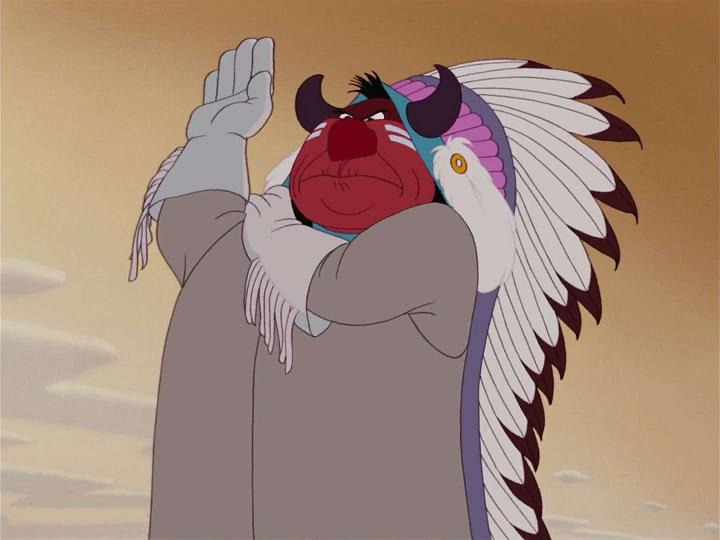
Peter Pan is regarded as a beloved and classic Disney movie. The film was released in 1953 and was an instant hit. At first look, Peter Pan is a fun story about an adventurous and magical boy who introduces three siblings to his home in Neverland, a place where children never grow up. Once further analyzed, the movie is revealed to be perpetuating Native American stereotypes through the depiction of Princess Tiger Lily and her tribe.

The Native Americans in Peter Pan are portrayed as inaudible, red faced savages. In a song featured in the movie, "What Makes the Red Man Red?" the Native Americans are all seen drumming and jumping around like animals, while wearing feathers in their long black hair. The Indian Chief explains his people's history and culture. The song says "Let's go back a million years to the very first Injun prince, he kissed a maid and start to blush and we've all been blushin' since." According to this, their genetic make up is the way it is because one Indian blushed red when he kissed a girl. They state this because there "needed" to be an explanation as to why their skin is not the "normal" human color of "white." The Native American's are also depicted as misogynistic; the woman Indian reprimands Wendy for dancing with the Indians and tells her that the women do not dance, they are supposed to gather fire wood instead. Near the end of the song, Wendy is also seen scolding her younger brother for joining in on the Indian's dance, demonstrating the Indians primitive nature.


This depiction of Native Americans reduces the culture to a subservient cartoon. If not obvious, this portrayal is extremely offensive. It blends all Indians together into one barbaric caricature, ignoring the diverse societies that are within the Native American culture.

The extreme racism against Native Americans in Peter Pan is problematic and is still commonplace in American culture today. There are still many sports teams that have Indians as mascots, including the Kansas City Chiefs, Cleveland Indians, Atlanta Braves, and the Blackhawks. Promoting the Native American culture as a mascot is inappropriate and oppressive. Racism against Native American's seems to be overlooked in today's society and although discrimination against Native American's may not seem as prevalent, it is still present and alive.


Friday, October 16, 2015

Loss of Heroes In a Postmodern World

Postmodernism a late-20th-century style and concept in the arts, architecture, and criticism that represents a departure from modernism and has at its heart a general distrust of grand theories and ideologies as well as a problematical relationship with any notion of “art.” Postmodernism has been steadily growing in popularity since its inception. If postmodernism works are really analyzed you can find a constant theme, heroes don't exist.

Heroes are key elements to most forms of storytelling. Most stories have a main hero who defeats evil and saves the day. In postmodern stories though, the hero seems to disappear. For example, in the book "A Visit From The Goon Squad" the reader follows a large roster of characters, but none of them are the "hero". All the characters are shown as flawed people trying to figure themselves out, whether it's the kleptomaniac, Sasha or if its the man trying to recapture is libido, Bennie. The characters all try to overcome their flaws, but fall too short.

Another example shows up in Quentin Tarantino's postmodern classic, Pulp Fiction, the idea of there being a hero is lost. The film follows three main characters;Vincent Vega, Jules Winnfield, and Butch Coolidge. All of these characters are criminals and murderers, and the supporting cast doesn't contribute a hero character either. Even a cop depicted in this film turned out to be a sadistic rapist. This only leaves one question, why can't there be a hero in a postmodern story?

The answer leads back to the definition of postmodernism. Postmodernism is many times seen as a critique of "modern" ideas, which explains why we can't have heroes. Although everyone likes to see the hero defeat evil and ride off into the sunset, we also like to blur the lines between good and evil. It has been a modern theme to embrace the dark heroes. American culture has been obsessed with the dark hero for quite some time, explaining why characters like Batman have a larger following than their clean cut counterparts like Superman. Critics say the dark hero appeals to the people more because they seem more human or relate able.


The point of a hero is to be larger than life, its part of what makes a person a hero, they aren't supposed to be relate able. The postmodernists see this and say, if the people want a flawed hero, then they don't truly want a hero. Therefore, erasing the hero from a postmodern world. This satirizes American stories and the direction the culture is going. A world without heroes.

Friday, October 9, 2015

Postmodernism Through Film

Postmodernism is a style or concept of art that shies away from big ideologies and tries to satire society. Postmodernism started in the late 20th century and since then postmodernism has made a significant impact on all forms of art, including film.

Postmodernism has been showing up in film for quite some time, with many saying Monty Python and The Holy Grail (1975) was one of the first films to successful pull off a postmodernism feel. In order for a film to be postmodern it needs to use certain techniques that separate them from most films.

One example of these techniques used in Monty Python and The Holy Grail is the use of meta-storytelling. If a movie has meta-storytelling then it means the film is aware of itself, and Monty Python pulls this off beautifully. The Holy Grail is filled with hyper-unrealistic situations used by the filmmakers to pull the characters and the audience out of the movie. This technique was very rarely used prior and helped turn this movie into an instant classic.

Another technique is non-linear storytelling. This technique can be found in films like Pulp Fiction and Memento. The split up timeline of Memento is a postmodernism tactic that perfectly captures the struggles of memory loss and contradicts modern storytelling norms. This is also effective in Pulp Fiction. Tarantino is considered the master of postmodernist cinema. All of his films have some sort of a postmodern element to them. In Pulp Fiction, the linear storyline is replaced with a chapter system, like novels. This system affects the linear story of the film, but instead gives you a series of interconnecting stories. This technique allowed Tarantino to have one chapter end with the death of a main character near the middle of the film, and have that some character walk into the sunset at the end.

Satire is another key technique used in postmodern films. A great example is The Big Lebowski. This film takes shots at the structures of modern films. The character "The Dude" often quotes other when trying to make a point, indicating a lack of originality in the modern world. The film also has many wild, intriguing, and beautiful scenes, pointing at the modern filmgoer's obsessions with visual aspects of film. Finally the movie ends leaving many questions unanswered, this was used to break free from the classic style of storytelling, ending in a resolution.

Postmodernism in film is a growing technique that that has only improved over the years with films like Inception and Her. Its techniques and fresh ideas are essential to the modern film industry to break the norms and provide new experiences

Wednesday, October 7, 2015

Birdman: A Commentary on a Post-Talent World

 Alejandro González Iñárritu's Academy Award-winning film titled Birdman or (The Unexpected Virtue of Ignorance) appears to be a parody of blockbuster action hero movies but is actually a postmodern narrative describing the life of an actor in a world where "being relevant" is all one can strive to do. Michael Keaton plays Riggan Thompson, an ex-Hollywood movie star who has achieved a lifetime of fame from playing the lead roll in the Birdman superhero trilogy. The story starts with Thompson writing and directing a broadway show 20 years after turning down Birdman 4, and his confidence in this play being his triumphant return to the mainstream wanes over the course of the movie, fueled by characters calling him "old" and "washed up" and with hundreds of fans recognizing him as the hero he wants so badly to be separate from.

Riggan Thompson is old-fashioned. To him, making a comeback as someone involved with theatre and film merely means putting on a good show. To everyone else, a "good show" has nothing to do with it. Everyone in the crowd is at the play because The Birdman is attached to it. Tabitha Dickinson (played by Lindsay Duncan), is a top theatre critic who is predisposed to give Thompson's new show an awful review. Not because she doesn't have faith in the show to be good but because she has seen so many actors desperately put out shows to come back and she doesn't feel like watching another.

Riggan Thompson's relationship with his daughter Sam Thompson (played by Emma Stone) worsens throughout the course of the movie, with Sam becoming more and more disgusted by her father's lifestyle. Sam delivers a rant during an argument with her father complaining about how Riggan doesn't understand the world he lives in. "Let's face it, dad, you aren't doing this for the sake of art. You are doing this because you want to feel relevant again," she says. "Well guess what, there's an entire world out there where people fight to be relevant every single day, and you pretend like it doesn't exist."

The most striking element of the narrative is the character of Birdman that reinforces the postmodern theme. Birdman exists for most of the movie as a disembodied voice in Riggan Thompson's head, always reminding him of what could have been. Birdman tries to convince him and Riggan Thompson are one and the same, and Thompson is constantly trying to shut him up. Sometimes this leads to Thompson throwing tantrums using his "super powers" to throw posters across the room with a wave of his hand, or walking outside and flying up to the roof. All of this adds up to a clever way to blur the line between Riggan Thompson as a person and Riggan Thompson as he is known to everyone else: Birdman.

Birdman is an incredibly clever postmodern commentary on the world of film and how one's image can affect their life. The movie was filmed in a way that makes it feel like one continuous shot, with a soundtrack consisting almost entirely of jazz drums. This combined with a fantastic narrative, memorable performances, and a fantastic ending creates a film that deserves the Academy award for Best Picture in 2014 and a spot among the most relevant postmodern works of this era.

Film Clip

Friday, September 11, 2015

Straight Outta Compton:A True American Story.

Straight Outta Compton is a movie that is taking the world by storm, already making over 150 million dollars in the domestic box office alone. After seeing the film it isn't hard to understand why. Straight Outta Compton is a captivating true American story. 

Straight Outta Compton tells the story of the notorious rap group N.W.A. The movie follows the different members of the rap group from their humble beginning, to their peak, and beyond. This film embodies the true essence of any American story for a few reasons.  

One reason is that the film is based on the real lives of each of the members. The film tried to take very few liberties when it came to each member’s backstory. The filmmakers weren’t afraid to show any details of the rap group’s lives to get the truest depictions. 

Another reason is the minimal amount of exaggeration. The filmmakers wanted to be sure that they represented N.W.A. in a very accurate way. They also wanted to properly display the trials and tribulations each member of the group had to go through in order to get to the top. Overcoming challenges to achieve our goals are a big part of the American identity, and Straight Outta Compton reveals this beautifully. This was shown best in the scenes between Dr. Dre and Suge Knight. Dr. Dre had climbed all the way to the top with N.W.A. but after Ice Cube left the group because he felt he wasn’t given adequate payment, Dr. Dre soon followed him. Starting his own label with Suge Knight, Dre climbed back to the top of the charts. Suge Knight’s “off the record”  actions made Dre very uncomfortable therefore Dr. Dre had to leave another multi million dollar label to create his own label, Aftermath. After all these challenges Dr. Dre still was able to become the first rap billionaire by selling his headphone company to Apple. 

The Final reason Straight Outta Compton is a true American story is because there are still millions of Americans who see this film and can really connect to the situations in it. Police brutality, racial profiling, poverty, and the Rodney King story are a few situations in this film that can instantly trigger emotions in almost anyone who was alive for the 80s and 90s. 

Straight Outta Compton is a true film that was able to connect and entertain millions of people.

Wednesday, September 9, 2015

Hunger Games: Not As Fictional As It Seems

The relatively new cinematic phenomenon, The Hunger Games, shines a new perspective on the idea of war. While the movie comes off as being very fictional, due to the advanced technology and controlled society, it really just enhances the negative sides of war. Tim O'Brien talks about draft day and the stress that it put on the American men, resembling the scenes of picking who was to go to the famous "Hunger Games" in the movie. These clips seem very unrealistic because of how overdramatic they are. In reality, however, they take what was a huge problem during the Vietnam War time period and show it as being as horrible as it may have been for those specific Americans and their families.

The main idea that the movie and Tim O'Brien's book had in common was forced violence. O'Brien talks about his thoughts and ideas to run away to Canada, in order to escape the draft and not participate in a war that he did not believe in. The Hunger Games does a great job of showing the change in lifestyle when being forced to participate in a war setting. It also shows the idea that every man is for himself. O'Brien would argue that the movie is fictional in that sense. He does a great job of demonstrating the contradicting sides of war, as opposed to simply relating it to death and hate. Towards the end of the movie, there have been alliances formed and relationships that have grown, showing what O'Brien would consider "brotherhood".

Many fictional movies, like The Hunger Games, come off as being unrealistic, yet tend to exaggerate the hard truths that surround us, forcing us to look at situations through new perspectives.

Saturday, September 5, 2015

A Serial Impersonator Becomes a Psychological Experiment: The Story of Frédéric Bourdin

I recently watched a documentary on Netflix called The Imposter which told the true story of a 23 year old Spaniard posing as a missing 16 year old from Texas. Seems impossible to believe, right? How could a brown-haired, brown-eyed, Spanish-speaking man named Frédéric Bourdin convince a family that he was their blonde-haired, blue-eyed son, Nicholas Barclay?

The Imposter not only tells the incredible true story of the serial impersonator Frédéric Bourdin, but the documentary also explores the psychological effects of losing a family member. Although Bourdin did dye his hair blonde to appear more like Nicholas, the Barclay family was so ecstatic at the return of "Nicholas" that they did not dare to question his eye color change. The Barclay family desired a truth so profoundly that logic did not dare interfere with the return of a loved one.

The story of Nicholas Barclay proposed a daunting question: How often do I idealized people because that is the truth I want? Obviously I would never go as far as accidentally adopting an adult from Spain, but on a daily basis I glorify people with more-than-human qualities. The Imposter revealed an underlying human truth: in order to cope with pain and loss, humans tell themselves false stories that eventually become their reality.

Sunday, March 22, 2015

The Spongebob Squarepants Movie II


The Spongebob Squarepants movie 2 has very few if any noticeable gender roles. Although only one main character is a female, she exhibits no form of domesticity, submissiveness, piety or purity. Sandy is not bound to any “spheres” and she behaves just like any other character in the movie. This particular movie is important because millions of young, impressionable children across the world (mostly in America) will view this movie.

In the movie, Plankton tries to steal the Krabby Patty secret formula from Mr. Krabs, and while him and Spongebob wrestle over the bottle containing the formula, the bottle simply disappears. With Krabby Patties no longer in production, the entire city of Bikini Bottom is thrown into a depression of rioting and hysteria. The main characters, Spongebob, Plankton, Mr. Krabs, Squidward, Patrick, and Sandy, the only female, must find the secret formula in order to save Bikini Bottom. 

Although there is a shortage of female characters, the lone female is treated and portrayed very similarly to the men. She does not take orders from any of them and does not show any of the characteristics that most other women in American culture do. 

When the Krabby Patty shortage began, everyone in the city of Bikini Bottom was panicking. Senseless violence and disorder was occurring, and Sandy Cheeks, the only female main character, leapt into action. She attempted to reverse engineer the Krabby Patty secret formula so she could stop the violence and bring Bikini Bottom out of tough times. She did this on her own volition, without any encouragement or supervision by a male figure.

The whole slew of main characters decides that they need to go on land to hunt out the Krabby Patty secret formula, each character decides for him or herself whether they will make the journey. Sandy decides by herself that she will make the trip, without any encouragement or reassurance from the male characters. She is of a different sex, but all the characters function as equals.

At the climax of the film, the main characters must fight a deranged neo-pirate to get the secret recipe back, and they quickly find that they function as an awful team. Since there is no teamwork, they fight as individuals, and Sandy is no exception. Her superpower is nothing stereotypically identified with the female sex.

Although the Spongebob Squarepants Movie II is very progressive when it comes to defining sex roles, it is very different from other works of American culture, and it hardly can enlighten children when most other culture is implanting sex roles into their very impressionable minds. 

Thursday, February 5, 2015

Weekend Update: Romantic Comedy Expert

Saturday Night Live is a hilarious satirical show that mocks and questions many stereotypes and current events or trends. Sometimes. A weekly sketch they include is Weekend Update, in which "newscasters" give us the news, frequently bringing on "experts" to elaborate on a particular topic. In one episode they interviewed the "Romantic Comedy Expert," on the premise that she would be giving her opinion on the new romantic comedy style television shows of 2014.

What ended up happening, as became quickly apparent during the sketch, was the expert, a sweet smiling woman named Daisy Rose, trying to create a romantic comedy with the newscaster. She uses many of the romantic comedy cliches to try to set herself up with the interviewer. She uses cliche lines (e.g. saying she hasn't laughed since she broke up with her ex boyfriend, but the interviewer got her to laugh again, she has to run and catch her plane and the interviewer has to decide whether he will run after her, that they should meet in their "special spot," etc.) and general rom com setups, such as giggling and looking down and then at the interviewer, having acoustic guitar music playing in the background that gradually swells as things get more intense. The interviewer is, of course, perplexed about the whole thing. 

As silly and light as the premise of this sketch is, I think the satire and satirical point is interesting and worth noting. The use of dramatic irony- the romantic comedy expert has no idea how ridiculous and out of place everything she's saying is- has two purposes. First of all, just to lay bare just how similar and silly most romantic comedies are. The lines she uses can all be found, in some form, in nearly every rom com. The second purpose, though, is a tad more serious. I think it makes an interesting comment on fans of romantic comedies (such as myself) and their tendency to sometimes look for the movie moment and movie setup and movie relationship instead actually creating unique situations. The romantic comedy expert, despite saying emotional and intense lines one would assume were directed at a love interest, is merely speaking to a man she met not even a minute earlier. I think it's supposed to make those fans think about their idea of what falling in love is. 

Thursday, January 22, 2015

Laughing at "Fool's Gold"

The movie Fool's Gold revolves around finding a lost treasure which is sought after by many individual search teams. Kevin Hart portrays Bigg Bunny D, a controlling power figure of the island, he is constantly threatening and executing violent actions. His greed to take the entirety of the treasure drives him to many attempts of killing those closest on his trail even though they have promised him a large amount of it in return for sparing their lives. This demonstrates the brute stereotype quite dramatically. The exaggerated violence often reaches a more comical level than the seriousness of the actions should be. He has no qualms with distributing violent threats and punishment through his minions but when he must fight on his own his courage fades although his anger grows.


Throughout the film you are driven to question Bigg Bunny's true authority and sanity. In his paranoia, he doubts the people who are loyal to him and hires new people to keep the others in line. Although his minions have been obedient and not protested even when they probable should have, Bigg Bunny is too greedy to see the connection and has someone murder them to demonstrate his seriousness. This is an extreme violent action which he takes lightly and continues on without an issue. His primitive greed for the money and to protect it despite the consequences is truly animalistic, a quality of the brute.


Thursday, November 6, 2014

Film Project Reflection


Creating the film project as a replacement for a conventional literary analysis turned out to be a far more enjoyable and informative experience for me. It allowed me to take the often times stressful and painful process of writing and turn it into a enjoyable time. For me the film project allowed me to express my interpretation of the book in something other than words on paper. It gave me a means to present to my peers how I was affected by the novel. This was a relatively new opportunity for me. So often in standard English assignments it is a personal sharing of ideas between student and teacher resulting in only the opinions of the two minds who got to view the assignment. In this assignment, as well as the blog page, my ideas and interpretations are able to be shared with the entire class. I am a huge fan of these open sharing platforms.

It was an enjoyable experience for another reason though. I liked the the actual process of making the video, quite contrary to writing a literary essay. The filming was fun and did not seem like school work in the normal manner. It felt like something I would do in my free time. Overall the assignment was very fun and much preferable to a literary analysis. I'm glad we were given this option.

Thursday, October 16, 2014

The Post Modern World of "The Social Network"

When learning about post-modernism and the structure of meta-stories, I was reminded of a movie I have watched more times than I can count. “The Social Network”, a film about the creation of Facebook, completely embodies the concept of post-modernism.

It is told as a meta-story, in a non-linear fashion. Throughout the movie, the main character Mark Zuckerberg, a founder of Facebook, is facing two lawsuits. The film tells the story of how Facebook came to be, what went wrong, and how it was handled by the law. One scene shows a moment from the past and in the next scene characters comment on the previous one during different depositions.

One scene in particular does this brilliantly. It begins with Eduardo Saverin, the CFO, walking into the offices of Facebook and being greeted by a lawyer. The lawyer presents him with papers to sign, and although you don’t know what they say, his expression, followed by an angry verbal attack on Mark, tells you it can’t be good. Then, it cuts to the deposition of Eduardo and Mark. Eduardo is telling the story of what happened that day; how he was cheated out of all of his stock in the company. It cuts back again to the offices where Eduardo tells off Mark and gives him a look that that could kill.

Not only is this film post-modern because of its structure, but also because of Facebook itself. Its ironic that Mark Zuckerberg was an antisocial college student and he created the most popular social networking site in the world. He promoted a culture where people take pictures at a party, look at the pictures while they’re at the party, comment online about the party, and then post the pictures later online to “relive” the party.

You’re never more aware of being somewhere than when you’re living in a post modern world. Or are you?

Postmodernism's Form of Story Telling

Postmodernism, in my experience, is a form of unconventional story telling. After seeing show and tell today, I learned that many other people believe this of postmodernism. When I say Unconventional story telling, I mean a different or unique way of presenting an idea or story. Many of the items brought to show and tell, mine included, were examples of unconventional story telling.

This abstract form of story telling may incorporate many different forms of story telling that make it unique. One of the more widely used forms of story telling used in postmodernism is non linear plot. The item that I brought to show and tell was the film Reservoir Dogs, directed by Quentin Tarantino, was a prime example of non linear story telling as the film skips around to different parts of the film and incorporates long extensive flashbacks that provide back story over specific characters. This non linear story telling allowed the individual characters be the focus of the film rather than the immense action sequences that were purposely not filmed. Another example of non linear storytelling is the film Memento, directed by Christopher Nolan, which is displayed scene by scene in reverse order. The use of non linear storytelling in this movie allows the viewer to empathize with the film's protagonist, Leonard, as he suffers from short term memory loss, having the film presented in reverse order does not give us any pretext for the any scene that we are watching so we react to the events in the film with the same confusion as the main character.

Non linear story telling is used in a variety of ways that let the viewer feel closer to the character and to better understand them. Postmodernism is way to present stories in a unique fashion that, in some cases, adds a deeper meaning to the story.

Thursday, October 2, 2014

Butch and Sundance: The Bad Guys

The film Butch Cassidy and the Sundance Kid, directed by George Roy Hill, tells the story of two train robbing bandits in the wild west. The story follows the escapes of these two men as they as they live out their lives as bandits.

This film breaks the traditional ideology that protagonists of film must be good people. Butch Cassidy and the Sundance kid are two of the biggest thieves in the United States of America and Bolivia. In the United States, this troublesome duo lead their own gang that robbed trains by partially blowing them up, and in Bolivia, they robbed so many banks that they became known as "Los Banditos Yankees". Traditionally in film, the protagonist is a good hearted character who obeys the law and stops the bad guys. Butch Cassidy and the Sundance Kid directly contradicts that ideology by having the main characters be two of the most famous outlaws in the americas.

At one point in the film, Butch and the Sundance Kid attempt to go straight by finding legitimate jobs, but when they are tempted by stealing gold they go back to their old ways of robbing people of their valuable possessions.

The character Butch Cassidy seems like he would not be a criminal by the way he talks his way out of a sticky situation by calming a man who thinks he has been cheated into not fighting his partner, the Sundance Kid, yet he is the leader of a gang. This notion of Butch being a kind hearted fellow is quickly dismissed by when he enters a knife fight to determine the leadership of his gang. Although the mere fact that he got into a knife fight for his gang is bad enough, he wins the knife fight by cheating and taking cheap shots on his opponent.

The Sundance Kid is an enigma of a character because very little is revealed about him, including his name. He is the right hand man of Butch Cassidy and has no moral dilemmas about killing men that get in his way.

Of these two men, it is clear that both of them are hardened criminals and that they break the ideology that protagonists of film must be good guys. Through cheating, killing, and robbing Butch and the Sundanc Kid are two protagonists that are unique for there immoral nature although they are the title characters of this film.

Tuesday, September 30, 2014

Mocking Our Society

While I am looking forward to the upcoming release of The Hunger Games: Mockingly Part 1 as most of American teens, the new trailer is overcompensating. While trailers are supposed to be representative of the movie and grab the viewers attention, it can be overwhelming. I think that this constant focus on the action and heroism takes a movie which is already unrealistic and deemphasizes the motifs which reveal truth. The trailer consists of constant cuts to battles, dramatic conversations, tension, and heroic statements. While they are supposed to be fighting a rebellion, a person has moments of weakness, fear, and selfishness in stressful situations, it is simply natural. The heroism would not be consistent if it were a true situation. Although the trailer does not advertise the underlying true motifs of war which the book expresses, the material from the series can be used to reflect upon american society.

The whole premise of this series is mocking US society today. The separation of districts is a parody of our class system and corruption of government. The government throughout the Hunger Games series is trying to squash the rebellion and ignore the issues of lower-class citizens. This is supposed to reflect on our society. The most extreme parody involved in the series is the idea of sending children to fight and die inside a dome for entertainment and "reminder" of the war. A reflection of reality television shows, the games is a radical version but may have truth, for the purpose of "entertainment" much of our television programs are shows in which the participants endure emotional stress and lies created by producers to increase ratings. Most "reality" shows are not even reality, the majority of content which makes it into the final product is a reproduction of something that did not go quite right or something completely staged to enhance the show. Our society is manipulating people's lives for the sake of entertainment, lives are meant to be natural not something that can be manufactured.


Friday, September 26, 2014

Parallels in Les Miserables and The Things They Carried

The story of Les Miserables and the songs from its musical, especially “Empty Chairs at Empty Tables,” have many parallels with The Things They Carried by Tim O’Brien.

During “Empty Chairs at Empty Tables,” one of the main characters in Les Miserables, Marius, has just gotten back on his feet after a revolutionarily sustained injury, goes to the sight of the revolution, and sings about his heartbreak. Marius sings, “Oh my friends, my friends forgive me, that I live and you are gone. There's a grief that can't be spoken. There's a pain goes on and on.” The guilt that Marius is feeling in the scene is made apparent when he begs for his dead friends’ to “forgive” him because he was the one to “live on” and that they are now “gone.”

O’Brien talks about a similar guilt when talking about death and war. He says, “my presence was guilt enough… and I remember feeling the burden of responsibility and grief” (171). Marius’ and O’Brien’s “guilt” about death brings to light the after affects of war on the soldier’s conscience.

Both in Les Miserables and The Things They Carried, characters acknowledge the profound sacrifice that takes place in war and that the reason for that sacrifice is not always clear. Marius sings, “Oh my friends, my friends, don't ask me what your sacrifice was for. Empty chairs at empty tables where my friends will sing no more.” Marius’ blatant ignorance in regards to what his “friends” have just died for exemplifies the fact that soldiers or revolutionaries do not always know if their “sacrifice” is worth the cost or if it is justified.

O’Brien discusses this often times unjustified sacrifice when saying, “you don’t make a war without knowing why… [and] when a nation goes to war it must have reasonable confidence in the justice and imperative of its cause… Once people are dead, you can’t make them undead” (38-39). O’Brien’s concrete way of talking about the “dead” demonstrates his views on the importance war being just.

The similarities that these two stories hold highlight the common experiences that all soldiers might have despite the century.