Showing posts with label #satire. Show all posts

Monday, February 6, 2017

Satire In Teen Chick Flicks

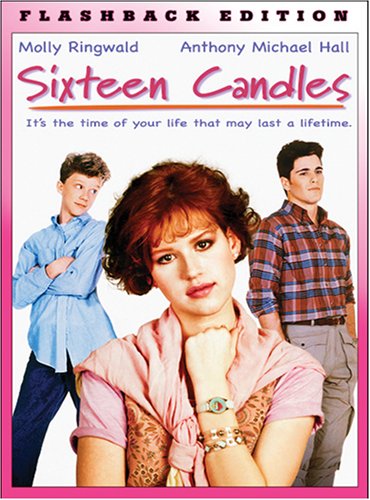
There is a certain type of movie that everyone has seen at some point, either with enthusiasm or with disdain for the person who picked it out. It most likely has a pink cover with the conventionally attractive lead actress on the cover, either just standing there and looking pretty or maybe standing there, holding something, and looking pretty. These movies all have the same plot: teenaged girl is faced with injustice in the form of high school cliques or the struggles of being unpopular, teenaged girl overcomes injustice, gets the guy, and looks hot doing it.
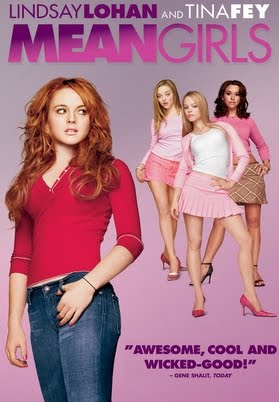
Image result for mean girls coverImage result for sixteen candles coverImage result for clueless cover
Don’t get me wrong, some of these movies are great. I would put Legally Blond in this category and I love that movie and think it has a really important message. That being said, these movies are often lazy in their storytelling. They rely on the same characters, plots, and settings and after a while, they start to blend together. This cannot be said for the 1988 film Heathers. If you haven’t seen this movie yet, please go watch it right now, it’s on netflix and well worth the hour and forty-three minutes.

Heathers is the brainchild of writer Daniel Waters and satirizes the typical teen drama. In the film, Westerburg High School is run by the Heathers, three popular girls who share the same name, and Veronica (Winona Ryder), the dark horse of their clique. Veronica is quite possibly the epitome of the “not like the other girls” archetype. She’s pseudo-poetic, she wears a monocle to write in her leather bound diary, and she hates her friends. Like in every teen movie, Veronica’s world gets turned upside down when she meets a boy. In this case, it’s JD, played by a young Christian Slater. JD fancies himself and Veronica Bonnie and Clyde types and sets out to kill the people that make his and Veronica’s lives miserable by staging their suicides. Their targets are fairly predictable, two of the Heathers and two stereotypical "meathead jocks". In the very first suicide they stage, JD and Veronica go to see Heather #1 to help cure her hangover. Veronica genuinely does not want to hurt Heather too much, but JD ends up giving her a cup of blue drain-cleaner, causing her to collapse, smashing a glass coffee table, and die.

While the first "suicide" scene is interesting from an aesthetic and cinematographic perspective, the most interesting detail is perhaps the color of the drain-cleaner. Throughout the film, blue is very closely associated with Veronica and the world she and JD create around them. Veronica kills Heather. JD may have handed Heather the cup of drain cleaner, but she choked on blue drain-cleaner, Veronica killed her. The fact Heather tormented JD and Veronica doesn't excuse the fact that they're murderers and it becomes clear towards the end of the movie that life, in fact, was better when Heather was alive. JD is not a hero. Veronica is not a hero. They killed people, they are not meant to be glorified. In the last scene JD blows himself up and Veronica just barely keeps him from taking the rest of the school with him.The idea that one unique, quirky girl can defeat bitchy teen queens is idiotic. The premise of a school run by a clique of cheerleading primadonnas is idiotic. The notion that the right guy will fix all a girl’s problems is idiotic. The genre of teen movies that constantly forces these concepts down the throats of a young and largely female audience is idiotic and Heathers wants you to know it.

Friday, February 3, 2017

The Satire in the Blow Up Doll

The television show The Office is built on the concept of satirical humor, it’s what makes the show it’s iconic self. The series is based on stereotypical issues of a corporate office and often makes jokes on race, age, sexism and gender.

One episode that really sticks out when it comes to satire specially is the second show of the second season, entitled “Sexual Harassment.” In this episode Michael received news that a CFO quit due to sexual harassment and decides to take matters into his own hands. Michael gives the entire office a mini talk or a conference that dealt with the issue of fraternizing a against women, specifically in the workplace. While talking at his own conference, he begins to start trying to re-lighten up the office by resorting to his old ways of rude and insulting comments. But, the situation gets flipped when Michael goes to the warehouse to get some new joke ideas, but just ends up getting jokes make about him, he runs away embarrassed from a taste of his own medicine.

The show uses both dramatic irony and satire to talk about a real issue in the workplace. They start with the real issue at hand, and slowly spin the topic more and more to the point of totally flipping it for a humorous effect. The episode even gets to the point where Michael brings in a blow up sex doll to show everyone the rights and wrongs of “touching in a corporate office.” By doing this the writers were addressing a serious issue in a completely unexpected funny way that helps the matter to be a bit lighter.

Throughout the entire series, The Office, used satire to make light of real world problems that corporate offices often face. Although they often bring up very controversial topics, it always seems to play out right and ends up making the show so unique and humorous.

Thursday, February 2, 2017

"Nosedive": A Social Media Obsessed Society

Charlie Brooker, the writer and creator of the television series “Black Mirror” explores the dark side of technology intertwined in our modern day lives. Black Mirror has three seasons on Netflix, with a fourth planning to air sometime in the beginning of 2017. Often taken to the extreme, the satirical manner of this show exposes the devastating possibilities of our nation involved with today's modern gadgets and technological products. The first episode premiering in the third season titled, “Nosedive” explores a world locked in a perpetual cycle of faux Facebook pages, likes, star ratings, and competition for acceptance.
This unsettling society is not too far off from the typical American experience today. Although highly exaggerated, the characters in the episode are dependent on “star ratings” from others. Every time you buy a cup of coffee, or engage in small talk, you hold your phone towards them and give them a rate out of 5. This point system reveals the shallowest impulses of our society. Not only does this point system affect your social impact on others, but it can limit you from being accepted from gym memberships, exclusive high end housing, etc... A society where the internal instant gratification social media allows is now outward and external. This episode shows how interactions with others can be highly superficial. The protagonist of the episode, Laci, is a social climber willing to do anything for a higher rating, until it eventually consumes her life leading to her downfall.

The ironic nuances played out in the episode critique the extent our society judges others based on looks a popularity. American culture is obsessed with beautiful celebrities, as well as our own likes and status updates. With constant gratification with the click of a button, we become trapped in our phones and social media accounts. The episode tries to show how Laci realizes that life is more than just a screen and artificial relationships with shallow conversations. Perhaps a world a little less self absorbed and dependent on the number of likes would be beneficial. How far is our society from the one depicted in the episode?

Wednesday, February 1, 2017

SNL Trump Satire


One of the biggest uses of satire in today's modern culture is on Saturday Night Live. In every episode you will always find some use of satire especially in the sense of making fun of a particular person. One recent one is Alec Baldwin doing the Donald Trump skits. In these skits they use so much satire, especially irony. Not only does Alec Baldwin imitate the looks, facial expressions, and hand gestures of Trump, the jokes are all directed towards decisions he has made and showcasing the kind of person most people view him to be. If you watch the video you can hear some of the hilarious references to things Trump has said. The show does a really great job with satire in the case of Trump because it’s actually quite easy to make fun of him. For example they use his obsession with twitter to make satirical jokes about him. There is one part when these men are trying to discuss security briefing and Syria and Trump is retweeting something. It's quite interesting to compare these skits to reality because they are so accurate. They obviously use a lot of dramatic irony but most of the points made are things that are very close to things that have actually happened.


https://www.nbc.com/saturday-night-live/video/classroom-cold-open/3435356?snl=1

"The Day Beyoncé Turned Black"


For my satire post, I chose to analyze Saturday Night Live's skit, The Day Beyoncé Turned Black. The skit is about the day when Beyoncé came out with her "unapologetically black" song "Formation," and how it was the day when white people realized Beyoncé was black. This causes them to basically lose their minds and go into chaos.

The main satirical techniques the video uses are hyperbole and situational irony. In the video, there are white people rioting in the streets the day that "Formation" came out, over the fact that Beyoncé's new song was not catered directly to white people, which is obviously an over-exaggeration of what actually happened. The video uses situational irony too, because of how little it matters that Beyoncé's song was not catering to white people, as opposed to how they make it out to be in the video, which shows it as a life altering event.

This video is not just making fun of white people, which is what it seems like at first glance, (although it is making fun of white people) but it is pointing out real problems in our society today. The main one is that white people can only like black celebrities if they can just forget that they are black. This leads into another issue; that there is a way to "act black." This is highlighted when a white woman tells her black friend that Beyoncé is black, and that they have to leave America. The black woman says that she is black too, to which the white woman replies, "What? no you're not, you're like, my girl," as well as another part in the video where a white man says, "How can Beyoncé be black? She's already a woman!" Using hyperbole is a great way to highlight actual issues in a humorous way, this video is a great example of satire.