Throughout his address Obama employed various rhetorical tactics, ultimately strengthening his arguments and capturing his audience. He would often reiterate his thoughts, especially when concluding an argument, thus tying together all he said and summarizing his ideas. In addition his use of logos was very effective, stating facts that logically support his argument. These facts such as over eleven millions jobs being created, are positive and in turn lead to the association of Obama with these national successes. Diction was one method used which particularly stood out to me. Obama used diction in conjunction with all other rhetorical strategies. Using words such as “us” and "we" he was able to construct a sense of commonality with his audience as well as inclusive terms adding to the impression of a connection between the audience and himself. In his speech Obama also utilizes pauses, adding emphasis to his points. He also sets up his sentences with a negative point then moves to a possible solution to the issue previously introduced. By doing so he is able to more effectively persuade his audience adding appeal to his proposed solution. His diction is also characterized by easily understood vocabulary. This aspect enables him to appeal to a much larger and more inclusive audience rather than strictly directing his ideals toward those with a higher education or social standing. Obama also used pathos and ethos throughout the address. Captivating his audience by speaking about the difficulties faced by americans as well as criticizing the government. He is able to make himself seem very relatable and be perceived as an ordinary person with the same struggles and views.
The Suite Life of Zack & Cody, First aired in March of 2005 receiving three Emmy nominations was set in the Tipton Hotel in Boston focused on the lives of twins Zack and Cody, who live in the hotel. Additional characters on the show included the hotel's heiress, London Tipton,Mr. Mosby, the hotel manager, and Maddie, the candy counter girl. The show employs these additional characters to help break out from multiple racial stereotypes present in our society today.It does so by assigning an authoritative role to a black man, Mr. Mosby, thus going against preconceived notions of the inferiority of african americans. The show also contradicts the stereo types of dumb blonds and smart asians with Maddie and London's roles.
Mr. Mosby shows hard work and competence throughout the series often using complex vocabulary and taking part in sophisticated activities and hobbies. Diverting from ideas which developed from the Jim Crow/Sambo stereotypes of the late 1820's which depicted blacks as carefree, irresponsible, and quick to avoid work. Maddie another hotel employee is extremely hard working, coming from a middle-class family, and is also very intelligent. Her character serves to deconstruct the standard of a wealthy dumb blond which is omnipresent in our society today. Lastly London Tipton is depicted as a vapid and half-witted asian girl unable to conduct the simplest of tasks. While characterizing these roles with traits completely opposite to those seen in the stereotypes described may seem a over exaggerated and unnecessary it works perfectly due to being a children's show. The Suite Life of Zack & Cody, is ultimately successful in dismantling many of the stereotypes surrrounding our culture today.
The presidential state of the union address has traditionally served as an opportunity for the president to lay out his annual agenda as well as to elaborate on some of the tasks his administration will be trying to focus on. This widely viewed speech allows the leader of this nation to explain and convince to his people what he is doing for this nation and how it will benefit them. In president Obama’s most recent state of the union address he accomplishes just that, and in one of the most persuasive fashions I've seen in a while. The speech's success can be strongly traced to the effective use of rhetorical strategies.
One of the point’s Obama focused the most on in his speech was the success of what he called ‘middle class economics’. He used this term as an umbrella for all the economic and social policies he executed that were aimed at strengthening and growing the middle class. He used an appeal to logos to validate his claims for their success, stating facts and statistics as evidence. When the rhetorical device of logos is used effectively it gives the audience clear and logical reasoning to be persuaded. Obama uses this to his full advantage and in turn delivers a speech with strong legitimacy and persuasion.
Obama gave an incredible State of the Union Speech. I am not one for politics just because I don't really understand it, and that's what I was expecting when I began watching his speech. But that isn't what I got. Obama gave a speech that really had nothing to do with politics, and was very interesting. He made it very easy to listen to, and somewhat enjoyable. Maybe some of this is due to the rhetoric he used.
One thing I noticed that Obama did quite often was repetition in his sentences. When he would begin to finish a point he was talking about, he would wrap it up with repetition. In two cases, I saw this to be true. He would say "Or will we..." and also "I believe..." These were used so effectively that I even found myself agreeing with whatever he was saying. It was a very powerful rhetorical device.
Another rhetorical device he used was logos. Logos is one of the most persuasive device. If someone isn't convinced by feeling, the have to be convinced by the numbers. President Obama's use of logos included talking about the increase in jobs across the nation. Obama said over eleven millions jobs have been created, and America's economy is the best its been since 1999. By saying these little facts, as an American, I feel that something we are doing as a nation has been working.
Obama used repetition and logos, but in my opinion, the most moving device he used was pathos. When Obama introduced Rebecca and her husband, I immediately knew what he was going for. He gave us insight in the struggles they went through, which gave us a sense of sadness, but then he hit us with their success story, which gave us a sense of pride. Obama even said that Rebecca and her family wasn't alone, and that most of America is Rebecca and her family. It was a very personal thing to consider myself similar to Rebecca. Obama made us feel that what he has been doing for our Union was the best that could be done, and I believed it.
Obama's State of the Union address was very well crafted from a rhetorical standpoint. He used a wide array of techniques ranging from appealing to his audience and occasion. He also used logos, pathos, and ethos to his advantage.
Throughout his address, I noticed a lot of repetitive patterns. Obama would say something, them it would invoke a response in his audience--prolonged periods of clapping. Usually he would bring up a fact or statistic about our nation's improved conditions, or even used humor to invoke a response in his audience.
Although, the audience on screen does not completely represent the entire audience that he was giving the address to. Many groups in the audience did represent larger groups in our nation, such as Republicans, Democrats, upper and lower classes. Obama uses this audience to create an occasion and use pathos to appeal to a particular audience. He uses a working-class mother as an example of the economy's improvement to show how well off she is now. This sort of example will correlate to many other Americans just like her.
Obama later transitions to the things that are bugging him about the current state of our nation. He makes references to a few failures within our nation, such as the government shutdown and college education. He uses these things to address how he hopes to see our nation in the future, and lays out a plan to execute his ambitions.
Obama crafts his words in a way that most can understand. He refrains from using terms that many would have a hard time understanding, and his diction allows him to speak to a wide range of people. He does however throw in a few terms like "middle-class economics". But overall, this appeal helps him reach his entire audience.
Obama makes a lot of strong points in his address, but his use of pathos and ethos, strong diction, occasion and other speaking techniques, allow him to captivate his audience and prove to them his argument.
Obama's State of the Union was a pivotal to the next two years of his presidency. He approached this speech to a newly elected congress, more of whom than ever being opposed to his policies. Knowing this, Obama came to the speech with a compromised air, determined to find common ground in Congress.
One of the primary themes of the speech revolved around Barack's new girlfriend, Rebekah Erler. Rebekah was introduced as the classic, middle-class American girl. With her sweet American charm and good looks, it was easy for her to win over the hearts and minds of the old, bitter Congressmen. Obama continued to rub her into the face of the audience throughout the speech, whenever he seemed to need a fall-back to common ground. Obama talks about how the plights of the recession forced Rebekah and her husband to seek new job opportunities and to move across the country. The story of this family's determination to make their American Dream come true, even through the hard times, serves as a model of the true American family.
Obama also uses this lucky gal to feed into his plan to provide Americans with two free years of community college. During the recession, Rebekah took out student loans so that she could go to school, and earn her place at a better job. It would've made Rebekah's experience much easier if she could have attended her first two years for free, and who doesn't want to help Rebekah?
With the help of Rebekah, Obama used moderate rhetoric to appeal to the idea of compromise in the conflicted Congress. By getting everyone on the same page with their universal love for the American Dream, Obama achieved this compromised tone. Now it is up to Congress to make these hopes for compromise a reality.
This year's State of the Union address was seen by many as a wild success in the department of speeches; Obama successfully employed rhetorical techniques that emphasized his points, delivering each line with finesse. As always, the address was a heavily nationalistic presentation, drumming up a lot of the 'F*ck yeah, America!' spirit that people love.
Throughout the entire speech, Obama pairs his diction with ethos. He refers to the people of our country as "we," and through this assertion, his speech solidifies that although he may be our leader, he is one of us. Unity through all classes and lifestyles was a key theme of the address, making everyone feel involved and drawn in.
Appealing to logos, Obama was sure to incorporate impressive statistics; the 81% reduction in troops stationed in Afghanistan and the middle east was a figure that everyone could rejoice over, regardless of political allegiances. Statistics aside, he further employed ethos with ironic comedy, stating that more must be expected of the government. Obama criticizes the acceptance of the government for not screwing up, pushing us, the people of the United States, to not be content unless forward progress is being made. Continuing his simple, logical approach, Barack spoke on equal pay, denouncing the decade old pattern that women get paid less than men for the same work. Through these straightforward, easily agreeable points, Obama created an address that was based in principle, rather than trying to finesse his way around different political interests.
Really, the address is almost all logos based. It was rather unconventional for a State of the Union, which in my experience have typically been more politically loaded. The impressive lack of this content was very strategical; the speech was crafted to appeal to all Americans, either through support of the troops, a rising economy, equal treatment, and firm opposition to terrorists and those who threaten us as a country.
In Obama’s State of the Union Address, he talks of both the hardships and successes that America has recently experienced, as well as its strong unity and potential for success in the future. Through Obama’s rhetorical personalization and assertion of community, as well as his pathetic appeal and support to the wants and popular beliefs of his nation, Obama stresses his want for government reformation, persuading America to put his plan to action for a more prosperous future nation.
Syntax:
--Obama has many pauses throughout his speech.
--The pauses are climatic and create emphasis, making Obama appear powerful.
--Obama constructs his sentences by starting with “we can’t.”
--This structure puts the negatives out in the open first.
--When Obama then states what “we must” do, it seems like the perfect
solution compared to the preceding “we can’t” statement,
persuading his wants/plan.
Diction:
--Obama uses words such as “we” and “us.”
--This personalizes himself with America and creates an appealing sense of community,
gaining support for his plan.
--Obama inserts superfluous yet powerful words such as “any” and “every.”
--Creates emphasis and shows Obama is not exclusive.
Logos:
--Obama states many facts and statistics.
--Many of the statistics are of positive successes that the United States has had.
--This makes the audience associate these positive successes with Obama,
persuading the audience to believe that Obama is responsible for them,
creating appeal.
Ethos:
--Through Obama’s stating of positive statistics, he is creating a trustworthy and
knowledgable image to the audience.
--Obama uses informal diction and has numerous humorous insertions.
--This makes Obama appear to be like and almost equal to the “normal American.”
--Obama wears a suit and dresses formally.
--This, obviously, creates a professional image and a high reputation for America.
Pathos:
--At one point, Obama intently attacks the government.
--This is appealing to the public because it is what the public constantly does,
making Obama appear like he supports the public’s beliefs.
--Obama states the many challenges that Americans must face.
--This shows that Obama truly cares for the public and understands what they
are going through, pathetically appealing to the audience.
--Obama also stresses the need for safety against terrorists.
--This appeals to the audience's sense of security and makes Obama appear to be
a protector and a hero on behalf of Americans.
To be a politician, you don't really need education, you just need to be good at talking to people and persuading them of something. You need to evict emotion and make someone want to vote for you, or at the very least support you. Barack Obama is very educated, as were most presidents, but one of the most important things is talking-- look what George W. Bush was able to do with Iraq.
Though I don't know the name for it, Obama used a strategy that he's used in the past to say: "Hey. Look. I'm making a difference in the lives of American people." He told a story about Rebekah and Ben from Minneapolis, who just wanted to live the American Dream. I don't even remember what the story was trying to prove-- but it makes one feel very 'ra ra ra' about Obama and America. That's why it works.
Obama also did some impromptu ethos (though it may have been thought-out.) He said that he has no more campaigns to run (normal ethos,) and then some people started clapping. That's funny itself, and instead of just laughing with them, he said: "I know, because I won both of them!" Quite good ethos. And funny too.
Something else that every president since Reagan in the 83' state of the union, Obama invited someone to honor. He invtied Alan Gross and called him out. Another time I don't know the name of the device, but it's rhetoric none the less.
In todays society there are few people who tolerate racism, so when it’s seen on popular brands and found in the media it becomes a big deal. Aunt Jemima is a famous pancake brand that can very easily be considered racist. The company was originally called “Self Rising Pancake Flour” but was renamed to Aunt Jemima based from a popular song played by white people in blackface. In the song the character aunt jemima was portrayed as a slave mammy on a plantation. Today Aunt Jemima is portrayed as a mammy stereotype on pancake boxes and more.
Aunt Jemima today has encountered a few subtle changes in her appearance, she has lost her red headband and her cheeks have slimmed however many still view the depiction of her as racist. Advertisements like these still air on television everyday and new ones arise. Today there are new Popeyes commercials that have taken the mammy stereotype and modernised it depicting a black women with an apron on cooking fried chicken to a slightly racist slave melody. Racist images like these are not uncommon and have existed in the world of advertising for more than a decade now
Brooklyn nine-nine is a relatively new television sitcom, premiering in late 2013. The show starts off set in the fictional 99th Precinct of the NYPD in Brooklyn, following a team of detectives and newly appointed captain. The single-camera series is shot in a similar style to The Office, adding a very relaxed and informal atmosphere to the show, a technique that adds to the shows humor. The show, comedy wise has not yet disappointed. It has won two Golden Globe Awards in 2014: one for Best Television Series– Musical or Comedy and one for Andy Sambergfor Best Actor – Television Series Musical or Comedy. Not only has the show racked up quite a reputation, award wise, but it might also be the most progressive show on TV at the moment. The cop comedy is on-point when it comes to portraying women, gay characters and people of color in a realistic, unforced way. This show steps out from the mold of two common racial stereotypes that are seen in many shows. This show does two things, it puts a black man in a position of authority in a non-aggressive way, and it subverts the "angry black man" trope.
Not only is Captain Ray Holt (Andre Braugher) a person of color, but he also addresses his sexuality from the very first episode, revealing that he is a happily married gay man. We learn that despite his hard work and competence, Holt was held back in his career due to politics and prejudice. Now that he finally has his own command, he wants to prove himself via his success. Holt is alternately stern and caring (seriously, does your boss download whale songs to help you sleep?) and is a fantastic leader.
Another progressive approach the writers achieve, is they never default to lazy cultural stereotypes and instead build complex characters. An example of this is Sergeant Terry Jeffords (Terry Crews), who is reinstated after a previous breakdown. Though he loves to work out and keep his "tough guy" image, he's also a doting father to twin girls and constantly worries about what would happen to them if he got hurt in the line of duty. Jeffords can spiral into rage if his officers are in danger, or if a line-up makes him miss the farmer’s market. Oh, and he really loves yogurt.
Although it's unfortunate that, in 2015, both of these things are even issues in today's media, it's the plain truth. This show is brilliantly able to integrate both of these common stereotypes into their show with out beating it into the viewers head. This show does it so seamlessly that while you're watching it, you don't even realize the barriers its breaking. Other shows should most definitely pay close attention to this ground
breaking t.v. show when trying to deliver a similarly progressive
message to a millennial audience.
While watching the show 24 on Netflix, I realized something that had been true in more than one other TV show. The angry black police chief that either made to look unfit for he job, or made to be the bad guy by ruining the main characters plans. In 24 a TV show about a Counter Terrorist Agent, the police chief is made out to be a grumpy man who is too quick to judgment and makes too many mistakes.in both cases, the black police chief is the only person standing in the way of the white main character.one one hand, it represents progress that a black man is in a position of strength, but the stereotype of the angry black man rooted in the “brute” stereotype, along with him being portrayed as the bad guy is still a problem.
While this problem can be looked at as progress for black actors, it still signifies that old stereotypes are still prevalent. In 24, the main character, Jack Bauer disagrees on a judgment call the CTU director made. The decision was made out of a hunch and even though Bauer had a lead that could give more clarity to the situation, the director went ahead and made the call. It turned out to be disastrous and his job was in jeopardy until the main character found the evidence and gave I to the director, saving his job. Having the black leader make many mistakes leads right into the common conception that black men are not fit to lead.
The black quarterback is another reinforcement that a black man can not lead a group of men. In the NFL, the quarterback is the most important player on the field because he is in charge of operating the offence. The stereotype for black quarterbacks is that they can run fast but do not have the mental capacity or arm to successfully run a NFL offence. Tim Tebow, a white quarterback had the same strengths as many black college quarterbacks. He was fast, aggressive, and ran a offence that fit his skillset, but did not translate to the NFL. Tebow was encouraged to play quarterback in the NFL despite his flaws. The problem here is that black quarterbacks who face similar challenges Tebow did and have the same skillset are encouraged to change position. Black quarterbacks are not giving the benefit of the doubt and that plays directly into the stereotype that black people are not as fit to lead as white people. The stereotype of mental superiority of whites over blacks is still common today and the evidence is in what we watch on TV every day.
After watching parts of The Lion King last year in sophomore english and having discussions about implications of race in the movie, I immediately became defensive. No one wants to believe that their favorite childhood movie could have possibly racist undertones that may have unknowingly shaped the ideas of children for two decades. Although many parents still allow their kids and especially their daughters to watch Disney princess movies it has been my experience that most people are able to clearly label the message of weak female characters and explain to their children that these popular tales are not the reality. The Lion King, while sometimes mentioned for its perhaps racist undertones, is usually overlooked in the list of stereotypical or offensive tropes that Disney often perpetuates.
For those not familiar with The Lion King, it is somewhat similar to the plot of Hamlet in that the main character Simba’s father (Mufasa) is killed by his evil uncle (Scar), although it takes place in the savannah with lions and other animals. For many movies the easiest way to recognize race is through image, and it is definitely true that Scar and his henchman hyenas have darker fur. However I am not sure that this is the most direct way that the movie comments on race. It is a widely accepted knowledge in our culture that lightness represents the good and darkness the bad. Because many of the frightening scenes have a darker lighting and deeper shadows while the happy musical numbers are bright and vibrant. Because it is not just the the evil characters color that is dark I don’t believe that it represents the animal’s race.
One part of The Lion King that is much more obvious than the color of the animals is that sound and voices of the characters. Shenzi played by Whoopi Goldberg and Banzai voiced by Cheech Marin are both hyenas and people of color. While Ed the third hyena is played by a white man the character has very few lines and is portrayed and incredibly unintelligent. Anyone can tell that the way that these three characters speak is much different from the rest of the lions. They are the only ones that use what could be considered slang while the rest of the ‘good’ characters speak using correct grammar all the time. These characters are also separated from everyone else and seem to bring with them famine and destruction. The portrayal of these animals seems to send a message that people who may have hispanic or other accents should not be trusted and are evil.
The movies becomes very complicated to talk about in terms of the rest of the cast. Mufasa (Simba’s father), and Sarabi (Simba’s mother) are both voiced by black actors, who use proper grammar. In the end I am not sure I am any more sure about the portrayal of race in The Lion King than when I started. Although I certainly believe that there are stereotypes of race that could be absorbed by young children unknowingly I still feel that The Lion King has a strong positive message for kids and should not become a banned movie in households. As long as parents are able to talk to their children about how race affects their lives and the lives of others.
Saturday Night Live has always been good at observing the way our society works and reflecting on it through humor and skits. One particular skit, “The Dudleys”, is about a family sitcom that goes through several changes. The sitcom begins with a typical white nuclear family as its main characters, but after several complaints surface on twitter about how it’s 2014 and one of the characters should be gay, suddenly Mrs. Dudley is replaced by a gay man. All is well until more complaints pop up because there aren’t any black family members. Next thing you know, Mr. Dudley is replaced by a gay black man. The show and its characters continue to evolve as more complaints come in until finally they end up back where they started with the white Mr. and Mrs. Dudley.
This skit shows not only the influence of social media over entertainment but also that in an time where being “politically correct” is held in such high regard, it is difficult to achieve that “correctness” in the media and in everyday life. No matter how much is done to please the public, there is always someone who will have a complaint. Some will say that things need to be more radical, others will think things need to be more conservative. There is no doubt that shows today receive complaints just like “The Dudleys” received. It seems like every show on television recently has at least one gay character and one black person. However, these characters often take on supporting roles, or are just there for comedic relief, and the incorporation of them into the shows sometimes feels forced.
The role that these characters play in T.V. and films should no longer be a stereotyped one. Blacks, gays, and other minorities shouldn’t only be represented in the media as the “token friends” or sidekicks.The entertainment we consume on a daily basis constantly shapes ideologies of what it means to live in America. If the media were to be politically correct in a responsible and truthful way, rather than a sugar coated way, perhaps the perception of American life could then be an honest one.
In the television show, It’s Always Sunny in Philadelphia, the main characters are all white and do not have a very firm grasp on how to behave around people of other races. The first episode of the first season is titled “The Gang Gets Racist” and the group gets a chance to make more money for their bar. The way that they do this is by getting help from a friend to promote their bar. The catch is that the friend is black. In any normal situation, this would not be a problem and things would just carry on like nothing was different. In this situation, the owners of the Irish bar, Paddy’s Pub, are racist without even really knowing it. This episode is an example of how race is projected in our own American culture. In the very first scene as the black friend first walks into the bar, they think that he is a robber or a guy coming to start trouble. If it was a white guy that walked in, they wouldn’t think twice about it, but since he was black they thought that he was going to cause problems.
This is a prime example of how the world that we live in is still a little racist. Even though we have made great steps toward a more equal future, the producers of the show can still make jokes like this and it is relevant. This is not to say that all black people start trouble, but more on the fact that they were able to make this joke and get a response out of it instead of people not knowing what they were talking about. The world that we live in is nowhere near the racism that Fredrick Douglass experienced as his time as a slave, but unfortunately it still has a place in society.
One of my favorite television shows to date is Community. It features laugh-out-loud humor, and plot lines that step outside of the box, while still managing to balance the line between comedy and insanity. It's charming, well-made, and entertaining. It also features people from all different backgrounds regarding religion, race, gender, age, etc. This works extremely well given the setting being a community college. Community deliberately uses stereotypes to point out flaws in the way we view certain groups of people.
First let's take a look at Shirley. She is portrayed as the stereotypical big black woman (similar to the "Mammy" character, very happy, loyal, and not seen as a typically "sexy" character). She is very Christian, motherly, and is a great example of the "sassy black woman" stereotype we see so much in modern media. But what Community does, is they take her character, and they use it to point out the way we view these types of characters. For example, in one of their Halloween episodes, Shirley dresses up as Glinda the Good Witch. But her friends, as well as the other people at the party, all assume that she is dressed as Miss Piggy. For a woman with her size and demeanor, people automatically jumped to that conclusion, and it caused her to feel genuinely upset. The show deliberately pointed out the way Shirley is stereotyped.
Senior Chang when first introduced, gives a long (and somewhat insane) speech about the fact that he always gets asked why he of all people teaches Spanish, as seen below;
"Every once in a while, a student will come up to me and ask, 'Señor Chang, why do you teach Spanish?' They say it just like that. 'Why do *you* teach Spanish? Why you? Why not math? Why not photography? Why not martial arts?' I mean, surely, it must be in my nature to instruct you in something that's ancient and secret, like, oh, building a wall that you can see from outer space! Well, I'll tell you why I teach Spanish. It is none of your business, okay?"
Now look at Troy. We see a black, tough guy football player. Stupid, self-centered, and basically what you'd assume him to be like. Yet when Troy comes into the study group, it becomes clear that he not only has a nerdy side, but he is kind, well meaning, and (surprise!) actually has a personality outside of football. He becomes best friends with Abed, a very nerdy, quirky guy, and they spend a lot of their free time doing random dorky things and watching "Inspector Spacetime".
This goes for pretty much every single character on the show. They all come from different backgrounds, and they all both embody and debunk the stereotype surrounding them, which isn't an easy feat to do. You can be a Christian woman and still get drunk at bars and have low moments. You can have a romance with the main character (Jeff) and still be your own person. You can be black, asian, biracial, while still being your own person. The list goes on and on. It's so nice to see a show that can point out the flaws in stereotyping groups of people, while not shaming those who DO fit the stereotype. It's a wonderful breath of fresh air to have outlandish crazy storylines and characters, while still accurately portraying race. It's not seen often, and it's not always done right. But when it is, it is so utterly worth it.
Sports commentators have the unique ability to shape our reactions to the game's events. A neutral viewer's energy and reactions are most often dictated by the commentators' energy and reactions. Many commentators though, perpetuate racial stereotypes.
Off the top of my head, here are some of the words used only to describe white players: gym rat, high motor, scrappy, hustle, high (insert sport) IQ, good fundamentals, deceptive speed/athleticism. As a result, white players are often-times underrated. Black athletes probably have it worse. They are mainly praised for their athletic skill rather than their team work or other qualities. A few common adjectives for black athletes: raw, fluid, durable, natural, fast, powerful. These seem harmless, but there are rare instances where it gets worse. A commentator once praised a black athlete's "getting away from the cops speed," although the commentator was himself black.
All of this stuff has been addressed before. My opinion though, is that this stuff is not a big deal. When a black athlete is described as fast, it's because he is fast, not because the commentator is consciously or subconsciously trying to perpetuate a stereotype. And black athletes are, in general, faster than white athletes. In fact, since black people could fully participate in the Olympics(starting in 1984), not a single white athlete has even received a medal in the mens' 100m sprint. That's not luck, so there must be some reason black people are faster. People get offended when innate physical differences between races are mentioned, but this one at least is fact, as are many others. What we should be worried about is stereotypes about mental capacity and personality.
Sadly, we live in a world in which news is presented through political lenses the projected images and concepts are often lost and obscured by these biases; any conservative would tell you to watch out for CNN News, while any liberal could tell you that Fox News edges more on the side of entertainment than news. Although this duality of truths is not something that should be embraced, its benign nature allows for it to be overlooked for the most part, and people continue to watch the stations that cater towards their personal beliefs.
Recently, Fox News crossed a line that brought it from benign territory into a spotlight, a spotlight that revealed their racism and hypocrisy. Following the non- indictment of killer cop Daniel Pantaleo, Fox ran the following headline about a certain meeting the Governor partook in: “Andrew Cuomo Meets With Admitted Former Crack Dealer To Discuss Police Policy.” The article is so based in slander that it doesn’t even touch upon the issues that warranted the meeting, or the positive impact the meeting could have had. So, who was this dark, evil criminal getting private time with the Governor? It was Shawn Carter, better known as Jay- Z, the 7th richest musician of modern times and one of the most business smart musicians, building an empire off of everything from cigars to sports teams. If Fox finds it appropriate to name Jay- Z by events and choices he made well over two decades ago, why don’t they call George W. Bush a coke-head cheerleader? Why does their slander apply only to a successful black man? Jay- Z man who embodies all of what Fox News seems to believe black men should be, as evident in this clip from Jon Stewart’s “Daily Show.” Fox is reaching for a villain, and they chose the wrong man. Focusing on 20 year old crimes rather than the present fact that Carter is a stand up citizen, a family man, and a successful entrepreneur, it is clear that while Fox wishes they could condemn his success because of his color, they over extended their reach.
Fox also seems to completely ignore the impact that Mr. Carter has, as his influence over the youth spans eons past whatever (hopefully negligent) impact of Fox News. With 12 best selling albums, Jay- Z is a household name. My 50 year old parents know him, and frankly, they too are much more intrigued by the reversal of fate and success story than mistakes he made in his youth that he has now owned up to.
This whole story was a painfully clear attack on black success by Fox; they chose a man who exemplifies success and possibility, an icon of hope with his struggle from the Marcy Projects to a net worth of nearly $500 million, and ended up making themselves looks like racist fools.
Compton is a neighborhood in Southern California often glorified by rappers and middle schoolers who have never even seen an impoverished community. Many of reading this I bet have never been within 500 miles of the place, but when you hear "Compton" your mind immediately takes you to a ghetto where rappers and gangbangers run free.
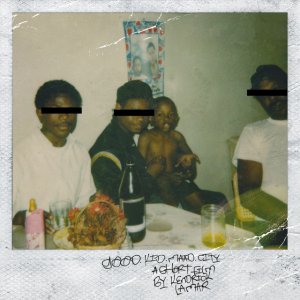
Kendrick Lamar is here to set the record straight about Compton and the people who live there.
Being from Compton, Kendrick's childhood and adolescence were a running theme through the album.
In an interview, it was stated that the album artwork was showing how he saw things through innocent eyes for so long, but eventually that went away as he came to understand the realities of Compton and similar areas.
Throughout his lyrics, Kendrick Lamar challenges the glorification of Comtpon. The two song I see this very clearly in are the namesake(s) of the album: Good kid and m.A.A.d city. They work together very well- I'll analyze Good kid, but I encourage you to take a look at both if you haven't already. Good kid analyzes what growing up in Compton was like for him. The hook reads:
"mass hallucination baby // ill education baby // want to connect with your elation? this is your station baby"
The hook takes the meaning of: Mass Hallucination lays out what the song is about: preconceptions that he had when he was in Compton-- about gangs, police, violence, and drugs, to name a few. Ill education refers to his running theme about how people in poverty (namely African Americans in Compton) don't receive the education that they need to succeed in this world and get out of the ghetto.
The first verse is about how he wants to get away -- run away (to fire bullets that stray // track attire just tell you) from Compton and gang violence. "I don't mind because one day you'll respect the good kid mad city" is him saying that he doesn't mind the harassment and gangs anymore because he knows that he'll come out better than them.
Here's the important thing-- Kendrick Lamar making this album itself is deconstructing what people know as race and ghettos-- it provides a story of what it's like growing up there and can help prove a point to those who glorify Compton and the African-Americans living there.
I was originally going to write this in a way that attacked 30 Rock, a sitcom about running an NBC tv show, for it's offensive and stereotypical portrayal of African Americans. After all, Tracy Morgan, one of the leads of the sitcom, plays a wild, not intelligent, rude tv actor (Check out some of his crazy history). He's low class and crude. But, as I reconsidered the show, I realized that his character takes black stereotypes that have existed for decades and blows them so out of proportion that he demands that we realize the stereotypes. His character is a satire of black stereotypes. His utter lack of intelligence, and carefree and goofy nature mock the Sambo stereotype. He does ridiculous things, like running through the streets in his underwear and striving to make headlines for doing such things, but underneath all the stereotypes, there's the real person. The real Tracy Jordan that sometimes comes out loves and cares about his family and friends and just wants to be famous.
The variety of black characters portrayed on this show add to the satire. While Tracy Jordan is off doing something crazy and pointless, we see Toofer, a stark opposite of Tracy. He's a Harvard graduate and the most proper and pristine person on the team. And Dot Com, Tracy Jordan's body gaurd, in nearly every episode shows off his extensive knowledge and in depth understanding of American history, contrasting with Tracy's utter lack of academic knowledge (Check it out!).
So, if one were to watch the show and only observe Tracy Jordan one might think, as I thought, that the show portrays a one sided and negative image of African American people. But after looking at the other African American characters on the show and considering the statement of Tracy Jordan's character might be making, one can argue, as I've tried to here, that the show attempts to fight black stereotypes.