Tuesday, November 10, 2015

Your Modern Black(-ish) Family.

The new hit T.V. show Black-ish is currently on its second season. After its premiere on September 24th, 2014, it has become a very popular television series. The show follows Andre “Dre” Johnson and his African American family’s daily life. After growing up in Compton California, Dre is very proud of his “Black” roots. Similar to the way in which Modern Family follows the story of what it is like to be a “modern family,” Black-ish is about what it’s like to be “kind of black.” Like Modern Family, Black-ish shows how the world is changing and society isn’t under the tight boundaries it used to be. In the course of one episode, Black-ish presents a handful of racial stereotypes about African Americans in society and proceeds to defy each stereotype by using humor or the personality and actions of characters.

Blackish, at times enforces racial stereotypes about black people but at other times defies stereotypes through characters personalities and humorous situations. Dre’s family as a whole defies the idea of a stereotypical African American family. Stereotypes often portray African American families as poor, undereducated and unsuccessful. Dre is a successful advertising executive while his wife, Rainbow, is an accomplished surgeon. Both professions aren’t typically associated with African Americans. As an upper middle class family, the Johnsons contradict what it means to be a stereotypical African American family.

In the episode, Switch Hitting, a white man named Jay Sloane comes to Dre’s advertising company. When Jay and Dre meet and they go to shake hands, Jay goes in for a complicated handshake that Dre fails to match. After Dre, Jay initiates the handshake between himself and Dre’s African American colleague, Charlie. Charlie and Jay execute the handshake perfectly and even add a little spin.


Dre is astounded that Charlie, who is slightly incompetent, was able to keep up with Jay’s complex handshake. Due to Jay’s childhood in the Bronx and Dre’s inability to keep up with the handshake, Jay doesn’t view Dre as “Hood” or “Keeping it real”. Later on in the episode Dre tries to prove he is “Hood” and “Keeping it real” by enforcing a variety of stereotypes. First off, he adopts a pit bull to show off how “Hood” he is. The stereotypical dog of African Americans is a pit bull. When he walks in to greet his wife Rainbow, he is wearing a gold chain, LA hat and a Clippers jersey. Dre’s attempts to act “Hood” enforce racial stereotypes about African Americans. Dre and Jay sit down to eat and Rainbow brings out “Soul food.”

Her take on “Soul food” is “ka-lard greens” instead of collared greens (ka-lard greens are made from kale). She also made “mac and tease” which is vegan mac and cheese. These creative, hilarious and relatively healthy alternatives to stereotypical "African American food," truly show how different the Johnsons are from the stereotype. In in end, Dre reveals to Jay that everything was all an act.
From Black-ish to Modern Family to stand up comedy, TV shows use comedy to show how ridiculous racial stereotypes are. Sometimes, even exaggerating a certain stereotype is what it takes to prove how absurd a stereotype is. Many stand-up comedians are incredibly racist in some of the jokes they tell. However, it is hard to get offended because the jokes are intended to be funny and not offensive. Black-ish articulates that racial stereotypes about African American families are entirely false and unjustifiable.

Parks and Recreation Fights Stereotypes by Allowing Them

The hit T.V. show Parks and Recreation has a very diverse set of characters, all of which exhibit common stereotypes often associated with that type of character. However, Parks and Recreation is very different in how they portray these stereotypes. Instead of just throwing them in there as subtle, small pieces of the character, they throw them in our faces in such a way that we have to realize that they're not making fun of the character; they're making fun of the stereotypes.
One really nice example of this is the character Tom Haverford, a Californian man with the complexion of a stereotypical Indian man. One such stereotype that he portrays is that Indians are bad at driving, but the writers represent this stereotype to such an unbelievable extent that we can't believe that their intent was to try to further the stereotype.
One last example is the legendary character Ron Swanson. He is the literal embodiment of all American stereotypes: he'll only eat meat and drink whiskey, he despises organized government, he loves shooting guns, the whole wazoo. The reason that his character works is because of how often these are brought up and the extremeness of how they are presented. He's not just there for people to point at as a stereotypical American man, he's there for people to laugh at and, in turn, laugh at the stereotypes that he brings to the table.
In short, Parks and Recreation is a melting pot of stereotypes, and the result is a well balanced stew of humorous banter and social commentary.

What is the truth behind Family Guy?

The cartoon, Family Guy, falsely depicts African Americans with the different stereotypes that are presented. The cartoon promotes many stereotypes of African Americans, many of which relate to similar issues in today’s society. Different episodes of the cartoon show different stereotypes. In some of these episodes, African Americans are singled out and bashed with many different stereotypes. The stereotypes vary from being uneducated, lazy, or violent.

B8S86rCCEAIqP1e.pngThe cartoon promotes many stereotypes, including those of African Americans. The cartoon singles out African Americans from other citizens in their town. African Americans are looked at as unique and fascinating, almost like art in a museum. In their small town, citizens view people with darker skin as outsiders. Generally, people of darker skin are not accepted by the town. Some scenes in Family Guy show examples of how African Americans are looked at by others in the town of Quahog, Rhode Island. They are looked down on and made fun of.  Other scenes in Family Guy show African Americans as a threat to the community. They are portrayed as violent and vicious. Those characters are separated from the community by jails, rehab centers, or lower level classrooms. This promotes the idea that African Americans stand out from society because of their physical appearance.
Carlos.png
maxresdefault.jpg

Monday, November 9, 2015

Kimmy Schmidt: Breaking Unbreakable Racial Barriers


The 2015 Netflix original comedy Unbreakable Kimmy Schmidt, created by comedy juggernaut Tina Fey and starring big names like Jane Krakowski, was sure to make waves. The show starred religious cult escapee Kimmy Schmidt and struggling actor Titus Andromedon as flatmates trying to find their way in New York City. Sure enough, the critical response at its release was almost unanimously positive. Many praised its dark sense of humor and willingness to explore questionable topics.

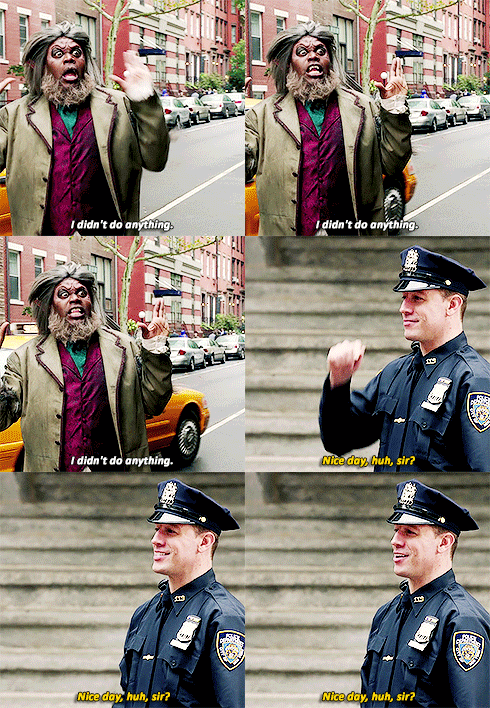
One of the heavy topics that the show explores is race. Titus is a large, openly gay black man who frequently finds himself surrounded by controversy about either his race or his sexual orientation. One episode focused on the former, as Titus scored a role at a horror-themed restaurant as a werewolf. Upon leaving the restaurant, however, he discovers that he receives better treatment in his werewolf makeup than he ever did as a black man in New York City.


This is highlighted in purposefully ridiculous ways. Cabs, who presumably would never stop for regular Titus, stop for werewolf Titus without him even hailing them, and random strangers asking him to hold their baby. In this way, Unbreakable creates a satire of the distrust that society directs towards black people, and black men particularly. It uses hyperbole to make a very specific point about the lack of respect that black men have in this country. If dressing as a monster gets you less fear and distrust than simply being black, clearly something is very wrong.

Eventually, the makeup begins to wear off. Titus begins to look like himself again, and the world around him once again treats him badly. Throughout this ordeal, Titus never falls into the archetypal black man in cinema, filled with anger and aggression. Titus remains one of the softest and kindest characters in the whole series, and this episode juxtaposes those kind actions with the cruel actions of those around him.

Unbreakable manages to create an episode about racial stereotypes without falling into them itself. It does this by pointing out the ridiculousness of the stereotype, in this case that all black men are dangerous, by showing how untrue it is. Therefore, this show is fighting back against the stereotype and helping to construct a new cultural identity for black men in America.

Racism in Peter Pan

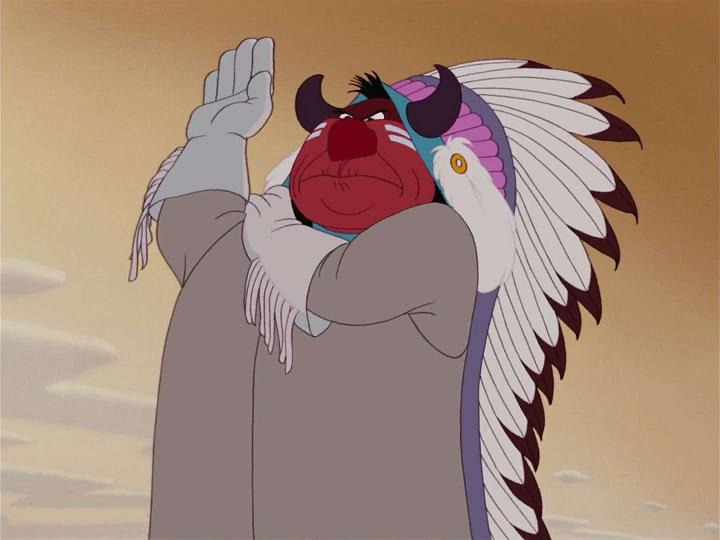
Peter Pan is regarded as a beloved and classic Disney movie. The film was released in 1953 and was an instant hit. At first look, Peter Pan is a fun story about an adventurous and magical boy who introduces three siblings to his home in Neverland, a place where children never grow up. Once further analyzed, the movie is revealed to be perpetuating Native American stereotypes through the depiction of Princess Tiger Lily and her tribe.

The Native Americans in Peter Pan are portrayed as inaudible, red faced savages. In a song featured in the movie, "What Makes the Red Man Red?" the Native Americans are all seen drumming and jumping around like animals, while wearing feathers in their long black hair. The Indian Chief explains his people's history and culture. The song says "Let's go back a million years to the very first Injun prince, he kissed a maid and start to blush and we've all been blushin' since." According to this, their genetic make up is the way it is because one Indian blushed red when he kissed a girl. They state this because there "needed" to be an explanation as to why their skin is not the "normal" human color of "white." The Native American's are also depicted as misogynistic; the woman Indian reprimands Wendy for dancing with the Indians and tells her that the women do not dance, they are supposed to gather fire wood instead. Near the end of the song, Wendy is also seen scolding her younger brother for joining in on the Indian's dance, demonstrating the Indians primitive nature.


This depiction of Native Americans reduces the culture to a subservient cartoon. If not obvious, this portrayal is extremely offensive. It blends all Indians together into one barbaric caricature, ignoring the diverse societies that are within the Native American culture.

The extreme racism against Native Americans in Peter Pan is problematic and is still commonplace in American culture today. There are still many sports teams that have Indians as mascots, including the Kansas City Chiefs, Cleveland Indians, Atlanta Braves, and the Blackhawks. Promoting the Native American culture as a mascot is inappropriate and oppressive. Racism against Native American's seems to be overlooked in today's society and although discrimination against Native American's may not seem as prevalent, it is still present and alive.


Kanye West's "Late Registration" Looks at Race in a Light-Hearted Way

Kanye West, famed Award-winning rapper, made his huge debut in the public rap scene with his first album "The College Dropout" in 2004. On this album was a hilarious commentary on how school doesn't matter to Kanye. He believes that school is just a system that gets you nowhere and you can still make it to the big time, even without a college degree. Since then his name has pushed dozens of singles to the top of the charts, and he's released four more albums with a fifth one on its way, each one getting decent recognition by critics, either for his solid story-telling, high-quality production, or interesting deviation from standard hip-hop.

A sequel to this first album was released in 2005 titled "Late Registration." This record opens up with the teacher character from College Dropout telling Kanye "Wake up, Mr. West." The album itself is entertaining, with tracks like Touch the Sky and Drive Slow being fan favorites, but Kanye adds in 4 short 1-minute skits spaced out along the duration of the album. These skits give the album character and a story. This story is Kanye's, one about how race has always been a part of him but something he's had to let go of anyway.

Skit #1 introduces you to an all black fraternity named Broke Phi Broke. The leader and the group have a humorous exchange about life being broke. "Should we let our women go and be the cat with the car?" he asks. "Yes we will!" responds the group. "Why is that? Because we can't afford gas. Say it with me!" This line is met by a stomping beat as the entire fraternity chants "We can't afford no gas."

Skit #2 is a short chant about how the fraternity doesn't have any money, clothes, cars, or women, things Kanye now has a lot of, although this hasn't yet been mentioned. "Broke- Broke- Broke Phi Broke! We ain't got it-" is the chant that appears later one, introduced here.

Skit #3 is a comedic approach to telling the background of Broke Phi Broke. It was founded years ago by broke slaves who passed it on to their broke children. "Eating all our cereal with forks because we wanted to save the milk? Remember that?" says the leader. "Do you remember all those Christmases when your Mama would walk in the room and pretend she was the tree, huh? Remember that?" Despite being funny, this skit starts to bring race into the foreground. Kanye is saying that this community of broke black people has been around for ages and it's more or less normal: When you're black, being broke is a part of your culture.

Skit #4 brings the album towards its close. The leader says that he has called a meeting because there is an imposter among them. "This brother has been eating every day, do you believe that? Eating every day." he says. "I do not want to believe this but I walked into brother Kanye's closet and I found new shoes!" Kanye tries to defend himself, but is stammering and clearly infatuated with his new lifestyle. The leader banishes Kanye from Broke Phi Broke, interrupting Kanye as he attempts to say "I was just trying to stick to my roots."

The skits on Late Registration tell the story of a rapper who grew up black and broke, but once he released College Dropout and was no longer broke, he had to really give up being black as well. It's an entertaining joke at first, but upon closer inspection is a sad commentary on the community expressed between black people. Kanye presents a problem, but doesn't seem to have a solution. Kanye's response to leaving Broke Phi Broke was just to stay gone and give up sticking to his roots.

Kanye's "Late Registration"

Disney Channels Perpetuating Stereotypes

Stereotypes of race on television shows can have a large negative impact, especially when little kids are watching these shows. In multiple Disney Channel shows, there are Indian characters that are placed with almost every Indian stereotype imaginable. Because so many young children are watching these television shows, the stereotypes are perpetuated and ingrained even more into society. For the many children who watch Disney Channel, this is now the idea of Indian people that possess.
    One show in particular, “Jessie”, shows an adopted boy named Ravi. Ravi is constantly referencing tigers, fortune telling, curry, samosa, or ganesh. He also teaches a yoga class, and is often bribed in one way or another to do his brothers homework for him because he is “good at math and science.”
Ravi is seen at the 54 second mark being made fun of for his traditional Indian outfit.

    It is not only the show “Jessie” that prolongs these stereotypes. In the Disney Channel hit show, “Phineas and Ferb,” Baljeet plays the role of the little Indian boy who helps Phineas and Ferb calculate the math in their constructions. Emerging series such as “Bunk’d,” also continue to perpetuate these stereotypes.
    Most children who watch these shows already have a set ideal about how Indian people dress, think, and act. Disney may be trying to teach children about culture, however they end up perpetuating false stereotypes.
     The extent of racist stereotypes used on Disney could almost be confused for being satirizing. Children are vulnerable to believing what they see in the media, and it is hazardous for Disney Channel to be perpetuating these stereotypes.

Turbo: Slow to changing stereotypes


Turbo, a film created in the middle of the year of 2013, is about a snail overcoming the labeling of being unbelievably slow. However, the film is responsible for making several more generalizations about certain types of people. While the film does not necessarily target one specific group of people, it still enhances the stereotypes that society has assigned to multiple races. For example, the Mexican men are seen working at a taco stand. This image is often laughed at and not given much thought because of how stereotypical it is.

One of the Mexican men in the film has the name of “Tito”, who is the driver of the taco stand called “Dos Bros”. One of the men that works with the tacos is shown to be overweight and talks with incorrect English. While the scenes with the men are not major, they still raise the problem of stereotypes within the film. There is also an Asian woman that is significantly smaller than the other characters who also has a very thick Asian accent and works in a nail salon.


It is debatable whether the movie is trying to draw attention to the horrible stigmas that society has created, or is simply making a joke of it all. It is easy to create specific images of characters in animated films, which gives directors the opportunity to exploit the extreme stereotypes in order to get an extra laugh, which is then passed onto the young audience of these films, creating the vicious cycle of racism.

Summer Heights High Cultural Analysis

The show Summer Heights High portrays the every day lives a three main characters at a high school in Australia. The show is filmed in a documentary style. One of the main characters, a female foreign-exchange student, is portrayed as a pretentious racist. I see this work as being false, but the humor and situations being pulled from the realistic views of people and real issues.  


The show promotes some stereotypes, while poking fun at others and defying these stereotypes. Ja'mie, the main character is a stereotypical rich, white female, who is an exchange student in Australia. Her family decides to house a poor, young male from Africa. Ja'mie claims she will help him and give him an opportunity at a better life. 
This pokes fun at the stereotype that Africans are "below" the white class; defending the idea that all Africans are struggling and that it is the white class's duty to offer them the help to increase their opportunities. Almost making fun of the non-fund organizations asking Americans to donate "just" fifty cents to give the poor Africans a filling meal. 

Ja'mie ends up using him as the waiter at a house party she throws, hinting at a "Butler" type of character. Ja'mie also makes very bold racial statements about Asian's throughout the show, some tend to be stereotypical "nerdy" Asian's who are exceptionally smart. The show, in this regard, supports the ongoing stereotype of intelligent Asians. Summer Heights High blatantly plays with stereotypes of all cultures, getting away with it by not targeting one culture, but by making fun of all cultures humorously.


To view a clip of Ja'mie from Summer Heights High, click on the link below:


The Removal of a Culture in a Children's Movie

Pocahontas is a popular movie created by the well known Walt Disney Corporation that was ultimately targeted towards children. Normally, people would not bat an eye at this, but within the seemingly innocent movie is some extremely offensive content in respect to race and gender. Many times, the Native Americans are portrayed as "savages," and the movie endorses the idea of the good Indian and the bad Indian. Not only that, but the history of the movie is completely wrong, and it gives an idea that the colonists were at equal fault of the Native Americans, effectively oppressing them to the point where children do not think twice.

At one point in the movie, the song "Savages" makes an appearance. The lyrics are unbelievably offensive and racist towards these Native Americans. "They're savages, savages, barely even human," is repeated multiple times within the song. It portrays the Indians as unpredictable hooligans that only follow through with physical carnal pleasures with the song having a complete lack of acknowledgement for any intelligence whatsoever. The lyrics clearly outlaw the mixing of races, saying "They're not like you and me. Which means they must be evil. We must sound the drums of war!" I am honestly unsure what the writers were thinking as they wrote this song that was meant for children. Something that makes it even worse is that these "savages" retaliate, calling the settlers demon and "paleface," in an attempt from the writers to try and even out the aggression from both parties.


Sure, they end up making it a love story between Pocahontas and Captain John Smith, a Native American and an English settler, with a happy ending and all, but how much of this was actually the case? In fact the whole movie twists history entirely, leaving out the cruelty and killings of many Native Americans, not touching on the fact that Pocahontas was not even a woman when the events actually took place, she was about twelve.


Another thing the movie did wrong was the visual aspect of the humans. Pocahontas's image was in that of standard American beauty, instead of whatever would be the norm of her own Native American culture. The dignified image is the produce of Western colonialism entirely, and reinforces the idea that there is no Native American culture, only western culture's perspective on it.

Fresh Off the Stereotypical Boat

Fresh Off the Boat is a recent ABC sitcom, first airing early this year, that revolves around an Asian-American family living in Orlando, Florida. The show is adapted from the famous chef, Eddie Huang’s memoir of his life, mainly taking place in the 90’s. As the derogative name suggests, the parents migrated from their native Taiwan to Washington DC who then move to Florida so the father could pursue his dream of owning a restaurant. Their transition from DC Chinatown to a middle-class white suburb isolates the family from their uncultured neighbors. Although Fresh Off the Boat aims to break and hinder stereotypes, the execution falls short in that the characters are isolated from everyone else and have stereotypes that are overly exaggerated for comedic factor.


The main intent of the Fresh Off the Boat storyline aims to shatter Asian stereotypes. For example, the main character is Eddie, the oldest child who is a school rebel with an obsession for hip hop rather than a studious and determined student. And rather the father owning an Asian restaurant, his dream restaurant is a steakhouse. Though they begin to assimilate with their neighbors, they also try to keep their culture. The objective is to portray the Huangs as just another American family chasing the American Dream with a small twist. The producers wish the audience to relate to the Huangs and have a better perception of Asian Americans as a whole.


However, while breaking some stereotypes, others are accentuated and over exaggerated. For instance, the mother, Jessica, is a stereotypical “Tiger Mom”, one who controlling and strict over her kids with an extreme emphasis for her kids to over achieve in school. In season one's episode two, "Home Sweet Home-School", all children receive high marks on their report cards, leaving Jessica the impression their school is too easy. When asking for each child to be placed in gifted programs, she is left astounded to find there isn't any. So she takes matters into her own hands and decides to send them to CLC, Chinese Learning Center. Every day after school, the kids have lesson plans to do additional hours of lessons and tests. The children are shown to have lost all their freedoms, bound to school 24/7. At one point, Eddie looks out of the window to see some neighbor kids playing with a stick and he remarks, "Look at them, the innocence. I couldn't hear them through the reinforced glass, but I imagined it was the sound of childhood. Enjoy your stick, white friends". This promotes the false idea that Asian mothers are so obsessed with their children succeeding in school, that they are willing to deprive them of any freedom of their childhood they have.

Not to mention, the stereotype that Asians are exceptionally stingy is also strongly promoted by the mother. Even though the family became friends with their neighbors, coworkers, or classmates, the Huangs remain to be in the limelight due to their ethnicity and origin. In addition, offensive jokes and misunderstandings of Asian culture are used as a comic effect in the show. The title itself is a derogative term given to immigrants (particularly from Asia) implying they are "fresh" to the country and have not yet assimilated to American culture.

These stereotypes and presumptions about Asians and the culture extend beyond just this show. For example, hardly ever do Asian actors play nondescript roles, so the Asian roles they play are heavily stereotyped. The media’s portrayal of Asians affects the audience’s perceptions allowing them to believe the misconceptions fed to them are the truth. 

Does Dora Promote or Defy Stereotypes?

Dora, also known as "Dora the Explorer," is a cartoon character that depicts a Latina icon. Intended to teach American preschoolers Spanish at an early age as well as ethics, morals, and teamwork, Dora has controversy critiques involving the Hispanic culture.


Many have the misconception that Dora is Mexican. In fact, it is not clearly stated what race Dora actually is. Because she speaks Spanish, the typical American initial instinct is, "Oh she's Mexican." While it could be argued that Dora is promoting stereotypes due to the lack of explicit race identification, it could also be possible that Dora is defying racial stereotypes. Not classifying Dora as a specific race allows Dora to connect with all Hispanic cultures, not just the Mexican. Dora's generic clothing choice is another example of her not promoting one Hispanic culture over another. However, does representing Dora as a pan-Latino culture allow every Latino culture to be portrayed as they want?


Also up for controversy are the hidden, potentially unintentional messages delivered in Nickolodeon's episodes of Dora. For example, in the first six seasons of Dora, fourteen of the episodes contained Dora and her friends having a "fiesta". In the episode "Surprise," Dora and the rest of her friends throw a surprise party for Boots. This fiesta featured typical Latin music, lots of family/friends, and even maracas. To some, these festival episodes could be perceived as Hispanics embracing their culture and sharing it with Americans. On the other hand, this could be perceived as the stereotypical Mexican party with a kid friendly tone added on.

The same goes for Dora referring to her family as "mama" "papa" and "abuelita." The extent of racism here varies from culture to culture, angering some Latino cultures that don't always refer to their family using Hispanic terms, and praising other Latino cultures that embrace this language on a daily basis.


While the intent of Dora was a good one and seemed educational to young children, a deeper analyze surfaces the racism involved in a seemingly innocent TV show.

Quantico: The New Hit Show that Tries to be Progressive

Although the new TV show Quantico seems to be breaking down racial stereotypes about terrorists (namely, that they must be dark-skinned) through its main character, a deeper investigation into the more minor characters reveals that the show does in fact perpetuate some harmful stereotypes about race. While the show’s main character, Alex Parrish, breaks down racial stereotypes by pointing out the fact that she is being framed as a terrorist simply because she is dark-skinned, the show’s portrayal of other dark-skinned females, its overall lack of anything other than white males, and the fact that the one black male is a terrorist promote damaging racial stereotypes.

The plotline of the show is that of a typical spy thriller; an FBI agent is framed as a terrorist, and must find the real perpetrator before the FBI finds her. Alex does a fine job of breaking down racial stereotypes. She explains why she is being framed in a video broadcast on the internet to millions of people around the globe. Alex points out that she is an easy target simply because she is dark skinned, and tells her audience that in order to free an innocent person (herself), they must put away their assumptions and be willing to suspect anyone (and everyone) around them as a possible terrorist.


Unfortunately, this is pretty much the extent to which the show defies racial stereotypes. Quantico’s portrayal of its minor black characters somewhat, if not fully, reverses whatever good Alex’s character has created. Aside from the large lack of black male characters in the show, the two dark-skinned male characters on the show are both portrayed as being dangerous and potentially harmful to hundreds of innocent people. One of these characters, an FBI recruit named Brandon, eventually goes crazy and tries to blow up the FBI training facility. It is later revealed that he was told to pretend to set a bomb as a test for the other recruits, but the simple fact that the show chose the one black recruit to play out this part of the story is detrimental to African Americans as a whole. The story behind the other black male is even worse; he is the son of an FBI agent who decided to join a terrorist group, and then planned a school shooting. While he did not succeed in carrying out the shooting, it is still important to note that this portrayal is extremely injurious to the black race.

Quantico makes a valiant effort at breaking down racial stereotypes, but in the end, the combined portrayal of more minor dark-skinned characters undoes any progress that the show had any potential to create.

Schmidt Walks the Line

New Girl is a comedic television show that has gained much popularity since it aired in 2011. I myself am a huge fan of the upbeat and witty show. However, my amusement often ends with one of the main character Schmidt’s frequent stereotypical and offensive comments about race. Schmidt acts as the the egotistical, yet deep, deep down, loveable character on the show. However, his comments can be so ridiculously offensive that they are overlooked or even laughed at by viewers and dismissed as obviously derogatory and wrong. One example of this is in an episode called “Cabin.” Schmidt decides that because Winston, an African American character on the show, lives with three white people, that he isn’t able to be his “true self.” He proceeds to encourage Winston to engage in the behaviors of quote “members of his own kind.” He displays a multitude of stereotypes that he accepts about African Americans, all while appearing to viewers as humble and earnest.


Winston sarcastically tells Schmidt that the one thing he misses from his childhood is using crack cocaine around a “flaming trash can” with his mother, grandmother, great grandmother, and his cousin “Peanut,” while harmonizing “shoo-op.” Schmidt, not picking up on the intended sarcasm, doesn’t even stop to question this, and immediately asks how he can help Winston access cocaine so that he can feel himself again. For his own amusement, Winston plays it out to see how far Schmidt will go to get the cocaine, and is seen throughout laughing to himself at Schmidt’s extreme ignorance.


The other characters’ reactions to Schmidt’s comments seldom go further than rolling their eyes or shaking their heads, further normalizing his outrageous statements. This is hardly the only example of Schmidt’s comments. He also commonly expresses his beliefs on a main character Cece’s Indian ethnicity, referring to her as “brown skinned Cece” and frequently titling her family members and friends “Patel.”


The show’s satirical way of denouncing racial stereotypes may be interpreted as a progressive approach, but it is simultaneously perpetuating derogatory racial stereotypes. The racial implications are often justified by fans and in reviews of the show, as seen in Ross Bonaime’s review of the “Cabin” in Paste Magazine: “Schmidt walks an incredibly fine line between hilarious and borderline racist here, but at his core, Schmidt is just trying to do what is best for his friend.” This review falls back on the “harmless and ignorant” defense, arguing that Schmidt is only trying to help Winston. However, on a more serious note, Schmidt embodies a very real mindset that, unfortunately, still exists to some extent in the minds of people in America.

Orange is the New Black - A Cultural Innovation or Cultural Setback?

Orange is the New Black is a Netflix-original series that premiered in July of 2013 and soon gained a large following of loyal watchers. The series is based on the true story of Piper, an upper middle-class, educated, white woman who ends up in prison many years after smuggling drugs. The show follows the protagonist Piper’s adventures in a women’s federal prison and also the daily lives of her fellow prisoners who come from a variety of backgrounds and ethnicities. The show is notable for not only having many women in lead roles, but also numerous people of color. Though the show has often been praised for its very cultured cast, the characters of color often perpetuate racial stereotypes. Orange is the New Black sustains stereotypes that black women are unintelligent, hypersexualized and lazy through the scripts and actions of the black characters.

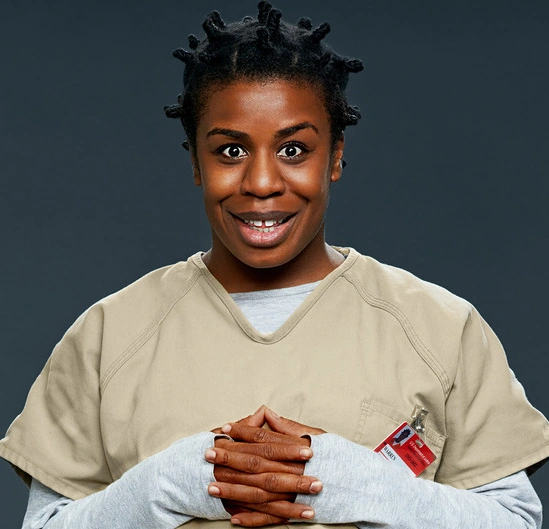
One of the characters on Orange is the New Black, Cindy Hayes, “a.k.a Black Cindy” is portrayed as an unintelligent woman who often does not think about the consequences of her actions. Cindy ended up in prison because she often stole items from travelers while working as a TSA officer. Cindy is also seen leaving her younger sister locked in a car as Cindy goes to smoke marijuana with her friends in one of the shows many character flashbacks. As well as being depicted as unintelligent, Cindy is portrayed as quite lazy because she does not want to lift a finger for anyone but herself. Cindy even has to be bribed with a cake by a fellow prisoner Vee to become a part of Vee’s tobacco smuggling business.


Taystee, a friend of Cindy who is also black is actually released from prison, but cannot handle the fast pace and responsibility of the real world, so she purposefully violates her probation and ends up back in prison. To Orange is the New Black writers, this ploy may have appeared as a genius segue to Taystee’s return to prison, but it actually perpetuates the stereotype that black people are unintelligent and in this case unable to handle the responsibility of the real world.


Another black prisoner named Suzanne is portrayed as hypersexualized. A prison counselor Healy recalls that Suzanne has a problem with coming on to other prisoners and has had many prison wives in her past. Suzanne takes an interest in Piper and is seen stalking Piper and pursuing a relationship with her. Suzanne also goes on to write an extensive pornography novel that becomes highly popular among the prisoners.


Many viewers praise Orange is the New Black for its innovative plots and its unique perspective on lives of women and people of color. Though the show is quite raw and often not sugar-coated, it portrays some people of color in their unrightful stereotypes. Some viewers may interpret this racist stereotyping as comedy, but this stereotyping is not something that should be taken lightly. If popular shows like Orange is the New Black can blindly stereotype races and get away with it, what views or rights does that give our nation as a whole? Racism can not be solved if popular media keeps perpetuating stereotypes and keeps getting away with it.

Blackish - A Parody of Stereotypes?

In ABC’s, Blackish, the comedic show centers around a black family living in a predominantly upper-class, white neighborhood. The father, Andre (or ‘Dre’), becomes a marketing executive and tries to lead his family through a different lifestyle. The show exhibits mockery of stereotypical black way of life through its blunt humor and its overall concept as a show. The name itself, 'Blackish,' suggests that the family is ‘trying to act black’ but cannot due to their social standing. However, this awareness of the ridicule implies a progression of black value in everyday society. The comedy escalates the absurdness of how black individuals are not regarded as successful. Although the television show, Blackish, may present few socially defying values, the show intentionally depicts an abundant of stereotypes to parody black lifestyle.

For example, in the episode “Churched,” Dre accepts an invitation from one of his white neighbors to attend church together. Here, Dre pauses the show, and describes how he and his family do not regularly attend church. Dre expresses how Sundays, in his house, are meant for extracurricular activities. Dre then discusses how 'to black folks, church has been a big deal’ and is the ‘backbone of our community.’ Later, when Dre’s mother finds out the family will be attending church, she is dismayed because she has been trying to get them to come to church for a long time. Additionally, the grandmother over-exaggerates after discovering that the twins, Jack and Diane, have not yet been baptized. The religious stereotype surfaces through the grandmother as she is very dedicated to her faith. On the other hand, Dre's family is not, which contradicts the stereotype and provides a breakthrough of this stereotype. Dre's family is used to mock the craziness of the stereotype and to further prove how this type of custom is not the case anymore.

Image result for blackish "churched" episode        Image result for blackish "churched" episode

Furthermore, in the episode, “Daddy’s Day,” Dre describes his experience of growing up without his father. In the beginning of the episode, there is a flashback of Dre on Father’s Day from when he was younger. Dre walks into the room with breakfast, but only his mother sits on the couch. He excitedly exclaims, “Happy Father’s Day!” only to be turned down from his mother who annoyingly points out to him that his father is not here anymore. Later, the eldest daughter’s friend, Recheida, additionally expresses how she does not see her father often and tags along with Dre’s horrible idea of creating this new holiday. Here, the stereotype of living without a father comes to light. Recheida and Dre both experience what appears as the non-existent father stereotype. Although the sorrow that might come from this experience, Dre is determined to cater to the needs of his children. Dre is used as a model of how not all black families live in such way. Thus, more irony surfaces as the show presents contradiction between Dre's intentions and the clichéd stereotype.

Image result for blackish "daddy's day" episode            Image result for blackish "daddy's day" episode

In Blackish, there are several examples of irony to demonstrate the intentional mockery of black lifestyle. The show conveys such fact that these stereotypes still exist and perpetuate in society. The comedy tries to highlight black lifestyle stereotypes in a positive direction. Blackish also tends to acknowledge several black stereotypes in humorous way, yet creating an impact that emerges through the stereotypes. 

Tim Riggins and Breaking Social Norm

Tim Riggins in the show Friday Night Lights is a character. He lives on the nice side of town and plays for the East Dillon Panthers, a very good football team. During the first season of the show I realized how Tim Riggins breaks social biases. Tim has been growing up with his older brother in a small house that they struggle to pay for. Tim works extra jobs and isn't raised in a correct way of life and grows up drinking and partying a lot. He was raised to not really care about school and to be a rough and tough guy. He is the teams fullback and he acts like that all the time and he also has a very short temper which get's him into trouble in very many situations.

After the first 3 seasons you find out there is a "rich" side and a "poor" side of Dillon. Tim Riggins lives in the East side of town where the majority are white families. On the other hand there is West Dillon where it is mostly populated with black families. As I've thought more deeply about the show, I have come to realize how Tim Riggins breaks social norm by not being a "perfect" white person. He as a person shows more errors than anyone on the show and he shows how bad life can get no matter what race you happen to be and that you can still get back up. He breaks so many "barbie" ideas about the white race being so perfect and how they have so many more liberties and don't deal with things that others experience just because he happens to be a white male. 

Exoticism and Vilification in Aladdin


Many view the movie Aladdin as a classic Disney movie. This movie, however, has somewhat of a dark side as it brings to the forefront various stereotypes concerning the Arab people and culture. The movie was originally released in 1992, but is the beginning of a broader trend. The stereotypes portrayed in the film have been reinforced in the minds of the American public through more recent events, such as the 9/11 terrorist attacks. Overall, the film Aladdin promotes dominant ideologies concerning the Arabic culture, especially concerning false stereotypes of the exoticism of the Middle East and the vilification of the Arabic people.

Common stereotypes of Arab people can be divided into two main groups: the vilification of Arabic people and the exoticism of Arab culture. In the category of vilification there are two main stereotypes, the terrorist and the protesters. The terrorist stereotypes is often connected with religion, in that many associate being Muslim with being a terrorist. The other main group of stereotypes, Arab exoticism, shows images of belly dancers, sheikhs, maidens, and women in burkas. Both these groups are present throughout the movie Aladdin, as it set a precedent for the the future portrayal of Arabic people in the media.

The film vilifies the Arabic culture and people in image and word. The original lyrics to the opening song of the movie once said, “where they cut off your ear if they don’t like your face, but hey, it’s home.” These lyrics, however were eventually changed due to pressure groups. The images of soldiers, and other personages in the film, are given ugly facial features without teeth, further promoting the villain stereotype. In contrast, the main characters, Aladdin and Jasmine, are somewhat anglicized. For example, compared to most characters, they have lighter skin and are without accents.

Furthermore, images that exoticize the Arabic culture are scattered throughout the film. For example, there is a copious amount of belly dancers, and even Jasmine wears clothes that are similar to what the belly dancer characters wear and promotes the stereotype of the maiden, a beautiful princess. There are also images of men of pedestals performing ‘exotic’ feats. Some of these include laying on a bed of nails, walking across hot coals, swallowing swords, and charming snakes. The character of the Sultan in his vast palace is also similar to the more modern sheikh stereotype, an old man with a beard and an inordinate amount of money.


While the film Aladdin was released prior to 9/11, it set a precedent for stereotypes concerning Arabs as villainous and exotic. Some of these include the stereotype of the sheikh, the belly dancer, and the maiden. In the media today these stereotypes have been enlarged and Arabs are often chosen as villains in American action films. There are many negative stereotypes in popular crime shows, and in the comedy series It’s Always Sunny in Philadelphia, there is an episode entitled, “The Gang goes Jihad.” Overall the film Aladdin highlights many stereotypes regarding the Arabic people and culture and was the beginning of a more extensive trend that still exists today.

Sunday, November 8, 2015

30 Rock's Tina Fey on Trial

When watching popular comedy shows like Saturday Night Live, The Office or Unbreakable: Kimmy Schmidt, it is always difficult to discern whether the writers are satirizing racial stereotypes or simply perpetuating them. This dilemma is particularly prominent when analyzing Tracy Jordan, one of the main characters on 30 Rock. 30 Rock is a conglomerate of stereotypes of conservative CEOs, high-maintenance actors, single middle-aged women, small town Southerners, and, in Tracy Jordan's case, black men. In many episodes, the story line takes on difficult problems regarding race and condemns characters who make false assumptions about others based on stereotypes. Although 30 Rock is filled with comical stereotypes, the satirical mood of the show does not justify Tracy Jordan’s racial depiction as an antebellum Sambo character.

In one controversial episode, the show uses blackface on Jenna Maroney, but it is unclear if the viewers should be offended by it or pleased that the other characters found it offensive due to the racist history of minstrelsy.


This confusing use of blackface is not the only reason why Tina Fey's writing can be considered racist, however. An episode entitled The C Word addresses the fact that Tracy Jordan has no intellectual importance and is only present for comic relief, which is typical of a Sambo character. Jordan is described as a "child" who needs "supervision" and "coddling," for he is "wired" to make trouble for everyone else who runs the show if left to his own devices. On top of his child-like demeanor, he is gullible and uneducated. In The C Word, Jordan recognizes that he is supposed to fit into the role of funny black man and is offended by that expectation, but the recognition of the stereotype does not redeem the racist nature of his character.

When Tracy stood up to the scary sounds of his co-workers.


Many fans of the show argue that Tina Fey was simply drawing from the comedic style of Tracy Morgan, the actor who plays Jordan on the show, instead of perpetuating the Sambo. The writers, however, made a conscious decision to create a one-side character that was a collection of racist tropes. The other main recurring black character is Toofer, whose name comes from “two for one,” because he is black and went to Harvard. The entire character is centered around how “unblack” Toofer is because of his formal speech and expensive attire.

Tracy Jordan's racist character makes a statement about how stereotypes should be portrayed on comedy television shows. Instead of having characters that embody these stereotypes, like Jordan, and offhandedly saying that the stereotype is wrong, television shows should have characters that defy racial profiles all together.