Tuesday, September 6, 2016

Swift Stories

Taylor Swift released the country song, “Fifteen”, in August of 2009 as her fourth single from her second studio album, Fearless. The song is inspired by Swift’s freshman year of high school, where she encountered love, heartbreak, and her best friend. “Fifteen” is a true story because American high schoolers witness themselves and those around them also defer to the common stereotypes of women. Swift’s song is written from the perspective of a high school graduate, looking back on her high school days, wishing she knew what she does now when she was young and naive. Taylor Swift's “Fifteen” is a true story because it was written to help American teenagers of the 21st century avoid conforming to misguided priorities and common stereotypes.

In this generation, female artists often sing of male approval; they portray it to their fans as the highest form of empowerment for women. In Taylor Swift’s “Fifteen,” the lyrics revolve around surviving high school but more importantly the relationships the artist held with boys throughout her four years. Swift sings:

It's your freshman year and you're gonna be here

For the next four years in this town

Hoping one of those senior boys will wink at you and say,

‘You know I haven't seen you around before.’

These lyrics are true because Swift writes about what she was worrying about on her first day of high school and, despite the fact that Americans do not like to admit it, acceptance from the opposite gender is an important part of high school. However, going to high school is about furthering your education, not about senior boys noticing the new freshman in the halls. In Swift’s lyrics, she is saying that drawing attention from the senior boys was her biggest concern. These primary concerns are important because she is allowing male approval to overtake the importance of her education.

Aside from prioritizing male approval in her songs, Taylor Swift never seems to take the blame for her relationships. A common theme that comes out of her work is that she is the blameless victim in all her relationships. The message is relayed in her song “Fifteen” when she writes, “Abigail gave everything she had to a boy who changed his mind / And we both cried.” Here, Swift references her best friend, Abigail’s high school breakup. She says that Abigail’s ex-boyfriend unexpectedly broke her heart after she “gave everything” to him. This line is a true statement because Americans experience unexpected heartbreak regularly, especially as teenagers when expect the most out of our juvenile relationships. As this statement may be true, however, Abigail could have prevented her heartbreak by never allowing herself to reach this point of extreme vulnerability and maintaining her strength and independence. Abigail allowed herself to reach this point because she prioritized male centrality.

Despite these examples of how Taylor and her songs conform to the everyday stereotypes of women, the song, overall, is about how she learned from her experience of dealing with boys and relationships throughout high school. Taylor says,

'Cause when you're fifteen and somebody tells you they love you

You're gonna believe them

When you're fifteen

And your first kiss makes your head spin round

But in your life you'll do things greater than dating the boy on the football team

But I didn't know it at fifteen.

Taylor acknowledges her past naivety because she thought that the greatest thing she could do in high school was date the boy on the football team, which is a true and common high school belief because dating a boy on the football team implies social acceptance. Taylor, however, when comparing her high school experiences with those of her current life, recognizes that what she thought was important at fifteen, does not amount to anything after high school but she “didn’t know it at fifteen”.

In conclusion, the lyrics from Taylor Swift’s “Fifteen” create a true American story because it follows the typical stereotypes of a girl trying to survive high school, with not only school to worry about, but also relationships. This generalization is shown not only in this single work of art, but in multiple recent pop songs by female artists, especially Taylor Swift. She is setting a dangerous precedent for young girls, inappropriately modeling that boys should be their first priority.


Kanye West: “Bounded” to Gender and Unrealistic Relationship Stereotypes

Kanye West is a man almost everyone knows, and most likely has an opinion on. Kanye, the controversial rapper known as “yeezy” is infamous for having a bad reputation and responsible for being self centered and crazy. Being one of today’s most talked about celebrity, he has a very powerful influence on culture and is also a very strong reflection of it. Kanye’s music is apart of a very popular culture trend that enforces previous stereotypes and also creates new ad questionable controversial ones as well. In one of Kanye’s most popular song “Bound 2” released in 2013 reflects today's society and ideals for men and women. “Bound 2” depicts a false stereotypes on the ideology of what a man is, how marriage is valued in American society, and how love is conveyed in order to be true.

Bound 2 depicts a the ideal for what makes a man and how a man should act. Throughout the song Kanye contemplated whether he should give up his past lifestyle in order to be with the women he loves. He is tired of meaningless flings and unrequited love as revealed in the hook “I know you're tired of lovin', of lovin' With nobody to love, nobody, nobody” Kanye knows that his new love also feels the same way, and in order to be happy, he needs to be with her. Kanye also remembers his past lifestyle and past relationships throughout the song. He is aware of his known bad reputation and how he is considered a player. In the song he admits to being a heartbreaker. He tends to have a “leave a pretty-girl-sad-reputation”. He is referring to his very public breakups with Alexis Phifer and Amber Rose. Kanye also references how he is “backstroking” through women in order to perfect them .By saying this he admits to using women for his own personal gain. He is also conveying an ideal that men should be with many women in their life, and in fact are helping women by doing this. They are helping these women by giving them practice or guidance. Because Kanye has such a prevalent influence in culture, his own personal life is being held up as a pinnacle for other men to live up to.

Kanye also reveals his own stance of marriage. Kanye is starting fresh with his new love in order to be with her forever, and soon get married. He is “bound” to one women for the rest of his life and is ready to be with her effortlessly till he dies. In the line “but first, you gon remember how to forget’” he is explaining how his new love will ultimately forget about his past mistakes and bring forth her unconditional partnership despite his previous blunders. This depicts the idea the fairytale lifestyle that is marriage and partnership. Kanye is expressing that when in a committed partnership, it is the duty to one partner to completely forget about the misbehaving and questionable antics of the partner, without any type of backlash or doubts. This unrealistic portrayal of partnership and marriage disguises the rough and troubling truth that today’s relationships go through. Overall Bound 2 is an untrue story because of the way it idealizes both men and women and unrealistically personifies modern love and relationships.

How Parks and Recreation Portrays Society Today

Parks and Recreation is an extremely popular television show that was watched by millions. The show had seven seasons. The show is based around the Parks department of fictional Pawnee Indiana. Parks and Recreation reinforces many traditional truths and beliefs for men, while defying many gender stereotypes against women. Ron Swanson, one of the most popular characters on the show is an extremely manly man. His character reinforces stereotypes about being a real man. Leslie on the other hand is an empowered woman, who represents many women today.
Image result for ron swanson\
Ron Swanson is portrayed as the hyper masculine boss who loves to woodworking, hunting, fishing and silence. While his personality is exaggerated, he represents how men are traditionally supposed to follow certain gender roles of independence and toughness. He is a very wise man who is uses few words. Ron is very critical of all men who he does not see as equals, going so far as to say “Every single contractor in the world, is a miserable incompetent thief.” He says this because he thinks that all people who cannot build things themselves are not real men. His tendency to look down on all lesser men are an example of Ron reinforcing gender stereotypes about men having to be the alpha in a group.
Leslie who is portrayed as an A-type personality. She is an incredibly hard worker who is always doing something. She breaks many stereotypes. First the stereotype that women are not hard workers. She is a really hard worker who has often scheduled 2 meetings at one time and somehow does them both simultaneously. She also breaks the stereotype that women shouldn’t be a leader in a group. She single handedly runs a park department, while being able to do a million other things at the same time. Lastly she breaks the stereotypes that women should not work after having children. Leslie has triplets and manages to run the Midwest national parks service at the same time. While in most television shows, Leslie would be at home watching the children, in Parks and Recreation, she is managing both.

Parks and Recreation reinforces many gender stereotypes of men and how they should act. Like Ron Swanson being the ultimate independent man. The shows also defies gender stereotypes of how women should act. Seen through Leslie, by her leadership and hard work. These gender stereotypes are not exclusively seen in Parks and Recreation. Many other shows, movies, and songs portray the same stereotypes. Only through pointing out these stereotypes will we ever break through them.

Sixteen And Perpetually Misrepresented


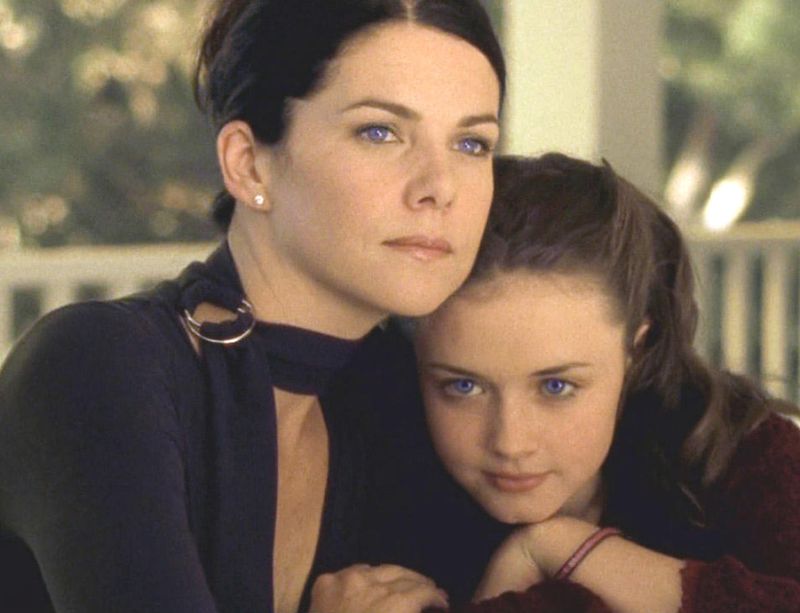
The early 2000s classic, Gilmore Girls, is centered around a mother daughter duo, Lorelai and Rory, living in the small town of Stars Hollow in Connecticut. Though the show went off air in 2007 after a seven season run, it’s being revived on Netflix due to its popularity. The show is a little unconventional since it’s completely female driven, features what is to some, the most realistic mother/daughter relationships on television, and portrays Lorelai, a teen mother, is an uncommonly positive light. While the pilot episode of Gilmore Girls relies on stereotypes for rich people in depicting Richard and Emily Gilmore, the show goes against the grain in depicting Lorelai, who, despite being a teen mom, is exceptionally competent and likeable, and her daughter Rory, a brilliant and level headed girl.


One might assume that since Lorelai got pregnant at sixteen and is unmarried that she doesn’t know what she’s doing and she can’t provide for her child, as that is the dominant understanding of teen moms in America. Lorelai defies this stereotype in the second act of the pilot episode, when she has to remind Rory that no boy is worth missing out on a great education. The script reads,

Lorelai: Look, don’t get me wrong. Guys are great. I’m a huge fan of guys. you don’t get knocked up at sixteen being indifferent to guys. But babe, guys are always going to be there. This school isn’t. It’s more important, it just is.

Lorelai is undoubtedly an excellent mother and provides pretty much everything her daughter needs. She has a job managing a local inn, owns a house, and has raised a daughter with straight As. This is goes against the dominant image of teen moms in America perpetuated by basically every other work of culture. She also doesn't see her past as shameful, she acknowledges that her pregnancy derailed her life, but she doesn't regret it. Similarly, the show rejects the idea that the children of single moms, especially single, teen moms, are doomed to be underachievers and have miserable childhoods. Rory has lived happily in Stars Hollow all her life, is at the top of her class, gets accepted into Chilton, a prestigious prep school, and later in the show, attends Yale. However, the show does fall back on stereotypes in portraying Lorelai’s rich, estranged parents, Richard and Emily. Richard is a businessman who spends most of his time working or ignoring his wife, Emily, blither on about planning teas, their country club, and the useless maids she’s hired while he reads the financial times. As a couple, they are not particularly affectionate, nor are they especially warm towards their daughter. Lorelai has to beg them to help her pay for Rory’s prep school tuition and they only agree after being promised more control over her upbringing.


Whether or not Lorelai and Rory are realistic characters is debateable. But even if they aren’t entirely believable, they offer a refreshing take on the mother/daughter dynamic and the lives of teen moms and their children. So many tv shows, movies, books, and songs portray teen moms as tragic, and though Lorelai never pretends that getting pregnant so young didn’t throw her life of course, she’s never presented as pitiful or stupid. What's more common are shows like Sixteen and Pregnant, that revolve around how teen moms ruin their lives by getting pregnant and are inherently bad parents. While narratives like those are popular in part to scare teenagers into not ruining their lives by getting pregnant, they're not reflective of everybody and alternative narratives deserve to be told.

Founding Falsities: Why Hamilton the Musical is Not a True American Story


Image result for hamilton the musical poster
Hamilton is one of Broadway’s top shows, receiving acclaim for its cast diversity. Critics say it has revolutionized the definition of a Broadway musical. However, Hamilton plays into the ideology of the ‘self-made man’ and fails to address elitism and racism in American politics. Hamilton picks and chooses details from the past to manufacture a false, though entertaining, story of America’s origins.

Alexander Hamilton’s story is one of a rise from poverty to fame. However, from the political elitism of colonial times to the Industrial Revolution’s business monopolies, patterns have shown that to rise through the classes is an exception, not a common truth. Yet the musical emphasizes how Hamilton was “non-stop”, as though hard work, rather than luck, can pull someone to elite status. It also ignores Hamilton’s elitism. He thought that the masses of people were untrustworthy and power should be given to a trusted - and rich - few.


Hamilton is also a false story because it ignores that most of the founding fathers actively supported slavery. The author, Lin Manuel Miranda stated that Hamilton allows people to, “leave whatever cultural baggage [they] have about the founding fathers at the door” - which is exactly what makes the story false. The lyrics mention John Laurens’ abolitionism but barely acknowledge Jefferson’s affair with Sally Hemmings. Alexander says of the South’s economy, “we know who’s really doin’ the planting”; but this is the only time slavery is mentioned in a political context. It seems as though Miranda is mentioning slavery just enough to be deemed politically correct, but little enough that listeners can forget that the founding fathers were white slave owners and their politics relied on slavery.

Poverty and racism are still around today, and they are entwined within each other. Systematic racism gives people of color unlivable wages, evicts them from their homes, and arrests them disproportionately more than white people. Classism and racism have been ingrained in American society since before the country even existed, and no matter how inclusive the casting call for Hamilton is, the musical forgets these issues and tells a false story of American history.

In Up, Love Has No "Gender" Roles


A love story that makes everyone swoon and even shed a tear may be more than just a cute couple. Up the movie is a true story because it questions gender roles. The main character's wife, Ellie, is shown as being brave and emotionally strong while he, Carl, is seen as emotional and dependent throughout their love story montage. This opposes what society views as the ideal man or woman and makes this tremendous love story into a true one as well.

During the opening scene of the movie, Carl wanders into an abandoned house to find Ellie for the first time. At first sight, it is not apparent whether Ellie is a girl or a boy, this is important because it limits first impressions of the character based on gender. Stereotypes about women in today's media might lead a movie-goer into believing that Ellie is dainty and emotionally fragile; however, this is not true. Pixar has created a girl that is neither, fearless Ellie dreams big about exploring and traveling. Even her male counterpart, Carl, is overwhelmed by her outgoing and fearless personality upon first meeting her.

Up’s love story is true because it depicts how real American women are independent and courageous. Characters similar to Ellie are becoming more common in mainstream entertainment. Strong female leads are seen movies such as The Incredible s, with Helen Parr a female superhero, and Inside Out, with a hockey player named Riley. Hopefully movies such as these three will help young American girls defy expectations. By challenging female stereotypes, this decade's favorite love story becomes even more epic.Image result for Up love story gif

Women Under Fire

The movie Courage Under Fire relates to recent changes in the United States military. Women, for so long, have not been able to fight in combat positions in the U.S. military. All combat positions are now open to all women. Women were and are still seen as weak, emotional, and not fit for the military. Courage Under Fire shows a female Captain in the Army, Captain Karen Walden (Meg Ryan), during the Gulf War, who does not represent this stereotypical female. She is the commander of a Medevac Huey. Her and the soldiers she commands sees other soldiers in distress and helps them just before their own helicopter goes down and then they become in trouble. She shows courage, strength and heroism
in a scary, hostile and dangerous place. These characteristics make her stand out to the higher ranking men in the military. Walden ends up getting killed for her act of courage under fire and receives a Medal of Honor. Giving this Medal of Honor to Walden, a female, is difficult because this is not a typical scenario. This movie shows a true women defying cultural stereotypes through her strength, power and courage in war.

In this movie, Walden refuses the female cultural stereotype in many ways. Just being a soldier in the Gulf War, Walden defies the stereotype that women cannot fight and handle being in a war. Because she is the commander of a Medevac Huey, Walden stands up to men and makes decisions and gives orders that they might not agree with. Women are supposed to take orders from men in our culture, so this is seen as not right to the men she is in charge of in some scenes in the movie. Walden ends up dying as a result of being shot after their helicopter goes down. Because of how she acts when she gets shot, she is seen as different and not normal. She is strong despite her getting injured. Just the fact that Walden went into the military and succeeded is a cultural backlash, being awarded the Medal of Honor is a specific event of how she succeeds in this field. Walden being the commander of this unit and her power that she has is definitely not a normal thing. She rejects the stereotype that men are “in charge” of women, she shows this when they are waiting for help after the helicopter goes down. She says “No surrender” to the other soldiers in a stern voice, this shows her commitment. She also makes a statement that they are not leaving the area where the helicopter went down because they have an injured soldier, she doesn’t want to risk his life or any other soldiers, this shows her loyalty. In the scene when she gets shot, she says “I gave birth to a nine-pound baby, asshole. I think I can handle it.” Walden shows toughness, strength and fearlessness to the other soldiers. Walden’s personality, character traits in war and the fact that she is in war is a unique and realistic part of our society.

Captain Karen Walden in the movie Courage Under Fire represents what our cultural thinks is false for women. Women in America are supposed to act, look and think a certain way. Women are put into categories and certain things are expected from them. This stereotype affects many cultural aspects of our society and everyday life. It is normal in our society for people to question women with jobs or hobbies that are reserved for men. These stereotypes are all around us and are even portrayed in movies and t.v. shows. Like Walden, women should defy stereotypes and do what they love no matter what other people think.

Feminism and Beyonce

When Beyoncé came out with her song “Flawless” in 2013, many people were not happy. With its less than subtle feminist message, it differed from Beyoncé's previous songs about love and yearning and seemed, to many, like a call for attention. How could someone who sings songs about being “Crazy in Love” or “Drunk in Love” all of sudden believe that she is a feminist who doesn’t need a man? What listeners did not realize was that with this song Beyoncé was actually solidifying her feminist message. Although many people view Beyoncé’s song “Flawless” as a contradiction to her other songs about love and sex, the messages in her song harness those messages of love while reinforcing the idea that women can crush societal expectations and be whatever they want to be while maintaining relationships.

If you were to listen to a random song by Beyoncé, chances are the lyrics discuss the same topic as many other female artists: being in love with someone can be difficult, there are ups and downs, it can make you crazy, but ultimately you love them. That is why her song “Flawless” became such a discussion. Beyoncé has always openly called herself a feminist and in interviews has never hesitated to whip out an inspiring message for women. When it came to her songs, however, her message, though briefly brushed over in some lyrics, was often lost among hits with the same messages of love and sex used by most female artists. When “Flawless” came out, with Chimamanda Ngozi Adichie’s Ted Talk on feminism intertwined with Beyoncé’s own thoughts and an undeniably catchy melody, the message was impossible to ignore. She had said it in interviews and now she said it extremely openly in her music: Beyoncé was a feminist. The establishment of this fact was not what bothered listeners. Most people were bothered by the fact that this song came out along with other songs still talking about being crazy and in love with men. Feminism to most had meant that you were perfectly fine without men and you should ditch any man giving you a hard time, but Beyoncé believed that you could love and have complex relationships with men and still be a strong and independent woman.

In the beginning of “Flawless” Beyoncé says, “I took some time to live my life/But don’t think I’m just his wife”. WIth these lines alone Beyoncé is beginning to open up about her ideas of strength and feminism. She is saying that a large part of her life is her family, but she still has an identity outside of her husband and daughter. All of those songs and years of lyrics about her conflicts with her husband Jay Z were a part of her finding herself. She is not weaker because she chose to keep him in her life, she is who she is today because of it. Later on in her song, Beyoncé has an excerpt from Chimamanda Ngozi Adichie’s Ted Talk on feminism. The lines featured in the song say, “We teach girls to shrink themselves/ to make themselves smaller/We say to girls ‘You should aim to be successful/but not too successful/otherwise you will threaten the man’”. This part of “Flawless” is why it got the most attention out of any of her songs about the power of women. She uses Adichie’s talk as a way to avoid sugarcoating the issues that girls face everyday. She puts the words right in her song in a way that they can’t be lost by the melody and they force people to face the reality. This is what girls grow up dealing with. Let’s not pretend it isn’t happening. Let’s face the problem, and let’s fix it. Beyoncé is one of the most truthful artists when it comes to feminism. Her song “Flawless”, though more directly focused on feminism than her usual work, did not contradict her past messages but, to those who listened closely, spread a feminist message a little more brave than most artists at the time. While many artists don’t address the issues that women face in everyday lives at all in their songs, and many spread a message of strength meaning complete separation from love and relationships, Beyoncé spreads the honest message that you can be both strong and struggle with your love life. Not only do her lyrics spread this message, but she proves it in how she lives her life. She has an extremely successful career that she uses as an outlet because her relationship isn’t perfect and her life isn’t perfect. But she isn’t less of a woman because of those things. She is Beyoncé.

You Don't Have To Belong With Me


Lyrics to You Belong With Me

The work of culture I selected was a song. The song and music video You Belong With Me by Taylor Swift is important to discuss. Both the song and the video are filled with stereotypes that promote false ideas about what is important to teenage girl. Although the song did not cause any public controversy, I believe the subject matter needs to be discussed. I think the message that Taylor Swift is sending in the song and music video You Belong With Me is that all girls should worry about is boys. She is promoting the idea that as a teenage girl you need to have a boyfriend in high school. There are many examples in the song and music video that prove the ideas she is promoting.

One example of the stereotypes Taylor Swift portrays in the song is that your appearance and your popularity matter when trying to get a guy to be interested in you. For example one of the lyrics in the song states, “ she was shorts skirts, I wear t-shirts, she’s cheer captain and i'm on the bleachers.” So she is comparing herself to a cheerleader that wears short clothing and somewhat saying this is why that guy is with her over me. She’s sending the message to girls that you need to wear short skirts and be a cheerleader for guys to like you. Also at the end of the music video she gets all dressed up and takes off her glasses and that’s when he notices her. She is portraying this idea that you need to take your glasses off to be pretty and for a boy to notice you. As she goes about her daily life activities she always seems to be thinking about him. She constantly watches from the outside while he argues with his girlfriend and waits around for them to break up. It is clear that the words she sings and the scenes in the video show what she thinks a teenage girl is like or needs to be.

The work of culture I analyzed relates to a lot of other pieces of culture as well as the life of a teenage girl. In many modern day movies and tv shows that take place in a high school setting all show the cheerleaders being the popular ones. The head cheerleader always dates the captain of the football team and he always ends up breaking up with her because she cheats on him or he realizes she only cares about herself. This is the same as in the music video I talked about. When younger girls watch things like this they grow up believing these stereotypes, but in reality that's not how it is. Personally this work of culture offends me because I do wear a uniform similar to a cheerleader, and I get called a cheerleader like it’s a negative thing. Cheerleaders are not always mean people, and girls don’t have to wear short skirts and take off their glasses to be noticed. Overall this music video is entertaining but promotes ideas that are not only offensive but just aren't realistic.


U.S. Navy Seal killed in American Sniper


Grayson Felton

9/5/16

True Story

Mr.Heidkamp

American Sniper-True American Story


The movie American Sniper that recently came out in theaters on December 14th 2014, is a story about Chris Kyle, who throughout this movie grew to become one of the most lethal snipers in the history of the U.S. Military. Chris Kyle was recently killed by a fellow Navy Seal at a gun range which was their reasoning behind the film being made. American Sniper is a true story due to the fact that it shares a deep emotional connection and is relatable to the audience. There are many instances in the film that can connect with the viewers.

Whether it's through the life of families during and after the war or a representation of the hardships soldiers face, American Sniper is a very relatable movie. The audience is able to connect with the film because many of them have experienced the same things.  The characters actions and experiences are a reality for most if not all of the audience.  The movie shows both sides of the separated family during the war and how much of a struggle it is for both Chris and his wife and kids to be seperated. Next, it’s relatable to many soldiers who have experienced war and done things that no one else can. These people are able to connect with Chris because no one else knows what they've experienced or done except for fellow Navy Seals. For example Chris Kyle's first task was to kill a 5 year old girl carrying a grenade. Chris talks about all of the seemingly unreal tasks he had to complete and how no one understands what he's done except his comrades. Chris struggles to be back in the real world because he has no one to connect too and talk about his experiences with.  Lastly it's simply backed up by factual evidence from the military, government, and the CIA who have all confirmed Chris Kyle's kills.


This thesis can apply to many works of culture whether is American Sniper, Zero Dark Thirty, or Lone Survivor. All of these films are supported by sufficient factual evidence and accurately depict the torment that soldiers had to face 24/7. Many war movies are true in the sense that their very relatable and are reinforced by factual evidence.  A true American War Story must be able to  connect with the audience, relatable, and backed by evidence all of which American Sniper accuratly displays.
Image result for american sniper

Beloved Tom and Jerry cartoons....RACIST!


For multiple generations, many American children grew up watching cartoons like Tom and Jerry or Looney Tunes. In retrospect, many of these cartoons had racist depictions of African American people. Tom and Jerry was seen as a harmless and entertaining cartoon about a cat and mouse fighting and trying to outwit each other. However, the cartoons also portrayed African Americans with offensive stereotypes. It is important to analyze works of culture such as Tom and Jerry because they directly influenced children and passed on ideologies to the next generation. Tom and Jerry cartoons are true stories because they reflect ideologies and stereotypes that existed during their time period.

In the episode “The Puss Gets the Boot” of the show Tom and Jerry an African American woman is shown as an uneducated maid. In something as innocent as a children's cartoon, the writers and animators were not trying to send a message about how they felt about African Americans or women but rather reflected the national consensus. The maid, Mammy Two Shoes yells at the cat “if ya go on an break anythang else ya are O-U-W-T! Out!”. Mammy Two Shoes’ lack of grammer reflects social opinions of African American’s intellect. During the time, an education was a difficult thing to obtain for African Americans in the United States. Segregation in the school systems and society prevented many African Americans from reaching a proper education. Tom and Jerry accurately reflects the stereotype that African Americans are uneducated. The episode also indirectly tells viewers that she is not working in her own home, but someone else's. “I can’t be having a good-for-nothin cat reckin up this whole house!” Mammy Two Shoes says as she scares the cat away from the fragile plates on display. During the time this episode was aired, the idea that African Americans should work for other people was commonplace. In a following episode “Midnight Snack” it is explained that Mammy Two Shoes is in charge of cooking, cleaning, and general kitchen work. In the 1930s and 1940s the common expectation for women was to work in the house, cooking and cleaning. This expectation was shown in the cartoon episode. There was no man in charge of housework, instead it was Mammy Two Shoes who did the chores.

These cartoons are true American stories. Works of culture that reflect ideologies and conventional views held during a time period are true stories. The racism and sexism in these cartoons were not of a foreign mindset to the American people. These prejudices and views were quite common in America. Other true stories can be found in movies and T.V shows made throughout the decades. When works accurately reflect the mindset of Americans at the time, they are true stories.
-Gabriel D

Call of Duty Feeds Stereotypes


Call of Duty, a game played by over 175 million people, is deceiving us all. The stereotypes that are portrayed in this video game have been around for a long time, and this game contributes to the problem similar to songs, advertisements, movies, and so much more. Call of Duty is portraying a false image of women, and men though common stereotypes. They have failed to add women characters for years, they portray men as they must be good looking and strong, and include extremely limited options for female players.

When Call of Duty was first released in 2003, there was absolutely no women characters involved, and till a year ago there still wasn’t any. In 2015, Call of Duty: Black Ops 3, they included their first female character option. This doesn’t make much sense considering the fact that the ban on women being excluded from the military was officially lifted in 2013, and women have played a role in the army up until then anyway. Considering the fact that there was two Call of Duty's produced from the time the ban was lifted till the first female character was introduced, it just seems like they didn’t see women as being a key role in the military. This isn’t even mentioning the fact of all the female players that were forced to chose a male character for so long. This plays into the stereotype that women don’t play video games when in fact 48% of women, when asked, said that they have or do play video games. All this considered Call of Duty: Black Ops 3 features their first ever female character, and while this is a great improvement, they have failed to correct many of the parts in the transcript, and no matter what gender your character is, there is many times where you will be referred to as a he. This being said, there wasn’t much attention or effort put towards the female character, which is only hurting the game further.

Ever since the first version of Call of Duty came out, they have depicted men that have huge muscles, tattoos, and good looking in general to be in war. This just simply isn’t true, and isn’t even possible. Not every man can have the same body type and the extreme muscles that the male characters have in the game. Also they only just came out with the first African American character in Call of Duty: Black Ops 3, which is even worse considering the fact that they have played a part in our military since the arrival of black slaves, during the times of colonization. This isn’t even mentioning the number of African American that have played the game since the very beginning and the growing number over the years.

Overall, Call of Duty, throughout the years has been feeding into these American stereotypes. Whether it’s about women in the war, the way males and females appear, or just who is playing the game itself, the game has not been accurate, but is slowly improving over time, and hopefully will take a big step forward with their next release.

A Brief Analysis of Mad Men's Historical Accuracy

Mad Men is a work of historical fiction that was first initiated during the summer of 2007, and remained for the duration of seven Television seasons. The show’s primary focus is an advertisement agency, Sterling Cooper, during the socially and politically eventful decade of 1960. Mad Men preserves this era in history with impeccable precision, which in fact grants the viewer a retrospective glance in the opposite direction of time from a standpoint in lack of opinion. The show transcends bias, ignorance, misinformation, and other such substantial boundaries. Mad Men is truthful due to its stern ambition in providing an exceptional illustration of an American reality of the past. In many ways, Mad Men takes upon itself the responsibilities of a time capsule. The show brings to question a number of social stereotypes and standards from the past, as well as suggests to the relevance of similar issues of the present, by attaching to the depiction of each stereotype featured on-screen it’s harmful and oppressive product. This encourages the viewer to consider and compare the state of humanity between the era of today, and that of the 1960s.

Mad Men’s commitment to historical accuracy is verified by an extensive collection of social issues and events of the time that assimilate into each layer of the show. Events that provoked considerable national shifts, such as the death of John F. Kennedy, are sewn into the show’s fictitious plot line with striking detail. The significance and value held by JFK at the time of his demise is revealed by Mad Men’s representation of public reception of the news of his death, which was preserved remarkably.

In conclusion, the distinct, documentary-style approach to a specified period in time (America during the 60s) that meaningfully adheres to historical fact does not exclusively apply to Mad Men. This valuable attribute is shared among a grand assemblage of artwork, a prime example of which being present in a film by Sam Mendes, American Beauty. Similarly to Mad Men, this picture explores the reality of a particular sector and phase of human existence (in this case, life as a resident in an ordinary North American suburb, during the late 1990s). The unrelenting devotion of director Sam Mendes to the accurate depiction of his desired image of truth in American Beauty is made obvious by the power and merit of the film, rewarded in part by such an approach.


Gossip Girls
, a show that most young teenage American girls have watched or heard of. If someone were to ask a teenage girl about the show they would most definitely say that they have at least heard of it. And even though the show has ended, many people are able to go to Netflix and just start watching all 6 seasons of it. The show began in 2007 and ended in 2012; however the names Serena Van Der Woodsen, Blair Waldorf, and Chuck Bass still have so much meaning to so many people. The show Gossip Girl draws out the lives of the upper east siders of New York City, their dilemmas and all of their individual actions, promoting sexist stereotypes and unrealistic high school ideals.
Image result for gossip girl blair serena gif

The show revolves around the ever changing unhealthy friendship between Serena and Blair who have a complicated relationship to say the least. They always seem to be competing against each other whether it is for college admissions, popularity, or a membership into a secret society; and when they aren’t competing against each other, they are going after someone together. This constant competition is found in many other television shows or movies. The idea idea that it is always women against women, seeing the other as a challenge is something that when it is displayed enough influences young teenage girls to see each other as competition as well. At the start of season two, both Blair and Serena are competing for the title of “Queen of the school," despite their public status of friends, but when Dan (Serena’s ex) sparks interest in a new girl, Blair and Serena focus their energy on humiliating the new girl. They use their 'minions' to pour a glass of some mixture on her hair which causes it to fall out in front of the grade while the are all at a bar. And while gossip girl is a fictional work, it only further normalizes the idea that a even if they are friends women must always be competing against each other.

Is Taylor Swift Promoting Sexist Ideologies?

"Blank Space" from Taylor Swift’s most recent record, 1989 has been one of her top selling tracks to date. The catchy tune and synthy pop beat rocketed this song straight to the top of the charts, and kept it there. A song like this that reaches (and potentially influences) such a large demographic is able raise some interesting questions: What kind of ideologies does this song promote? Should Swift have released a controversial track like this knowing that the majority of her audience is impressionable young people, many of whom idolize her or see her as their role model? And finally, Does Swift realize that a vast number of listeners will not know that the actual goal of the lyrics and music video for this song is to combat the sexist stereotypes that it appears to be promoting?

 "Blank Space" ​perpetuates​ ​female​ ​stereotypes​ ​through​ ​both​ ​the​ ​song’s​ ​lyrics​ ​and​ ​music
video.​ ​The​ ​promotion​ ​of​ ​these​ ​false​ ​and outdated​ ​ideologies​ ​in​ ​today’s​ ​pop​ ​culture​ ​provide​ ​ammunition​ ​for those​ ​that​ ​believe​ ​these​ ​stereotypes​​ ​to​ ​use​ ​against​ ​someone​ ​who​ ​may​ ​be​ ​trying​ ​to​ ​educate them​ ​on​ ​what​ ​the​ ​reality​ ​is. The​ ​song​ ​opens​ ​with
​ ​“Nice​ ​to meet​ ​you,​ ​where’ve​ ​you​ ​been?​ ​I​ ​could​ ​show​ ​you​ ​incredible​ ​things”​ 
​and​ ​later​ ​continues​ ​with
​ ​“’Oh​ ​my​ ​God, look​ ​at​ ​that​ ​face, You​ ​look​ ​like​ ​my​ ​next​ ​mistake’”.
 Immediately,​ ​we​ ​know​ ​from​ ​this​ line ​that​ ​the​ ​character​ ​Swift is​ ​portraying ​​is​ ​not​ ​taking​ ​the​ ​relationship​ ​so​ ​seriously, and is seeing her newest potential love interest as a strike on her tally board rather than a human being. This promotes the idea that women like to jump from partner to partner, and that that is an inherently bad and unnatural thing. ​Swift​ goes on to ​describes ​love​ ​as​ ​“a game”,​ ​and​ ​asks​ ​if​ ​her targeted partner​ ​“want​[s] ​to​ ​play”,​ ​indicating​ ​that relationships​ ​are​ ​a​ ​joke​ ​to​ ​this character,​ ​and​ ​that​ ​she​ ​will​ ​move on​ ​quickly​ ​after​ ​she gets bored of you. This suggests that essentially all women will do the same.​ ​

The​ ​song​ ​continues​ ​to​ ​use​ ​its​ ​lyrics​ ​to​ ​get​ ​across​ ​this​ ​image​ ​of​ ​a flighty, jet-setting, wild woman​ ​until​ ​suddenly​ ​Swift​ ​becomes increasingly more​ ​aggressive​ ​and​ ​volatile,​ ​singing​ ​
“Wait, the​ ​worst​ ​is​ ​yet​ ​to​ ​come,​ ​oh​ ​no Screaming,​ ​crying,​ ​perfect​ ​storms I​ ​can​ ​make​ ​all​ ​the​ ​tables​ ​turn, rose gardens​ ​filled​ ​with​ ​thorns, keep​ ​you​ ​second​ ​guessing​ ​like​ ​‘Oh​ ​my​ ​God,​ ​who​ ​is​ ​she?’ I​ ​get​ ​drunk​ ​on​ ​jealousy, But​ ​you'll​ ​come​ ​back​ ​each​ ​time​ ​you​ ​leave, cause​ ​darling​ ​I'm​ ​a​ ​nightmare dressed​ ​like​ ​a​ ​daydream”.​ 
​It​ ​is​ ​here​ ​in​ ​the​ ​song​ ​that​ ​things​ ​start​ ​heading​ ​south at an alarming rate​ ​in this relationship​ ​when Swift’s character ​begins​ ​showing​ ​signs​ ​of​ ​manipulation ​and​ ​possessiveness​, potentially implying that women are fundamentally clingy and borderline abusive over their romantic partners if they are given any reason for distrust.

 ​When​ ​in​ ​the chorus​ ​Swift​ ​sings
​ ​“got​ ​a​ ​long​ ​list​ ​of​ ​ex-lovers,​ ​they'll​ ​tell​ ​you​ ​I'm​ ​insane”,​
 ​it​ ​clues​ ​the​ ​listener​ ​in​ ​on​ ​the​ ​fact that​ any number of men​ (a number for which Swift is shamed for) ​before​ ​Swift’s​ ​current​ ​partner​ ​have​ ​been​ ​exposed​ ​to​ ​her​ ​frightening​ ​behavior​ and left her for that reason.

The character Swift is playing and the critique of society that she was attempting to create through her lyrics and music video have likely fallen on countless pairs of deaf ears that have not realized that her goal was to comment on the power of false feminine ideologies rather than encourage them. By ironically playing right into modern society’s age-old views of women, she quite irresponsibly forgets to consider the average listener who may not know anything about Swift, other than the fact that in "Blank Space", she encourages the perpetuation of sexist ideologies.

Party of the century

This movie came out about four years ago in 2012, and tells an epic tale about three friends who aren’t the most popular but throw the party of the century. Project X shows the classic story of kids throwing a party when the parents go out of town and things get a little out of control. Parties for a teen are their chance to have a taste of freedom and for these three that includes under ages drinking, narcotics, and sexual activity without any repercussions. Although this party is unrealistic and is one of a kind the ideas that it promotes are definitely true so therefore it makes the piece of culture true. Experiences like these are what makes a teen a teen and allow them to prepare for adulthood because without these times they will search for them when their time has passed.

In this chase for popularity there are no restrictions on what can or will happen and that’s good for everyone but the host. Often for the host the good times tend to end early because all you can think about is the mess that you will be left with and this is where peer pressure comes in as the movie shows. In Project X the main character and host of the party begins to stress because the party begins to get out of hand and his friends notices that. So what does he do, he sweet talks his friend into drinking and taking ecstasy to loosen him up. When he is pressured to become intoxicated he feeds into, which happens to so many teens today. Sometimes for teens when things aren’t going right in their life being pressured into drugs causes them to think that the drugs will make everything better. Not only does this movie show a true story of peer pressure but it also shows regret, once the host is pressured into intoxications he has a moment that he may regret. He became a little bit too loose when he mixes alcohol with ecstasy, he messes up his chances with the better girl he has known for a while for a one night stand that didn’t even happen. In my opinion this is true because once you become that intoxicated you can’t think straight and your judgement becomes off.


This movie is a true piece of american culture because the ideas it promotes happens all too often in the life of a teen. Early I said that these experiences are necessary to mold an adult out of a teen and I truly believe that because if they don’t have them then they will never learn from them. Without them they won’t truly know the meaning of what it means to be an adult and learn how to handle certain situations. In my life I have been in similar situations and I know how I react versus others some give in to pressure and some don’t.

The Super single, Super young, Super dad

Private practice is a TV show that went off of the air in 2013. At the time it was apart of a bigger trend to have TV shows about doctors struggle with their life and their jobs. It is relevant because unlike many TV shows during that time, it shows the truth about what many people actually go through in america. Even though Private practice does not follow american ideologies, it works hard to break these ideologies and cliches to be true. This TV show does not sugar coat life and shows the viewers the hard truths about what's going in america. The writers show this by using the character dell.


In Private Practice it breaks many ideologies such as the common thought that a young, male single parent can not do as good as a job as a two parent home or an older female single parent. They break this ideology by introducing the character dell who is a young single parent who is raising his young daughter Betsy. He does this by taking her away from her drug addict mother. When her mom died and Betsy has trouble adjusting without her mom he takes days off of work to help her. At the end when dell is on his deathbed he even thinks about Betsy and says how everything will be OK. This shows that even though dell struggles with becoming a midwife and going through medical school, he still had time for his daughter. Therefore, he is a good young single parent who treats his daughter well.

In many different works of culture you see the same theme occurring with single dads and young parents. Like the TV show Two and a Half Men Alan is a single dad who takes care of Jake. It shows him as an inadequate father who lets him do whatever he wants and leaves his mom with the tough decisions. This theme also occurs in the TV show 16 and pregnant where they show younger parents who is not ready for children. They fill the stereotype by showing young parents panicking, be unprepared for children, and making bad parenting choices.
Cultural Analysis: New Girl


The show New Girl features Jess, a young woman who goes through a hard break-up and ends up moving in with three male roommates; Nick, Shmidt, and Winston. It is an unconventional situation. Jess’ best friend Cece is also a regular character and becomes friends with all the guys too. The show is a great light-hearted sitcom.

The TV show New Girl breaks the stereotype of boys and girls not being able to be just friends. In the show, Jess is friends with all three of the guys she lives with, and while at first, the guys think it will be weird, they all get along great. The show does a great job of showing that Jess and the guys can live together and have functioning non-romantic relationships. However, you could argue that the show supports this stereotype, because Jess and Nick become romantically involved later on in the show. I would disagree though, because she still maintains platonic relationships with Winston and Schmidt.

This quality is what makes this show so great, along with the fact that New Girl does a great job of showing realistic romantic relationships. For example, Nick and Jess’ relationship is complicated and confusing for them, and it takes them a long time to figure out what they mean to each other. This is what relationships in real life are actually like, as opposed to the classic movie trope of “love at first sight.” Winston and Shmidt also go through a lot of relationships, some are longer and more serious, some are not, just like real life. Shmidt also falls in love with Jess’ best friend CeCe, and they date for a while, but Cece ends up dating other people, getting engaged, etc. I think this is really valuable because it depicts real life, and how relationships are messy, and it’s not always a “love at first sight” deal.

The show also has a great cast, that is much more diverse than most I see on TV. It is diverse in terms of race; Shmidt is Jewish, Winston is black, and Cece is Indian. Winston also dates an asian girl, and Cece dates another Indian man. It is great to see a diverse cast like this without the classic media stereotypes attached to them. New Girl shows a lot of Cece’s arranged marriage to the Indian man, and the culture around it, which is definitely not something you see a lot on TV, and it adds to the unconventional romantic relationships seen on the show.

The TV show New Girl does a great job breaking a lot of different stereotypes. It helps to break the stereotype that men and women can’t be in relationships that are not romantic, and that not all romantic relationships are easy and make sense, as well as breaking racial stereotypes. The show is a light-hearted show, but when you look deeper you can really see the importance of it. New Girl shows that all people can be friends, no matter how “different” they are.


Family Guy and Female equality

Cultural Analysis of Family Guy

The idea of women’s rights is very prominent in today's culture, and has gained more exposure with the current presidential election. Having one candidate who is known for being sexist against females, and the other candidate who is known to support rights for women, with the potential to be the first female president of the United States, has put women’s issues into the spotlight.

Family Guy (1999-present), is a satirical animated TV show made to make you question our current society. The husband and father, Peter Griffin, has become the overweight, lazy man of the house. He has a son and daughter, and a wife, Lois. There are many common stereotypes represented throughout Family Guy, most prominently the idea that women are made to be housewives and be servants to the husband. 

In season 13, episode 1 For Pete’s Sake!, Peter makes a comic that portrays the wife as the dishwasher and the vacuum cleaner. The local feminists dislike this, and protest the gender inequality and sexism of males. The Griffin family is forced to move from their hometown until the protesters abandon their quest. Sexism is exhibited throughout the entire series. Peter always makes Lois do even the simplest of tasks, such as having her turn on the TV for him when he is on the couch. Seeing this makes the viewer question some people’s views of women.

Society has almost always placed men before women, and it wasn’t until the late 19th century that we began to question this idea. Many people strove for women’s rights in the past, but the first big movement is arguably the Suffrage Movement. Rights for women have only grown since, but we should continue to remain aware of the treatment of women in today's society.

Monday, August 1, 2016

Welcome!

Welcome to the weblog for our American Literature class. Here's the place we will be continuing conversations from class and starting new ones. We'll be discussing and debating current events, historical controversies, and literary conundrums. We might even see a little poetry.

So, what's a blog? And how will we be using it class? For information on blogging and how to join and post to our blog, see "All About Blogging."

We're looking forward to a great year.

Make sure you check your e-mail for your invitation to join the blog. Also – and this is very important – the first step you should take after you accept the invitation is to edit your user profile so that you control how your identity and your communication preferences.  Click on the pull-down menu next to your name in the upper right corner of the browser and click on “Blogger Profile.” Then click on “Edit Profile.”

You can fill out as much of it as you want, but the only requirement is -- under “Identity” -- make sure your “Display name” is your first name and last initial only -- so we provide some anonymity while still allowing your classmates and teacher to be able to identity who you are. For example, change “Bernie Heidkamp” to “Bernie H.”