"Straight Outta Compton" is a song sung by an American hip-hop group named N.W.A. The group originally consisted of Dr. Dre, Eazy-E and Ice Cube. However, DJ Yella and MC Ren joined later. Their album, released in 1989, sold 750,000 copies before they ever went on tour. N.W.A. uses a lot of profanity in their music. On average, their songs contain 32 profane words. "Straight Outta Compton" contains 34. Today, profanity is being used more and more in everyday music, especially in rap music. Surprisingly, there were fewer curse words in music in the late 80’s and early 90’s than in today’s music. There are a variety of references to violence and crime in the song as well. Because of this, Straight Outta Compton was one of the first albums to use the “Parental Advisory” sticker.
"Straight Outta Compton" is a song documenting the ups and down of gang life in a low income community. The artists present their view of life from living in a ghetto. In one line Ice Cube says, “When I’m called off I got the sawed off, squeeze the trigger and the bodies are hauled off.” Here he references gang life in late 1980’s Compton, California. He is saying gang members are willing to back up other gang members even if it means killing some people. Currently there are gang issues in Pilson and the Little Village area. There are many known Latin Kings members in Little Village, making it a very dangerous place. In ghettos and very low-income neighborhoods there tends to be more crime, violence and gang activity. Later on in N.W.A.’s song, MC Ren references burglary and weaponry in two lines, he says “Just like burglary, the definition is ‘jackin’ and when illegally armed it’s called ‘packin’.” Both of these are very common themes throughout N.W.A.’s songs but also in the news today. However, gun violence has dropped 48% since 1993 (4 years after N.W.A.’s album release).
I recently watched the popular movie Ant-Man with a few of my friends. Part of Marvels’ hit series of superhero movies, it made $57 million its opening weekend. In it, the protagonist Scott Lang’s trouble finding a real job and as a result of being a convicted felon reveals an insight into a very real american problem.
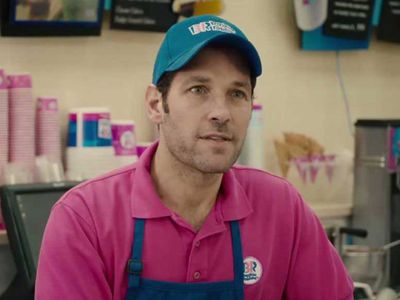
Scott gets released from jail in the first ten minutes of the movie, and his trouble finding a job is the reason that he ends up getting super powers at all. The only work he can get is at Baskin-Robbins, and even there Scott is quickly fired when his manager finds out that he spent time in jail. Scott is unable to get a real, well-paying job, even though he clearly has some amount of useful skills based off events prior to the beginning of the movie. The American prison system doesn’t serve to prepare its constituents for success outside of jail, and Scott’s plight is a prime example of this. Originally, Scott is completely averse to returning to crime. He rebuffs his criminal friend’s efforts at recruiting him for a heist twice, only giving in once he loses his job at Baskin-Robbins. He only accepts the offer to break into Dr. Hank Pym’s house after he is unable to make honest money due to his prior offenses.
America is seen around the world as “the land of opportunity”. However, for the significant portion of it that has spent time in jail, this is simply not true. A study conducted in 2010 by Kris Warner and John Schmitt states that “ex-offenders lower employment rates for men [in the United States] by 1.5 to 1.7 percentage points”.
Ant-Man also fits very well into our criteria of what makes a “true” American story. Scott’s trouble finding work, while made mildly comedic, is not necessarily exaggerated. It also connects with the current social context of our troubled prison system. Signs offering to find jobs for felons, and even shops like Felony Frank’s catering to those unable to find jobs otherwise point to a situation more serious than one just confined to a superhero movie. With little opportunity to find jobs, many felons are forced to return to crime. While clearly a superhero movie, Ant-Man dives deep into a very pressing problem to America today.
It’s safe to say, the majority of people have some type of need; whether it’s always having a phone or constantly washing your hands, it has to be done. For Dexter, the main character of a hit T.V. show, his need is killing people. It’s typical to think the main character is the enemy, but this serial killer specifically kills serial killers only. On special occasion, a rapist or kidnapper has tasted his knife as well, but it’s portrayed that these people are well deserving of their death.
If he goes too long without killing, he faces everyday challenges that could result in harm of an innocent or loved one. Multiple people feel a not-so intense urge, or else anxiety builds up in them. Half the people say it’s all mental and they can make it go away without achieving their need, while others would differ. Dexter like many others, have habits that are imprinted in their brain that they cannot break, but that’s the same as saying they aren’t in control of their own mind. Everyone has the power to break such a habit, it can only take over if they let it.
In our society, things like O.C.D. and anxiety are looked upon as weaknesses, which the only way to cure is by getting help. It's becoming programmed in many kids that there is something wrong with them, that only outside help can cure them. Sometimes, that may be the case but if more motivation and information is represented as much as "help" is many more people would understand that they are in control and that they can teach themselves to fix their habits, without any pricey outside help that's portrayed as necessary to these people. In Dexter, he doesn't believe he's in control of his life. His "dark passenger" has been inside him since Harry, his adoptive father, took him in and gave him "Harry's code" to live by. The idea of having his own life, and being free of his habits was never viewed as an option from his eyes. His need to kill is always a must, and never an option to him. Our society has formed into a weak-minded community who don't believe they are as strong as they truly are.
Remember the Titans, produced in the year 2000 and based on a true story, accurately represents racism of the 70’s. The movie tells a story of an originally all white football team from the south coached by a white coach. The school decides to hire a black coach and incorporate black athletes into the football program, becoming the first school of the south to immigrate. The story questions racism by mixing a white and black football team together.
At first the two teams are not willing to play together. Denzel Washington, the hired assistant coach, threatens the boys that they will either have to play together or that they will be cut from the team. Washington mandates that two players of two different colors will have to get to know each other by the end of the first week. Two characters, however, do not have such an easy time getting along. Gerry Bertier and Julius Campbell are socially paired, but neither respect where one another comes from, which barricades their friendship.
Julius puts up a poster that supports African-American culture that Gerry refuses to keep up on “his” wall. Julius responds, “You better use your x-ray vision superman, you’re going to look right through it cause it ain’t coming down.” which then results in a physical fight. This does not critically injure either player, however later on, Gerry gets into a car crash and becomes paralyzed from the waist down.
Coaches and team members are some of the first to arrive to the hospital, standing by Gerry’s side. When Julius gets to the hospital, Coach Boone(Denzel) notifies him that Gerry has been paralyzed from the car crash. Julius is heartbroken and immediately walks over to Gerry’s parents. Julius begins to repeatedly apologize to them, when Gerry’s mother interrupts his tears saying, “He doesn’t want to see anybody but you, Julius.” Julius respectfully responding, “Yes ma’am.”. When Julius enters the hospital room with Gerry the nurse says that only ‘kin’ are allowed to visit the patient. Gerry answers, “Are you blind? Don’t you see the family resemblance.”.
Gerry, in a vulnerable state, comes around to confess that he was afraid of Julius before, for a reason he could not understand, but really only hating his brother. Julius then explains that one day Julius and Gerry will move to the same neighborhood and grow old together. Sharing love and brotherhood in the hospital bedroom expresses the turning point in discrimination between the two. Racism is a dominant ideology of American culture, be that as it may, Remember the Titans tells a story that defies and overcomes racism.
I decided to take a look into one of the Chicago-born band “Rise Against”’s most successful songs they’ve ever made, “The Good Left Undone”. I feel that this work, specifically from the lyrics, is very real and not really artificial at all because despite the overall message being a bit clichéd, the way it’s presented is really refreshing.
I chose this work because the band itself was created relatively recently so they’re still extremely popular with a large crowd. This song heavily reflects the ideologies of our current society by enforcing the (somewhat clichéd) ideal that unless we all change what we’re doing pretty heavily, the world is going to eventually give up on us and we won’t be able to fix what we’ve done to Earth.
An idea presented throughout the song is that while we’re already pretty far gone, there’s still hope for us to change. This is evidenced by the opening line of the song where lyricist Tim Mcllrath says “in a field where nothing grew but weeds, I found a flower at my feet”. He’s perpetuating the idea that despite what we’ve done to the land that we live on, there’s still hope for us to change it. This isn’t surprising to hear from the band, because an idea that the band often talks about in their music is saving the environment.
This piece of music is very important to talk about because it’s perpetuating the extremely important idea that we need to change what we’re doing to the Earth and we need to do it quick.
If you'd like to hear the song, click on the video below
In honor of football season starting in the IHSA, the movie, “The Blind Side,” correlates well with football season beginning and the social and race issues going on in America today. “The Blind Side” features Sandra Bullock, Quinton Aaron, and Tim McGraw. Although this movie came out in 2009, there are relevant issue risen throughout the movie, that remind Americans whether a story told is true or not and how these stereotypes affect today’s society. Controversy with racial stereotypes are subsequently associated with social class stereotypes. As exemplified in other pieces of recent American culture, such as “Straight Outta Compton” and “Selma,” racial stereotypes can cause the most controversy, or make people of all races feel uncomfortable. “The Blind Side” is just another part of this trend that has been building for decades. This American cultural piece is a good, paradoxical example of conveying social class and race stereotypes, both promoting and breaking the typical ideologies society has. Analyzing the accepting and rejecting stereotypes in “The Blind Side” is done with the help of knowing the characteristics of a true story and a false story.
“The Blind Side” contains specific scenes that help prove the stereotypes for race in America are false. For example,white people are stereotyped to be racist. While this statement is seemingly true, because there are white people who are racist, it is not true in the sense that all white people are racist. In “The Blind Side,” Leigh Anne Tuohy rejects this stereotype when she takes in low economic class, black, Michael Oher. A white person would not open their nice home up to a black person and provide clothes and food for them with nothing in return, if they were racist. Furthermore, the stereotype that black people are only good at sports is also rejected when Michael Oher proves he is more than just a big football player. Although Michael Oher is his team’s best football player, he needs to get his grades up to qualify for an academic scholarship for a D1 school. With the help of his teachers and tutor, Michael devotes time to his studies as well as juggling football. When writing a paper for English class, Michael demonstrates and learns of his capability to write and perseverance. He is ultimately able to and accepts a college offer with his improved GPA.
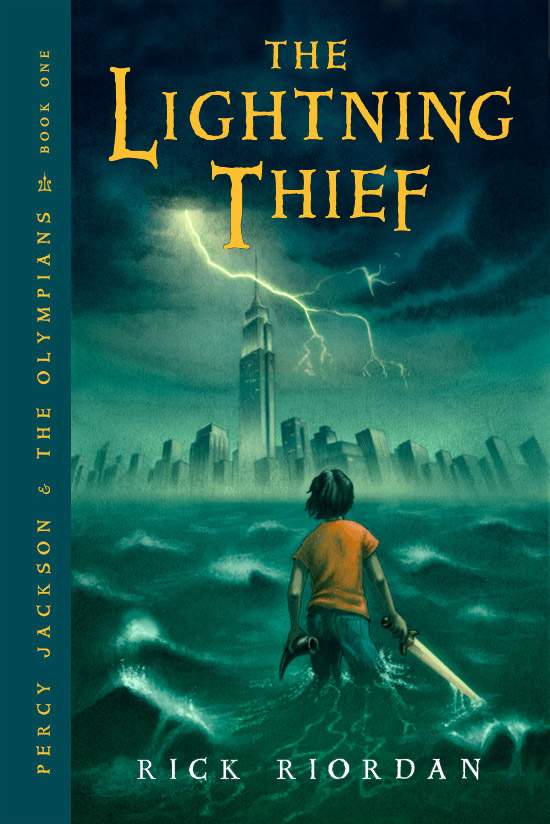
Recently, I have begun to re-read 10 books by Rick Riordan, that begins with "The Lightning Thief," that regard Greek and Roman mythology while following the adventure of a certain set of heroes that end up saving the world several times over. At first glance, this seems just about as real as flying pigs, but the characters and problems that they face actually seem both real and relatable.
There are many aspects of the characters’ struggles and personalities that speak a lot towards everyday social, physical, and emotional problems. Many times throughout all 10 books, the characters go through many unflattering human emotions, as well as the “warm-and-fuzzy” ones, creating a large attachment between reader and character. The struggles and obstacles that the people must overcome are a fun fantasy, and hold all sorts of morals and lessons to be learned. All of these concepts are, if not necessary, extremely important for the young audience that the books are targeted at.
When a character in these books becomes happy or cracks a joke, you can’t help but smile due to the brilliant writing style set up by Riordan, such as when two of the characters, Leo and Jason, make fun of each other playfully, it shows that in their essence, they’re still teenagers and their antics are fully relatable. The obstacles that the heroes have to face are all seemingly impossible, but also have important morals attached to them. In the end of the first series, the main character Percy hands over his only arms, to the main antagonist Luke, who was hosting the titan lord Kronos, in order to have Luke expose his own weakness to defeat Kronos and himself. This shows that even against all logic, it’s beneficial to have some trust.
These morals, as well as emotional connections are extremely important to all audiences, and that’s what makes Riordan’s works so astounding as works of American culture.
Kanye West has had an extremely long career for a hip-hop artist, spanning over the course of 3 decades an producing over 109 singles. On of my personal favorites is Homecoming, which appears on his album Graduation. Homecoming draws from stories of Kanye's childhood to illustrate his connection with his home town of Chicago. While Kanye is no longer living in Chicago, Homecoming is meant as an homage to the city and describes the aspects that Kanye misses from his old home.
The most prominent poetic language used throughout the song is an extended metaphor. Kanye opens his first verse with the lines:
I met this girl when I was 3 years old
And what I loved most she had so much soul
She said "Excuse me lil homey, I know you don't know me
But, my name is Windy and I like to blow trees"
On the surface, Kanye is writing a love ballad to a girl he met when he was young, but this really isnt the case. Windy is a play of off Chicago's nick name "The Windy City" and Kanye moved to Chicago when he was 3. This metaphor continues throughout the song and adds depth to the relationship between Kanye and Chicago. By describing his love as the love between two people, Kanye lets the audience feel the great amount of intimacy that join him with Chicago.
In almost every single line, Kanye continues to develop the seperate stories of his romance with a girl and his romance with Chicago. In one of the most vivid lines, Kanye says:
In the nighttime her face lit up, so astounding
On one level, this is just talking about a girls face brightened by all the city lights. However, it gets much more interesting when you view it as a personification and inspect it next to the underlying theme of Chicago. While Chicago doesn't have an actual face, its lights do turn on at night and the whole city shines. Though this line is simple in sentence and word choice, it does a good job of representing the goal of the song, which is the development of two stories. What I think is remarkable about this is how naturally Kanye is able to use this personification to weave the two stories together.
In one of the last lines of the second verse, Kanye says:
Reach for the stars so if you fall, you land on a cloud
This is a perfect example of an idiom that feels completly at home in the song. Kanye developed the plot of the song from his childhood to his rap career and uses this figurative language to explain that he is trying to make it to the top of the rap industry. The use of the words stars and clouds helps build on the previous language used to describe Chicago as a big, bright city.
Over the span of 3 minutes and 24 seconds, Kanye is able to build a love story in a cityscape, a love story to that cityscape, and connect them both back to his rap career through the use of his poetic language.
Kendrick Lamar is a rapper that grew up in Compton, California who began to gain major recognition in 2010. In October 2012 he released an album called good kid m.A.A.d city. In this album, the fifth song is called "Money Trees." Kendrick expresses this song as a way of talking about how money changes people and he assesses his situation in his home town of Compton, where he reflects on the immortalization of his uncle after he was shot. There are many ways in which this song could be considered poetry. There are many striking and clever lines that Kendrick uses to make his point.
Money trees is the perfect place for shade and that's just how I feel
A silver spoon I know you come from, ya bish
And that's a lifestyle that we never knew
Go at a reverend for the revenue
By saying this I believe that he is trying to express the fact that a person in his old situation is never really safe unless he has money to protect himself. In Compton there is a lot of poverty and it is a place known for its violence. A person living in that kind of environment seems to be in danger a lot of the time and Kendrick knows that first hand. He says this because the only way to get out of that dangerous situation is to make a lot of money so you can move away from that terrible place. The silver spoon is a lifestyle that many people in Compton do not have the luxury of receiving in their lives. These lines reflect how Kendrick felt as he was growing up.
Dreams of living life like rappers do
Back to reality we poor, ya bish
Another casualty at war, ya bish
Two bullets in my uncle tony head
In these lines we see that even though he dreamt of "living life like rappers do," he still had to realize that was an unlikely wish. He references to when his uncle was shot. Just "Another casualty at war" because that was such a normal thing around there. I feel like he is speaking to the general public about his experiences. He wants people to see that someone being shot is not really a huge deal around there. Life is a war in that situation and he accepts the fact that lives will be lost in the fight.
I believe that this song is a true representation of what poetry can be. This song has many lines in it that make you think about where he came from and the situation of these people living in that place. Kendrick Lamar uses many clever words and phrases to speak to the audience in a way that they can tell what he is feeling while he is speaking those lines. I think that is what poetry is all about, is being able to read something or listen to something and experience a feeling of what the author was trying to convey.
I consider music to be poetry because my definition of poetry is quite broad and loose. I define poetry as a release of emotions or ideas through words. “The One You Love,” a really beautiful song by Passenger from their album Flight of the Crow, is a great piece of poetry. While I don’t agree that poetry has to include specific “poetic devices” to be poetry, this song does include poetic devices. The song is, quite simply, about finding The One and figuring out how to tell when you've found The One. At the heart of the song is the idea that The One is the person you are the most comfortable with and the safest with.
In the first verse the use of repetition in the lines, "we’re all looking/ that’s what she said/ for someone to share our thoughts/ for someone to share our beds" helps with the idea of knowing when you've found The One. When you've found someone you can connect with mentally and emotionally- "our thoughts"- and connect with physically- "our beds"- then you know you've found your person. The chorus uses repetition to show signs of The One saying that "if you find someone that doesn’t try to change you/ if you find someone that doesn’t have to blame you/ if you find someone you don’t need to explain to" then you've found The One. Repeating the line "if you find someone" makes it clear that there are many signs for telling whether someone is your person to spend the rest of your life with. I love the imagery they use when they say that we're searching "for someone to keep us warm/ when the rain soaks through our clothes." I always imagine two people running through a thunderstorm holding hands and laughing and then huddling together and dancing close to each other. It paints a picture of how things are when you find The One.
And now since I've proved that this song fits the standard description of poetry and includes poetic devices I can say that I don't think these things are what makes this song poetry. It's poetry purely because someone had a strong emotion of love, or loss of love, or hope for love and needed music to pour out that emotion. Writing music is an emotional outlet and to me that's the only requirement for poetry.
Company (listen) by Drake was featured on his latest mixtape release, If you're reading this it's too late. The central focus of this song is a struggle of being who Drake is, and relationship issues, primarily trouble with finding a woman who is right for him. It states what he wants from a woman he would have a relationship. He forgets his ego when he says "I don't deserve her at all", but the things he expects from a woman are very sexist, confining his women to traditional sex roles. "I need a girl who gon' love me, I need a girl who gon' trust me, someone to fuck me, Someone to make me feel lucky..." This is one of the main focuses of the song, and Drake really confines women to specific sex roles in his expectations. He implies that what all men need is a woman he will love him, trust him, and please him sexually, objectifying women as is typical of rap artists. "She on some 9AM already cookin' in the kitchen shit". Another highly stereotypical expectation of women, which further adds to Drake's apparent purpose of describing the sex roles of women and actually believing them. "I need you to take my mind off being in my prime". And finally Drake finishes his portion of the song by expressing his desire for a woman who will relax him because of all the stress that he has from work.